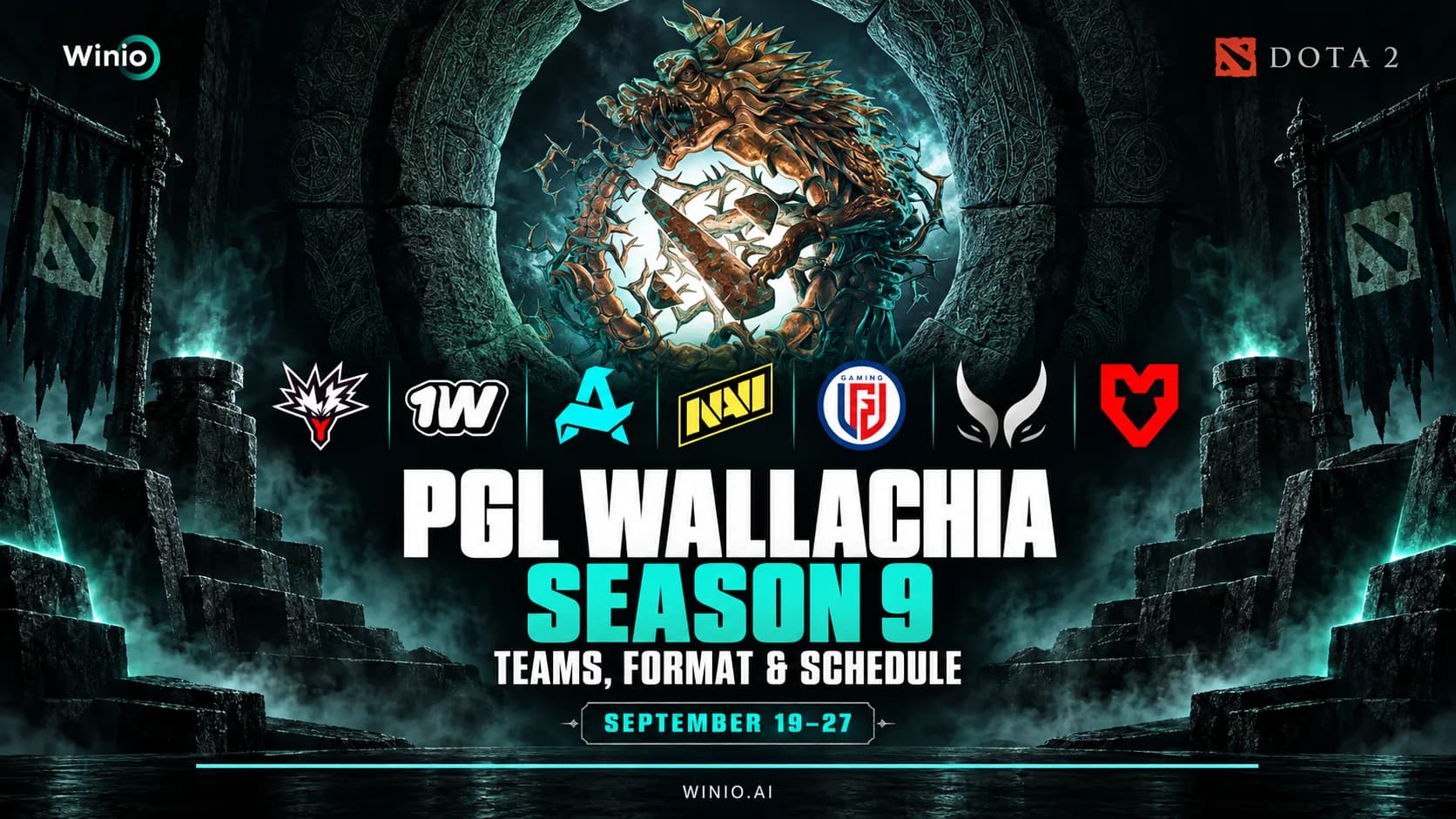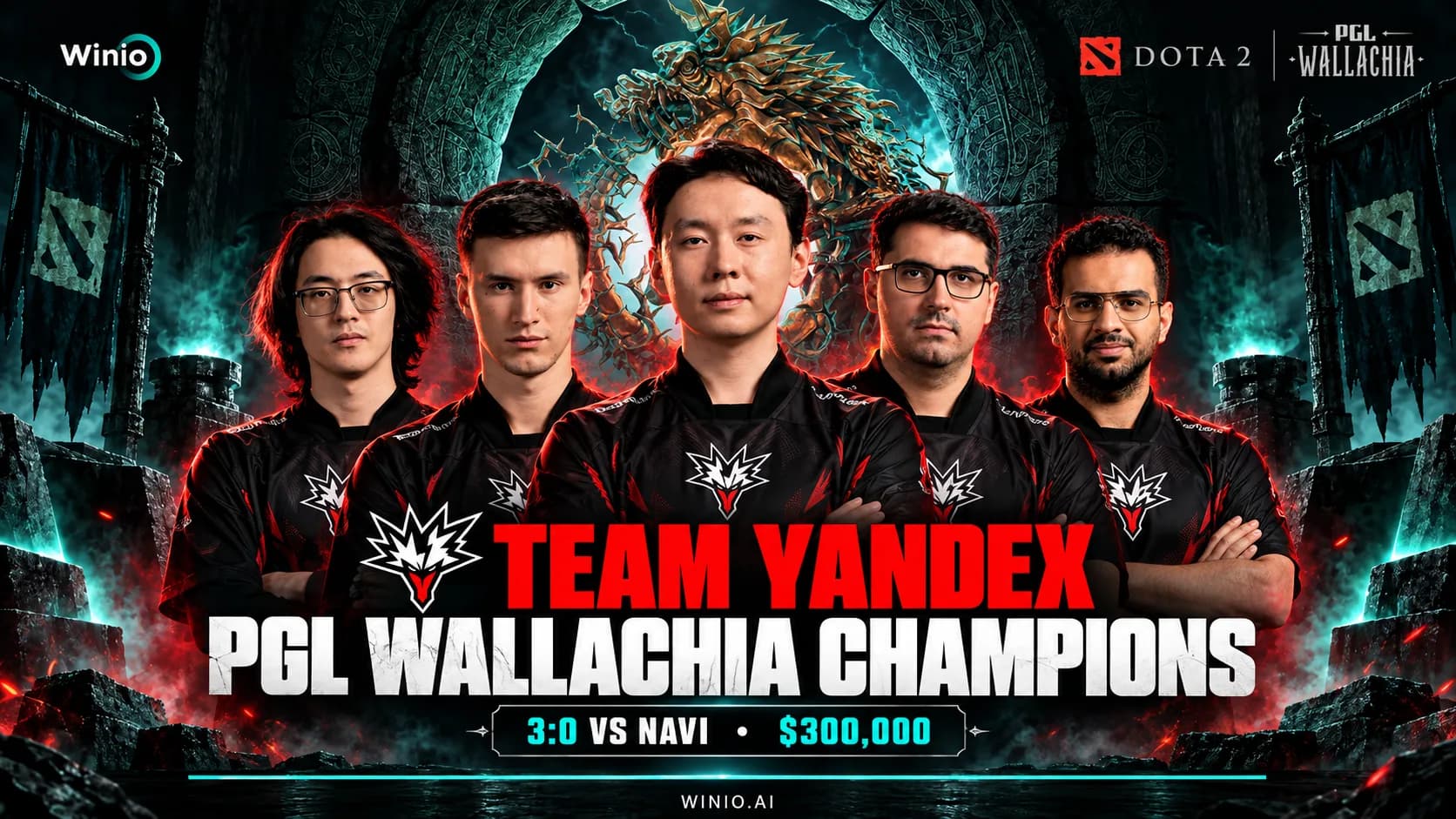
PGL Wallachia Season 9 Results: Team Yandex Win, NAVI Surprise
Team Yandex swept NAVI 3:0 to win PGL Wallachia Season 9. We analyze the champions, NAVI’s final run, surprises and disappointments.
September 28, 202607:28 AM8 min


Dota 2 and League of Legends (LoL) are the two dominant titles in the MOBA (Multiplayer Online Battle Arena) genre. Both originated from the same Warcraft III modding scene and share a common structural foundation, yet over time, they evolved in markedly different directions. Today, they represent two distinct interpretations of what a MOBA should prioritize: depth versus accessibility, systemic freedom versus controlled design, and long-term strategy versus moment-to-moment execution.
Even though it is considered that MOBAs are hard to understand, in this article, we provide a comparison of the two games, focusing on mechanics, complexity, design philosophy, player experience, and competitive culture, helping players decide which game best suits them.
At a structural level, Dota 2 and League of Legends are very similar. Each match features two teams of five players on a symmetrical map with three lanes, a jungle area, defensive structures, and a central objective whose destruction ends the game. Players select a hero or champion with unique abilities and gain power through experience and items over the course of the match.
EPL World Series: SЕA Season 18
Today 06:00
 Inter Active PhilippinesYangon Galacticos
BLAST SLAM VIII
08.10 12:00
 Team YandexLGD Gaming
At a high level, both games revolve around:
Despite this shared foundation, the way these elements interact differs significantly. Dota 2 allows players more freedom in how roles are played and how the map is approached, while League of Legends places stronger constraints on roles, pacing, and interactions to ensure consistency and clarity.
Dota 2 is built around interconnected systems. Many mechanics interact with each other in non-obvious ways, rewarding players who understand the game holistically. Examples include aggroing creeps to control lane equilibrium, managing courier to optimize item timing, and choosing whether to spend gold on buyback as a strategic resource rather than a punishment.
Items in Dota 2 often function as extensions of a hero’s kit. Active abilities from items can enable initiation, escape, crowd control, or defensive plays that fundamentally change how a hero is played from one match to the next.
League of Legends, by contrast, emphasizes immediacy and readability. Most power is concentrated directly in champion abilities rather than external systems. Items enhance strengths rather than redefining playstyles, and the absence of mechanics like denying or buyback reduces the number of variables a player must track at any given time.
This leads to a key distinction: Dota 2 mechanics are layered and situational, while League of Legends mechanics are more linear and predictable.
Dota 2 presents much of its complexity upfront. New players are exposed early to advanced systems that remain relevant at all levels of play. Progress often comes from understanding interactions, timing windows, and strategic trade-offs rather than mechanical improvement alone.
League of Legends takes a more gradual approach. Early gameplay is simpler and more guided, allowing new players to focus on fundamentals before encountering deeper strategic concepts. Complexity increases primarily through champion mastery, matchup knowledge, and mechanical refinement.
As a result, Dota 2 generally has a higher barrier to entry, while League of Legends offers a smoother and more forgiving onboarding experience.
Dota 2 follows a design philosophy that tolerates and embraces extremes. Heroes may have abilities that feel overpowered in isolation, but the game assumes that counters, positioning, and strategic decisions will balance these strengths over time. This philosophy encourages creativity, unconventional strategies, and high variance between matches.
League of Legends prioritizes controlled balance and consistency. Champions are designed with clearer strengths and weaknesses, and the game limits how far any single mechanic can be pushed. Balance changes aim to preserve fairness and reduce situations where players feel they lost due to factors outside their control.
The result is a philosophical divide: Dota 2 prioritizes strategic freedom and emergent gameplay, while League of Legends prioritizes reliability and competitive integrity.
League of Legends matches are typically faster, with a strong emphasis on early and mid-game momentum. Advantages gained early often translate into map control and objective dominance, making it difficult for the losing team to recover without significant mistakes from the opponent. Individual mechanical skill and lane performance play a major role, particularly in solo queue environments.
Dota 2 matches tend to be longer and more elastic. Mechanics such as buybacks, high-ground defense, and late-game scaling heroes allow teams to recover from substantial deficits. Matches often swing multiple times, placing greater emphasis on decision-making under pressure and coordinated team play.
In practice, League of Legends rewards precision and tempo, while Dota 2 rewards patience, risk assessment, and long-term planning.
Dota 2, just like League of Legends, has a highly competitive community that is globally diverse, but their cultures differ in emphasis. League of Legends has a very large casual player base, with strong regional identities shaped by server separation and local esports leagues. Solo play is common, and communication expectations are relatively low.
Dota 2’s player base is smaller but more homogeneous in experience level. Many players engage deeply with strategy discussions, professional play analysis, and meta theory. Communication and coordination are often expected, especially in ranked matches.
When it comes to the number of players, League of Legends has an estimated 120-135 million monthly active players globally in 2025, with around 30-40 million daily active players across all regions and occasional peaks of over 1 million concurrent players at high-activity times. Dota 2’s public data shows average concurrent players around 540-560 thousand, with peak concurrent numbers often 800-850 thousand, and third-party trackers estimate over 7.6 million monthly active users. Due to differences in platform reporting and a lack of official unified data for both games, these figures are approximate but they illustrate the significant scale gap between the two player communities.
League of Legends operates a tightly controlled, league-based esports ecosystem. Franchised regional leagues provide financial stability, predictable schedules, and long-term narratives. Developer involvement is strong, and competitive formats are designed to be accessible to viewers.
Dota 2 uses an open tournament ecosystem with fewer restrictions on organizers. The competitive year culminates in The International, which features some of the largest prize pools in esports history. However, earnings are heavily concentrated at the top, making the professional scene more volatile and less predictable.
League of Legends esports emphasizes sustainability and structure, while Dota 2 esports emphasizes openness and high stakes. To better understand which game suits you, watch pro matches and explore predicted outcomes that Winio’s mathematical models supply: pay attention to decision-making, team coordination, and strategic choices. This helps you see not just flashy plays, but the underlying patterns that determine success, making it easier to decide which game matches your preferred pace, style, and approach to learning.
Dota 2 generally appeals to players who enjoy engaging with complex, interconnected systems and who are willing to invest time into understanding how those systems interact. It tends to suit players who value strategic planning, adaptability, and long-term decision-making over immediate mechanical execution. Because outcomes often depend on coordination, timing, and macro-level choices, Dota 2 is particularly attractive to players who enjoy team-oriented play and are comfortable with longer matches where momentum can shift multiple times.
League of Legends, by contrast, tends to attract players who prefer faster feedback loops and clearer indicators of success or failure. Its design emphasizes mechanical expression, lane dominance, and moment-to-moment execution, making it appealing to players who enjoy refining individual skill and seeing tangible results quickly. The more guided structure and faster match pace also make it easier for players with limited time to engage competitively without committing to extended sessions.
Both games reward skill, consistency, and dedication, but they do so through fundamentally different priorities. Dota 2 places greater emphasis on strategic depth and systemic mastery, while League of Legends prioritizes accessibility, responsiveness, and mechanical precision. As a result, the choice between them often reflects a preference for how complexity and competition are expressed within the MOBA genre.
Although Dota 2 and League of Legends share the same genre and historical roots, they represent two distinct design philosophies. Dota 2 emphasizes systemic complexity, strategic freedom, and adaptability, while League of Legends focuses on accessibility, clarity, and pace. Understanding these differences helps explain why both games continue to coexist successfully, appealing to different types of players within the same competitive space.
Yes, both games are free-to-play. Dota 2 is fully free with all heroes unlocked from the start; revenue comes mainly from cosmetic items. League of Legends is also free-to-play, but new champions must be unlocked through in-game currency or real money, while cosmetics provide additional monetization.
No, both Dota 2 and League of Legends are PC-only games. LoL does have a mobile spin-off called League of Legends: Wild Rift, but it is a separate version with adjusted mechanics. Dota 2 does not have an official console or mobile release.
League of Legends is lighter and can run on low-end PCs and laptops. Dota 2 has higher requirements due to more complex graphics and physics systems, but it does not require high-end PCs. Both games offer adjustable graphics settings to accommodate older hardware.

Inter Active Philippines
Yangon Galacticos
Team Yandex
LGD Gaming

Aurora Gaming

1w Team
Inter Active Philippines
Yangon Galacticos
Team Yandex
LGD Gaming
Aurora Gaming
1w Team
Inter Active Philippines
Yangon Galacticos
Team Yandex
LGD Gaming
Aurora Gaming
1w Team