PGL Wallachia Season 9 Results: Team Yandex Win, NAVI Surprise
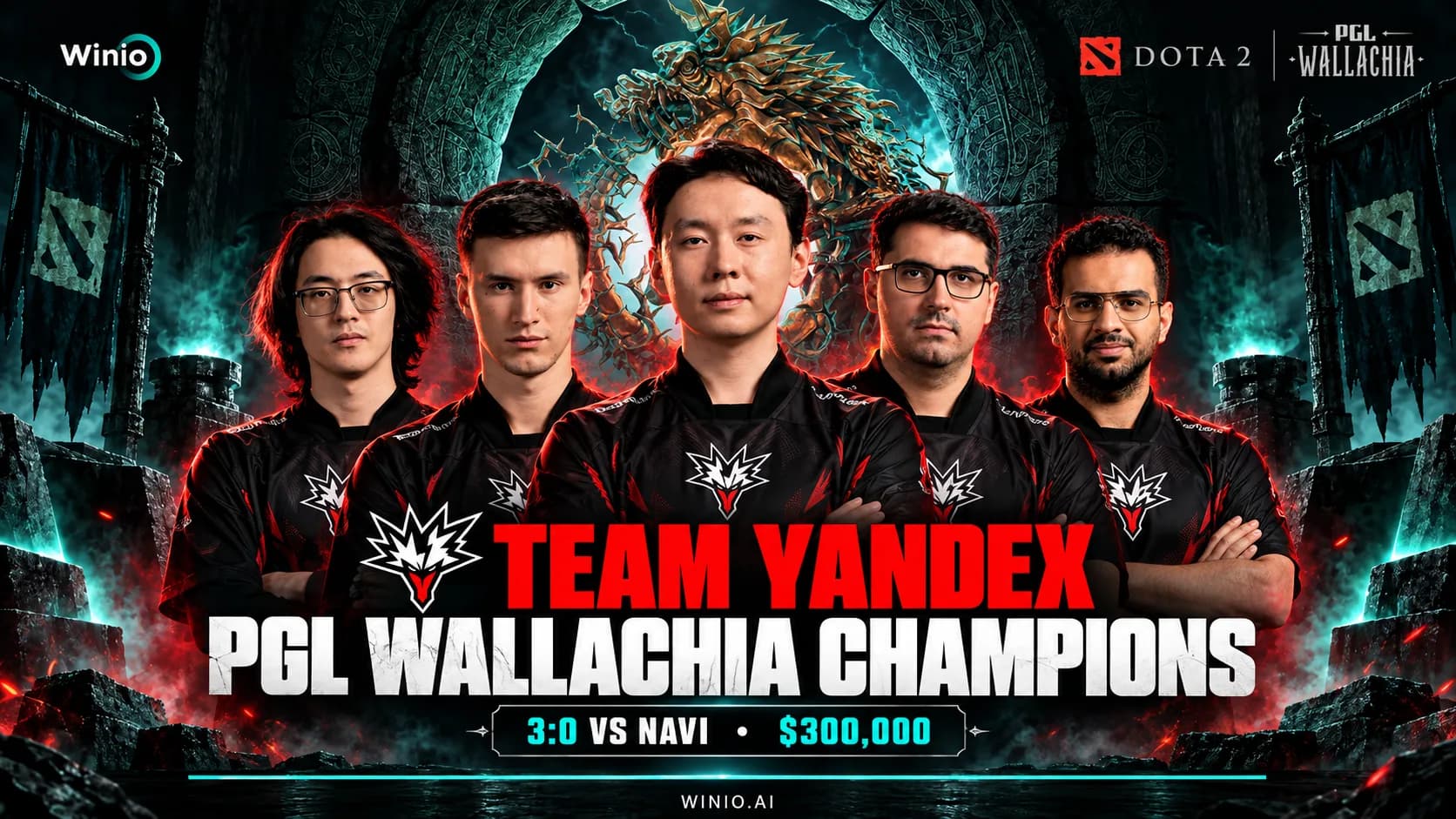
Team Yandex swept NAVI 3:0 to win PGL Wallachia Season 9. We analyze the champions, NAVI’s final run, surprises and disappointments.
September 28, 202607:28 AM8 min


Dota 2 is one of the most complex and dynamic esports disciplines in the world. Every match is a massive equation with hundreds of variables: from hero picks and their synergy to micro-control, item timing, and even the psychological state of players. It’s no surprise that both fans and professional analysts are constantly searching for a formula or metric that can predict match outcomes with perfect accuracy.
But what actually helps make accurate dota 2 predicts? Many enthusiasts rely on classic stats like KDA (kill/death/assist ratio) or total team net worth. However, modern sports science and machine learning algorithms show that the traditional view of statistics is often misleading.
In this article, we’ll break down which factors in dota 2 matches truly matter, how scientists train neural networks to predict victories, and what conclusions an average player or analyst can draw when building a betting strategy.
EPL World Series: SЕA Season 18
Today 06:00
 Inter Active PhilippinesYangon Galacticos
BLAST SLAM VIII
08.10 12:00
 Team YandexLGD Gaming
When you open a team or player profile on a stats website, the first things you see are kills, deaths, GPM (gold per minute), and XPM (experience per minute). At first glance, it seems logical: if a team gets more kills and farms faster, it wins. But in reality, most of these numbers, taken out of context, are useless, or even harmful, for deep analysis.
Kill score can be deceptive. A team might be leading 20:5 but still losing in gold and map control. In Dota 2, killing a position 5 support at the cost of losing key towers or Roshan is a strategic loss. Moreover, many playstyles (like “4+1,” where four players create space for a hyper-carry) naturally involve frequent deaths for space-makers. Their low KDA doesn’t indicate poor performance, it often enables victory.
Total team gold might be equal, but distribution is everything. If one team has 20,000 gold spread evenly across five heroes, while another has 12,000 concentrated on a carry Alchemist with Radiance and Black King Bar, the second team holds a massive advantage at that moment.
Blind trust in high hero win rates is a common beginner mistake. A hero might have a 56% win rate in public games but be completely ineffective against a specific draft in a professional match. Win rate only matters when applied to a specific draft and team playstyle.
To build quality analytics, you can’t rely on “pretty” numbers, you need to look deeper, where algorithms and mathematics operate.
If surface-level stats mislead us, what should we rely on? Recent research highlights several fundamental factors that truly correlate with victory in dota 2 matches.
According to the study, hero composition and synergy are decisive. The authors showed that AI can predict match outcomes with up to 93% accuracy using only hero picks and final item builds.
Key draft elements include:
Dota 2 is a game of positioning and execution. You can farm perfectly for 30 minutes, but one lost late-game fight can cost you the throne.
Research shows that a team’s ability to consistently gain more value from fights is often the main turning point in professional games. If a model detects this pattern, it significantly increases that team’s win probability.
This is harder to quantify but critically important:
Once the game starts, predictive analytics shift from static draft data to dynamic in-game metrics. Which stats should you track in real time to improve your dota 2 predicts?
Let's take a look at the fundamental work of scientists from the University of California. The authors of this study examined the data sets in detail and identified key numerical markers of dominance.
High GPM or XPM at the end of the game is just a result of winning. However, their progression at 10, 15, and 20 minutes is crucial.
Research shows that if a team maintains a steady gold and experience lead during the first 15 minutes, their chance of losing drops significantly. Early levels (XPM) are especially impactful.
Power spikes in Dota 2 are tied to items. A timely Black King Bar or Blink Dagger can completely shift momentum. Analysts always compare item timings against benchmarks, early items often signal aggressive opportunities.
Towers, Roshan, and other objectives provide both gold and strategic advantage. The number of destroyed buildings by the 20-minute mark is one of the strongest predictors of victory.
Many players rely on misleading metrics when building a betting strategy, but serious models largely ignore them:
How, then, do you combine dry numbers and the live context of the game to get accurate predictions? To do this, you need to use a multi-layered approach. This is how the most advanced systems work.
For example, in a recent scientific paper, scientists used ensembles of decision trees. Their system didn't just look at the numbers, it compared them in a complex way.:
This comprehensive approach has made it possible to achieve phenomenal prediction accuracy in the late stages of the game: up to 98.6%!
If you're analyzing an upcoming match, don't just look at the history of wins. Go through the following checklist:
Many esports analysts coming from the Counter-Strike 2 discipline face great difficulties when trying to predict Dota 2. Why is this happening? After all, both games are team-based and highly competitive.
The answer lies in the fundamental difference in game mechanics:
To ensure that your analytics are of high quality, try to avoid the most common traps that even experienced players fall into.
Predicting wins in Dota 2 is a combination of game knowledge, psychology, and data analysis. Traditional stats like KDA and net worth often hide the true state of the game.
Modern research shows that real predictors of success are:
Winio can also help predict the victory of a particular team. There are five free forecasts available to you every month.

Inter Active Philippines
Yangon Galacticos
Team Yandex
LGD Gaming

Aurora Gaming

1w Team
Inter Active Philippines
Yangon Galacticos
Team Yandex
LGD Gaming
Aurora Gaming
1w Team
Inter Active Philippines
Yangon Galacticos
Team Yandex
LGD Gaming
Aurora Gaming
1w Team