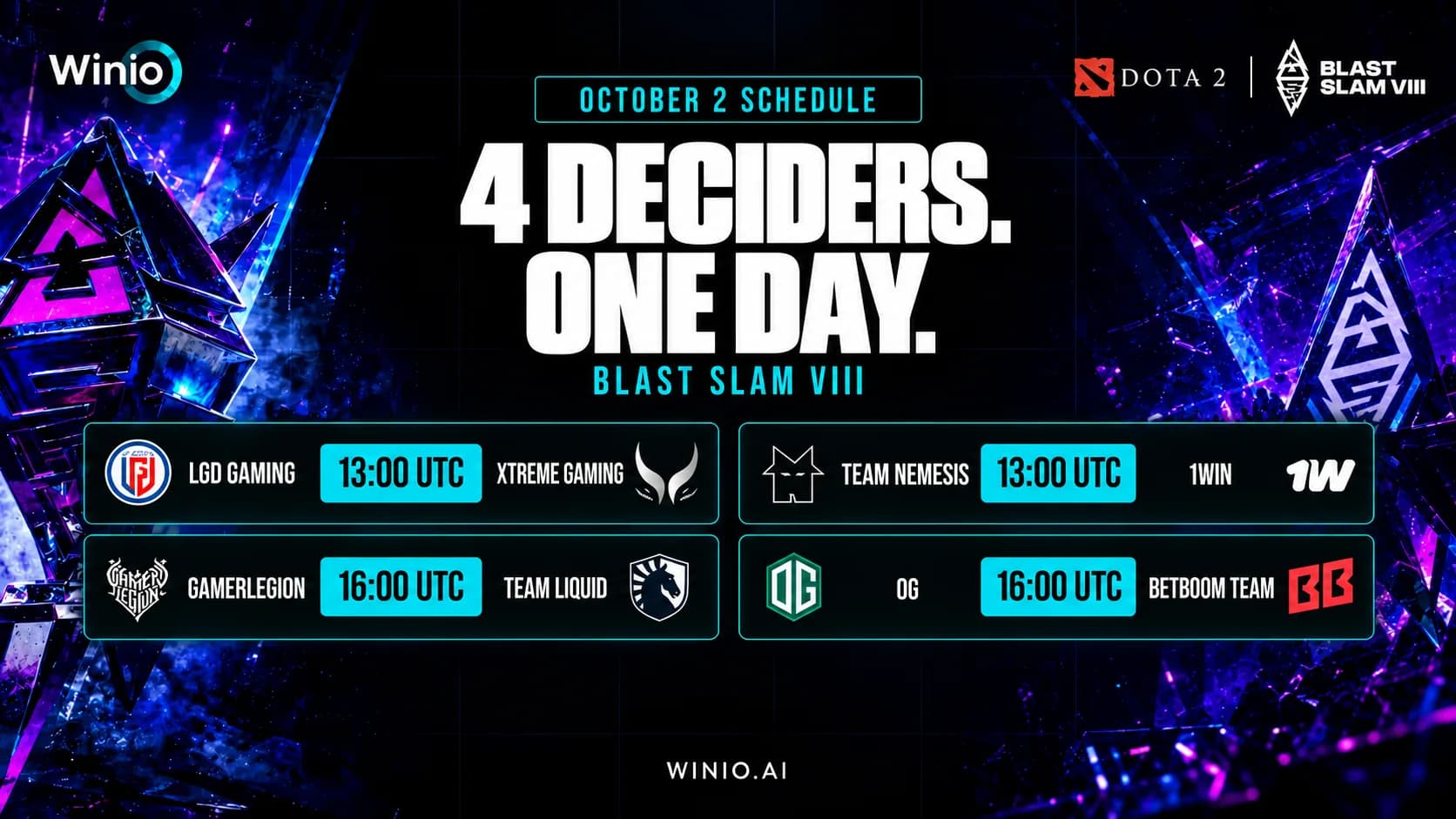
BLAST Slam VIII Schedule for October 2: Four Elimination Matches
Check the BLAST Slam VIII schedule for October 2, including LGD vs Xtreme, Nemesis vs 1win, GamerLegion vs Liquid and OG vs BetBoom.
October 2, 202603:54 AM5 min

Miposhka has revealed that the first thing he focused on after returning to Team Spirit’s coaching staff was the team’s drafts. According to him, Spirit still had good ideas, but some hero choices did not make enough sense in relation to what opponents were picking.
That detail is more useful than a general “Miposhka is back” headline. Spirit did not bring back a two-time TI-winning captain only for motivation or name value. His first adjustment points to a concrete problem: the team needed a cleaner connection between draft logic and the actual matchup on the map.
In Dota, a draft can look fine in isolation and still be wrong for the game. A hero may be strong in the meta, comfortable for the player, or good in previous matches, but still fail if it does not answer the opponent’s win condition. That seems to be the kind of issue Miposhka noticed first: not that Spirit had no ideas, but that some answers did not fully match the questions asked by enemy picks.
Team Spirit’s identity has often depended on making the game easier for their core players. Yatoro, Larl, and Collapse can win difficult games, but the best version of Spirit usually does not ask them to solve every problem from behind. Cleaner drafts can give the team earlier direction: what lanes are supposed to happen, which timings matter, and how fights should be started.
BLAST SLAM VIII
Tomorrow 16:00
 PARIVISIONAurora Gaming
Prediction: PARIVISION
BLAST SLAM VIII
Tomorrow 19:00
 Team SpiritTeam Yandex
This also changes how Spirit should be evaluated before bigger events. If the main issue was individual form, improvement would be harder to trust quickly. But draft correction can show results faster. A better hero response, a clearer lane plan, or one avoided bad matchup can make the whole team look more stable without every player suddenly becoming sharper overnight.
Winio read: Miposhka’s focus on drafts makes Spirit a team to watch for short-term improvement. The key signal is not only whether they win, but whether their picks start matching opponent lineups more cleanly. If that happens, Spirit’s recent form may become less useful as a predictor than their new draft direction.
The risk is that draft fixes can also be hard to separate from opponent strength. Spirit may look better against weaker teams simply because their ideas are cleaner, but the real test comes against opponents who can punish predictable answers, force uncomfortable lanes, or ban out the first layer of preparation.
For now, Miposhka’s comments make Spirit easier to read in one specific way. The early focus is not vague confidence, discipline, or “team atmosphere.” It is draft logic. If Spirit improve there, their ceiling can rise quickly. If the same mismatch between picks and opponent heroes remains, then Miposhka’s return may not solve the deeper problems before EWC and TI.


Team Spirit
Team Yandex

Cloud Dawning

Ivory
LGD Gaming

Xtreme Gaming
Prediction: Xtreme Gaming wins

Team Nemesis

1w Team

OG

BetBoom Team

GamerLegion

Team Liquid

TEAM ROSTIK

Team Cake
PARIVISION
Aurora Gaming
Prediction: PARIVISION wins
Team Spirit
Team Yandex
Cloud Dawning
Ivory
LGD Gaming
Xtreme Gaming
Prediction: Xtreme Gaming wins
Team Nemesis
1w Team
OG
BetBoom Team
GamerLegion
Team Liquid
TEAM ROSTIK
Team Cake
PARIVISION
Aurora Gaming
Prediction: PARIVISION wins
Team Spirit
Team Yandex
Cloud Dawning
Ivory
LGD Gaming
Xtreme Gaming
Prediction: Xtreme Gaming wins
Team Nemesis
1w Team
OG
BetBoom Team
GamerLegion
Team Liquid
TEAM ROSTIK
Team Cake
PARIVISION
Aurora Gaming
Prediction: PARIVISION wins