CS2 Pets Guide: How to Get and Hatch a Chicken Egg
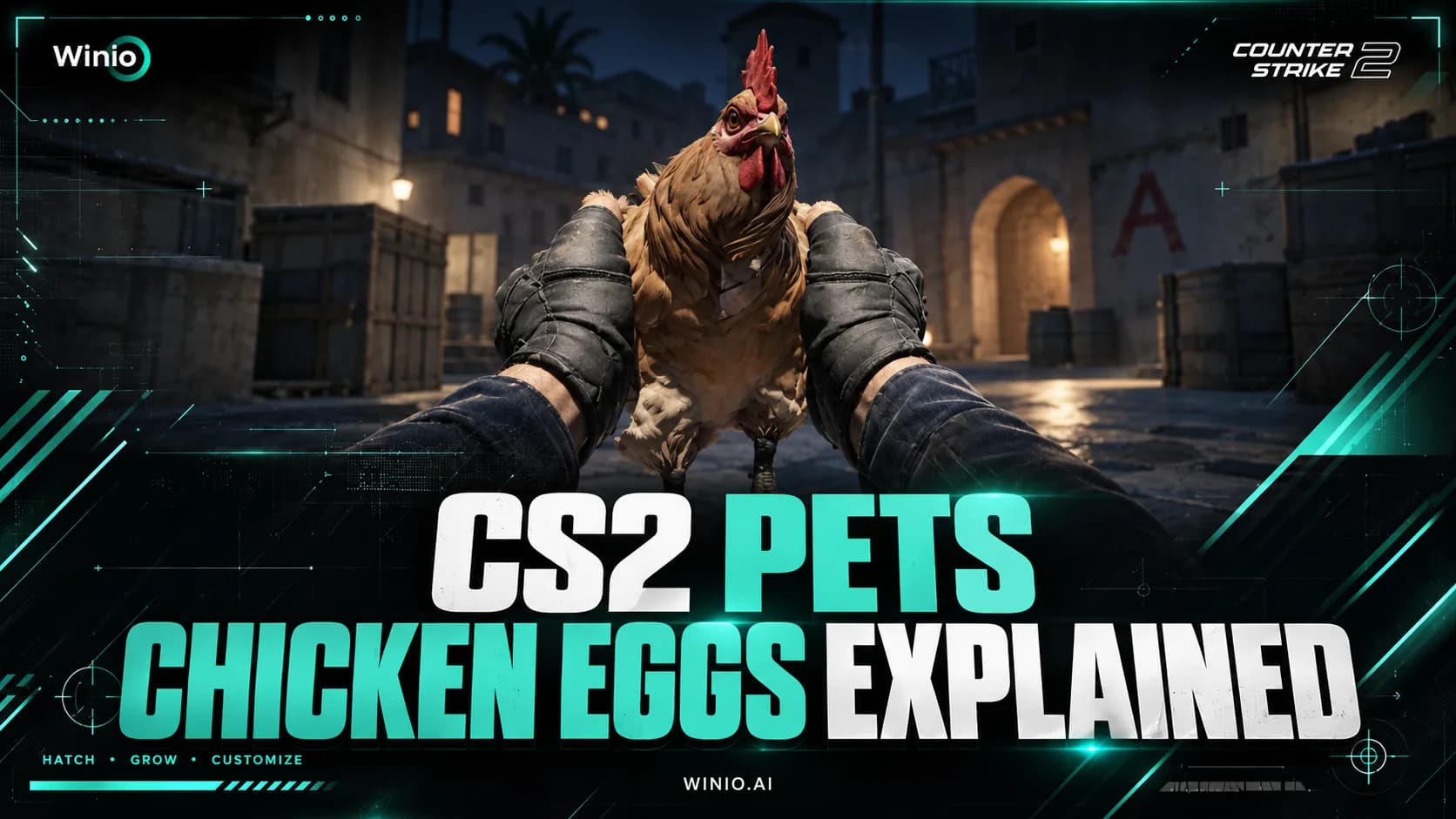
Learn how to get a Chicken Egg in CS2, how pets hatch and grow, all discovered chicken breeds, Pet Book features and current drop details.
October 1, 202607:54 AM10 min


BLAST Bounty Season 2 is the first major test of the CS2 hierarchy after the summer player break. It combines established title contenders, heavily rebuilt rosters and ambitious lower-ranked teams in a format designed to create uncomfortable matchups.
The first matches have already produced close maps and several threatened upsets. However, the main conclusion so far is not that the hierarchy has changed. The leading teams are still advancing because they are better at recovering when their initial approach fails.
BLAST Bounty begins with 32 teams playing two online rounds of single-elimination best-of-three series. The eight remaining teams then travel to Malta for the LAN stage, scheduled for July 30–August 2.
Unlike a conventional seeded bracket, lower-ranked teams select their opponents from the upper half of the field. Each team also carries a bounty based on its seeding. When a team wins, it receives half of the defeated opponent’s bounty immediately, while the other half is added to its own value for the next round.
CCT Eu 2026 Challengers #8
Tomorrow 16:45
 QuintessenceRyvex
Prediction: Quintessence
Private Club #2
Today 12:00
 magicThe MongolZ
This creates a different competitive dynamic. Underdogs are not simply assigned impossible opponents: they can study the available favorites and target the team whose form, roster or map pool appears most vulnerable.
The format also reveals how teams assess one another. Choosing a recognizable organization is not necessarily reckless if that organization has recently changed players, lacks reliable map data or has struggled since the break.
| Match | Result | Key signal |
|---|---|---|
| NIP–M80 | 2–0 | Controlled win |
| Astralis–Nemesis | 2–1 | Astralis needed a reverse sweep |
| MOUZ–Nuclear TigeRES | 2–0 | MOUZ struggled on Nuke |
| Wildcard–Alliance | 2–0 | Only seeding upset |
| FaZe–EYEBALLERS | 2–0 | Mirage required overtime |
| G2–Nemiga | 2–1 | G2 recovered after losing Anubis |
The opening results largely favored the higher-ranked teams. Ninjas in Pyjamas beat M80 2–0, Astralis recovered to defeat Nemesis 2–1, MOUZ eliminated Nuclear TigeRES 2–0, FaZe overcame EYEBALLERS 2–0 and G2 completed a 2–1 comeback against Nemiga.
Only Wildcard produced a clear seeding upset, defeating Alliance 13–3 on Inferno and 13–7 on Dust2. The Inferno result was particularly notable because Alliance entered the series with a 13-map winning streak on the map.
The absence of more upsets does not mean the favorites were consistently dominant. Astralis lost Nuke to Nemesis and needed to reverse the series. MOUZ were close to being forced onto a third map before a Spinx Deagle round changed the economy on Nuke.
FaZe needed overtime to win EYEBALLERS’ Mirage pick 16–12. G2 started its tournament by losing Anubis 9–13 to Nemiga before stabilizing on Mirage and Ancient.
These series exposed problems without yet punishing them. The favorites generally had more ways to adjust once their original plan stopped working, while the underdogs struggled to maintain the same pressure across an entire best-of-three.
| Team | Main change | Early evidence |
|---|---|---|
| MOUZ | PR joined | Successful but uneven debut |
| G2 | r1nkle replaced SunPayus | Riflers carried the recovery |
| FaZe | JBOEN replaced broky | Solid 1.13 HLTV Rating 3.0 |
| Aurora | kyxsan, Jimpphat and ash joined | Yet to play |
| HEROIC | Brollan and MartinezSa joined | Yet to play |
BLAST Bounty is also functioning as a laboratory for the summer’s roster changes. Several teams are playing their first official matches with new personnel, making current rankings less informative than usual.
MOUZ entered the tournament with PR replacing Jimpphat. The team defeated Nuclear TigeRES in two maps, giving PR a successful debut, but the 13–11 score on Nuke showed that the new lineup is not yet operating with complete control.
G2 introduced r1nkle in place of SunPayus. The new AWPer finished the Nemiga series with a 0.85 rating, but G2 still advanced because MATYS, NertZ, huNter- and HeavyGod supplied enough rifle output. MATYS finished with a 1.35 rating, narrowly ahead of NertZ at 1.33.
That distribution is important. G2 did not need its new AWPer to immediately become the center of the team, but stronger opposition will eventually test whether r1nkle can provide more consistent impact.
FaZe faced a similar question after replacing broky with JBOEN. The Danish AWPer recorded a solid 1.13 rating against EYEBALLERS, while jcobbb and Twistzz led the team at 1.39 and 1.31. JBOEN then improved on Dust2, where his 20–11 score helped FaZe close the series.
Other new lineups have yet to play. Aurora rebuilt around kyxsan, Jimpphat and coach ash, HEROIC added Brollan and MartinezSa, GamerLegion brought FL4MUS back, and The MongolZ signed two young players. Their opening matches should provide a wider picture of how quickly the summer’s projects are developing.
The opponent draft appears to have worked better than the final results suggest. Nemesis identified Astralis as a viable target and won the opening map. Nemiga selected G2 and immediately punished them on Anubis, while EYEBALLERS pushed FaZe through a full overtime cycle on Mirage.
The underdogs therefore succeeded at the first part of the task: finding a map or tactical matchup where the favorite could be challenged. Their main problem was reproducing that advantage after the opponent adjusted.
Nemiga built its Anubis victory around a 9–3 first half and strong performances from KaiR0N- and khaN. On the following maps, G2 limited Nemiga to eight rounds twice. Ancient was still competitive at halftime, but G2 won eight of the nine rounds after switching sides.
EYEBALLERS received an exceptional performance from stand-in yxngstxr, who finished the FaZe series with 44 kills, 91.8 ADR and a 1.43 rating. FaZe nevertheless had three players above a 1.10 rating and considerably more balanced production across the lineup.
That difference is common in favorite-versus-underdog series. A lower-ranked team can create a dangerous peak through preparation and one standout individual, but the stronger roster is less dependent on a single player or approach.
Cache has replaced Overpass in the active map pool, giving teams another problem to solve at the beginning of the season. Public information remains limited, and teams have had less time to build reliable strategic identities on the map.
Astralis and Nemesis played the only Cache of the opening six series. Astralis won 13–7, with phzy providing the firepower needed to complete the reverse sweep.
One result is not enough to establish which teams are strong on Cache. Its immediate importance is the uncertainty it introduces into vetoes. Some teams will avoid it while their playbook develops, whereas others may use the lack of established information to create a temporary specialist advantage.
This also makes early predictions more difficult. Historical strength on the previous map pool cannot be transferred directly to Cache, and a team’s private preparation may be far ahead of what its official results currently show.
The tournament’s real competitive level will become clearer when Falcons, Vitality, Spirit and FURIA enter the server. These teams occupied four of the final eight places at the Cologne Major, with Falcons defeating FURIA in the final after eliminating Spirit in the semifinals.
Falcons begin BLAST Bounty as the team to beat. Their Major victory demonstrated that the karrigan-led roster can manage high-pressure playoff series, while m0NESY, NiKo and kyousuke provide an exceptional individual ceiling.
Their first opponent, 100 Thieves, is another rebuilt lineup. Gizmy has taken over in-game leadership from rain, who has moved into a different role alongside device, sirah and poiii. The result matters, but the series should also show how much structure the new leadership arrangement has already produced.
Vitality will face Liquid, who recently changed both their leadership and AWP setup. Spirit drew OG, while FURIA will play DENDELE. All three favorites should advance, but the opening matches have shown that a series win can hide meaningful weaknesses.
Aurora may be the most interesting team outside the leading group. The organization replaced MAJ3R and soulfly with kyxsan and Jimpphat, moving from a Turkish core toward an international lineup. Individual quality is not the problem; the main question is how quickly the new leadership can organize it.
The first six series show instability rather than a power shift. Higher-ranked teams have lost maps, fallen behind and depended on individual rounds, but five of the six favorites still advanced.
This distinction matters when evaluating early-season results. A close map can reveal genuine problems without proving that two teams have become equal. Stronger teams separate themselves by changing pace, adjusting defensive positions and finding alternative sources of impact once the original game plan fails.
The Bounty format makes these weaknesses more visible because underdogs can actively select opponents they consider vulnerable. Even so, identifying a weakness and exploiting it for two or three maps are different tasks.
The most encouraging early performances came from teams that retained several reliable ways to win. NIP controlled M80 through stavn’s consistency and xKacpersky’s CT impact. G2 recovered through its riflers, while FaZe survived a strong yxngstxr performance with balanced production across the roster.
MOUZ and Astralis advanced, but their next series should be more informative. Both teams showed enough instability for future opponents to build a credible plan around what went wrong.
BLAST Bounty has opened the new CS2 season with vulnerable favorites, dangerous underdogs and several lineups that are still defining their identities. The early matches have produced warning signs, but not enough evidence to redraw the competitive hierarchy.
For now, the elite teams retain their advantage because they can recover inside a series. The next rounds will show whether that resilience is enough against stronger opposition—or whether the instability exposed online becomes decisive when qualification for Malta is at stake.
magic
The MongolZ
FaZe

JiJieHao

SINNERS

HEROIC

Aurora
The MongolZ
Prediction: Aurora wins

MOUZ

Liquid

Spirit

BetBoom

Vitality
9z

Legacy

Nemiga
magic
The MongolZ
FaZe
JiJieHao
SINNERS
HEROIC
Aurora
The MongolZ
Prediction: Aurora wins
MOUZ
Liquid
Spirit
BetBoom
Vitality
9z
Legacy
Nemiga
magic
The MongolZ
FaZe
JiJieHao
SINNERS
HEROIC
Aurora
The MongolZ
Prediction: Aurora wins
MOUZ
Liquid
Spirit
BetBoom
Vitality
9z
Legacy
Nemiga