


BLAST Open Porto 2026 Results: Spirit Win the Title
Spirit beat MOUZ 3:1 to win BLAST Open Porto 2026 after an 11:1 map run. Full results, donk’s MVP numbers and key tournament takeaways.
September 8, 202607:06 AM10 min


If you’ve ever watched a pro break down a round or seen a smooth cinematic map walkthrough, you’ve probably wondered how to fly in CS2 yourself. It looks like a hidden mechanic, but in reality, it’s a built-in developer tool called noclip.
Counter-Strike has always been about more than aim. You can have sharp mechanics and still lose fights because of poor positioning, weak utility, or lack of map awareness. CS2 maps are even more detailed than they were in CS:GO, with tighter angles, updated lighting, and more subtle geometry. Learning all of that by running around normally takes a lot of time.
That’s where flying helps. CS2 doesn’t offer real “flight” as a gameplay mechanic, but it does allow you to move like a free camera. You can scan the map from above, pass through walls, and test ideas instantly. More importantly, you start to understand why certain positions work.
This guide explains how to fly around in CS2, how to set it up properly, and how to actually use it in a way that translates into better gameplay.
Logitech G Play Connect 2026
17.09 13:00
 B8GamerLegion
Prediction: B8
CIS LAN Championship #7
Today 18:15
 NemigaBlack Phoenix
The noclip CS2 command is a console command that disables collision and allows unrestricted movement in all directions, effectively bypassing gravity. In practical terms, it lets you fly freely through the map.
When noclip is active:
This is what players refer to as the cs2 fly command. There isn’t a separate “fly” feature, noclip is the system behind it.
It’s also worth being clear about limitations:
CS2 treats noclip as a cheat tool, even though it’s widely used for practice. So if you’re trying to figure out how to fly in CS2 during a competitive match, that’s not possible.
If you want to learn how to fly in CS2 practice mode, the setup takes less than a minute.
If the key doesn’t work (common with some keyboard layouts), you can manually bind the console key in your settings.
Noclip only works in environments where cheat commands are allowed:
If the server blocks cheats, the command simply won’t work even if you type everything correctly.
Open the console and enter sv_cheats 1. Without this step, noclip won’t activate.
Now enter noclip. You’ll immediately switch into flying mode.
Movement stays intuitive:
Your speed is noticeably higher than normal movement, which lets you cross the map in seconds. By default, this speed is controlled by a hidden setting called sv_noclipspeed. Advanced users sometimes tweak it, but for most players the default value is perfectly fine.
Typing commands every time breaks your flow. If you plan to use noclip regularly, binding it to a key is almost mandatory.
bind "v" "noclip" - pressing V will toggle flying on and off.
You can combine commands bind "ALT" "sv_cheats 1; noclip".
This ensures noclip works even after restarting a map (since cheat settings are reset when a new server/session is created).
When you’re practicing:
You will constantly switch between normal movement and flying. A bind keeps everything smooth and saves time.
A lot of players treat noclip like a toy. That’s a mistake. Used properly, it directly improves your gameplay.
Instead of running the same routes repeatedly, you can:
This helps you avoid “dead route” paths where you’re exposed to multiple angles at once.
This is one of the most valuable uses.
With noclip, you can:
Good positioning in CS2 comes down to small details. Noclip lets you:
If you’re playing with a team, you can:
You start building strategies based on actual map geometry, not assumptions.
Flying gives you:
It’s widely used in guides and analysis videos for a reason. When you’ve spent time flying around maps, checking angles, and testing utility, pro matches stop looking random. You begin to notice why certain positions are played, why rotations happen earlier on some maps, or why a team avoids specific areas altogether.
That’s where tools like Winio.ai start to make more sense, especially if you follow pro matches or look at them from a betting or analytical perspective. Not as something separate from the game, but as a way to see how those same map decisions and patterns show up across real matches, especially if you’re interested in the competitive scene or even following matches more seriously.
Once you’re comfortable, noclip becomes more than just a movement tool.
You can measure:
This helps with decision-making under pressure.
CS2 introduced more realistic lighting, which affects visibility.
With noclip, you can:
Instead of guessing crosshair placement:
This builds precision much faster than playing blindly.
Rather than copying lineups:
CS2 maps include small details and occasionally inspect map geometry and out-of-bounds areas.
With noclip, you can:
Sometimes you’ll even stumble across little Easter eggs or map details you’d never notice in a real match.
To get real value from how to fly in CS2 practice, use it with intention.
Noclip is a tool, not a substitute. Always return to normal movement to:
Set up a proper practice environment:
You can experiment with sv_gravity 400. Default gravity is 800. Lower values create longer jumps and slower falls. This doesn’t replace noclip (you won’t pass through walls), but it’s useful for testing movement, jump arcs, and timing.
host_timescale 0.5 - this command (which also requires sv_cheats 1) helps when analyzing small details like grenade trajectories or angle exposure.
While flying, shooting becomes unreliable, not because noclip directly “breaks” accuracy, but because you’re constantly moving and often technically in-air. CS2 applies movement inaccuracy, so noclip is strictly for practice and exploration, not combat.
Noclip doesn’t work:
Console won’t open:
Bind not working:
Stops working after map change:
Understanding how to fly around in CS2 isn’t just about messing around with the game. It’s one of the most practical tools available for improving how you actually play.
The noclip CS2 command lets you:
It takes seconds to enable, but the payoff builds over time. Instead of relying on repetition alone, you start seeing the structure behind every angle, every rotation, and every setup.
Nemiga
Black Phoenix

TheChampionGG

PRZ

Permitta

Bebop

OLDBOYS PL

LPH

3DMAX Academy

EVOLUPEGG

BRUTE

G2 Ares

Gatorian

Eternal Fire Academy
Black Phoenix

Just Players
Nemiga
Black Phoenix
TheChampionGG
PRZ
Permitta
Bebop
OLDBOYS PL
LPH
3DMAX Academy
EVOLUPEGG
BRUTE
G2 Ares
Gatorian
Eternal Fire Academy
Black Phoenix
Just Players
Nemiga
Black Phoenix
TheChampionGG
PRZ
Permitta
Bebop
OLDBOYS PL
LPH
3DMAX Academy
EVOLUPEGG
BRUTE
G2 Ares
Gatorian
Eternal Fire Academy
Black Phoenix
Just Players
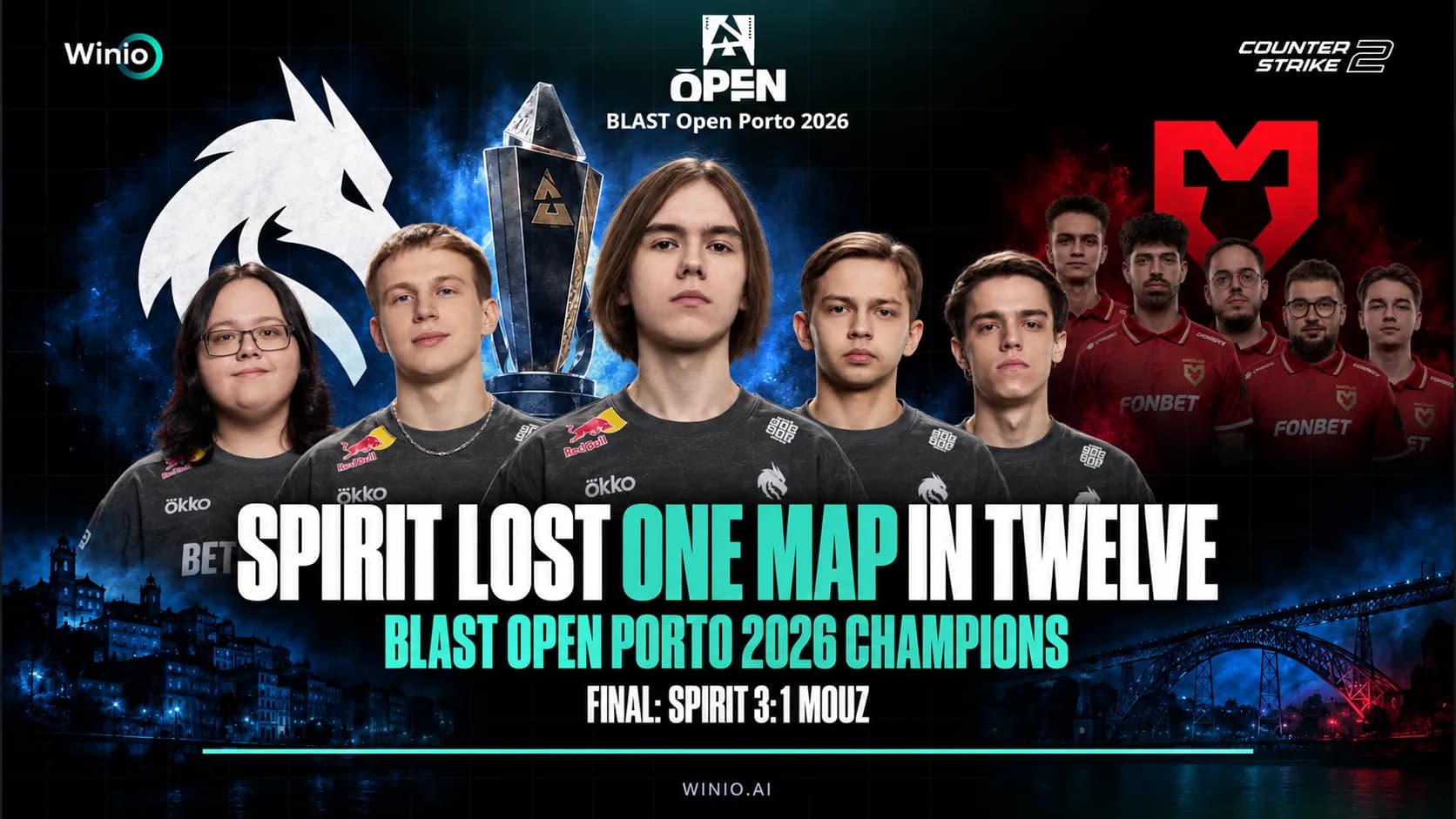
Spirit beat MOUZ 3:1 to win BLAST Open Porto 2026 after an 11:1 map run. Full results, donk’s MVP numbers and key tournament takeaways.
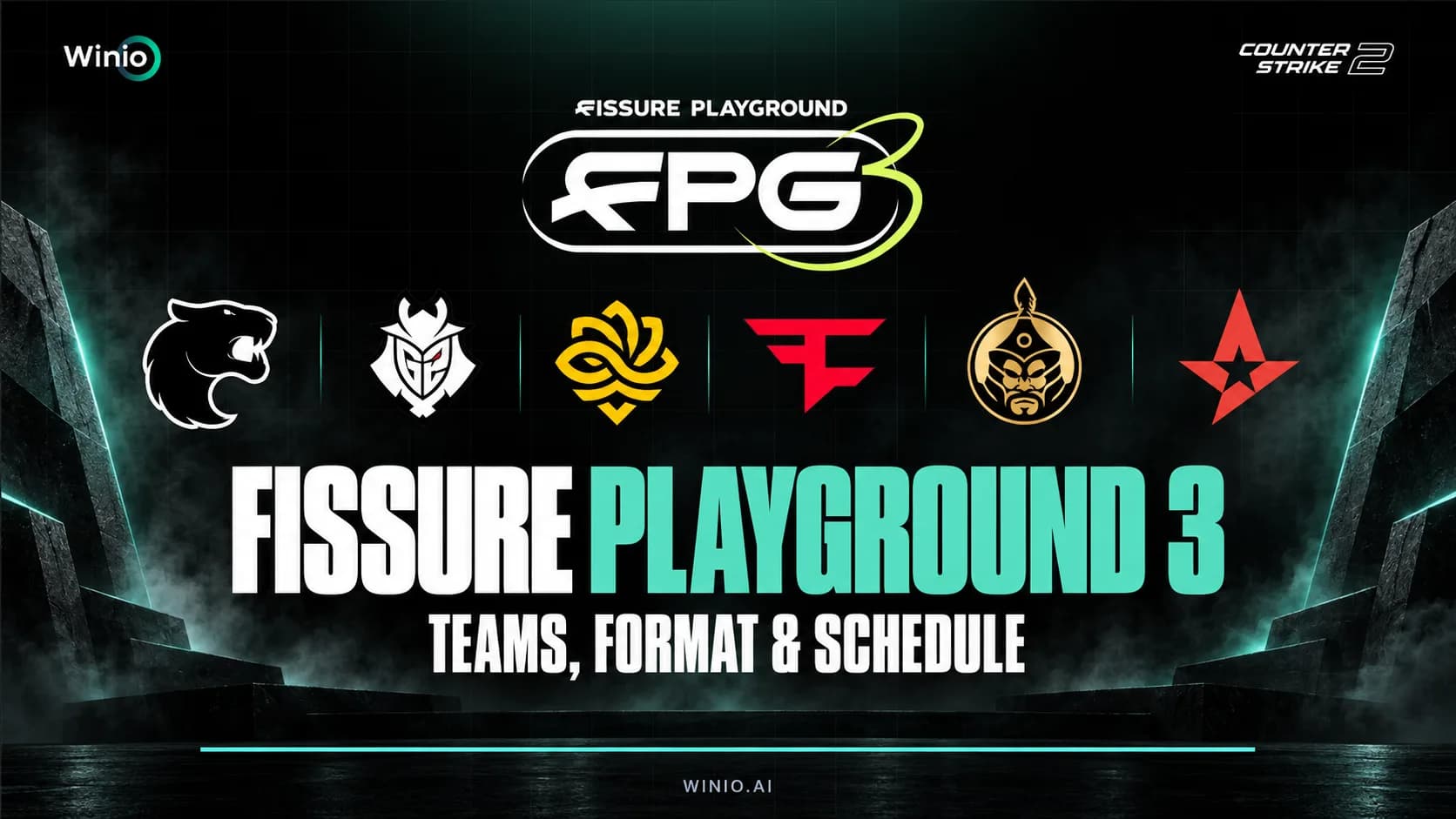
Preview of FISSURE Playground 3 CS2 with dates, teams, tournament format, favorites, prize pool and the complete opening-day schedule for September 8.
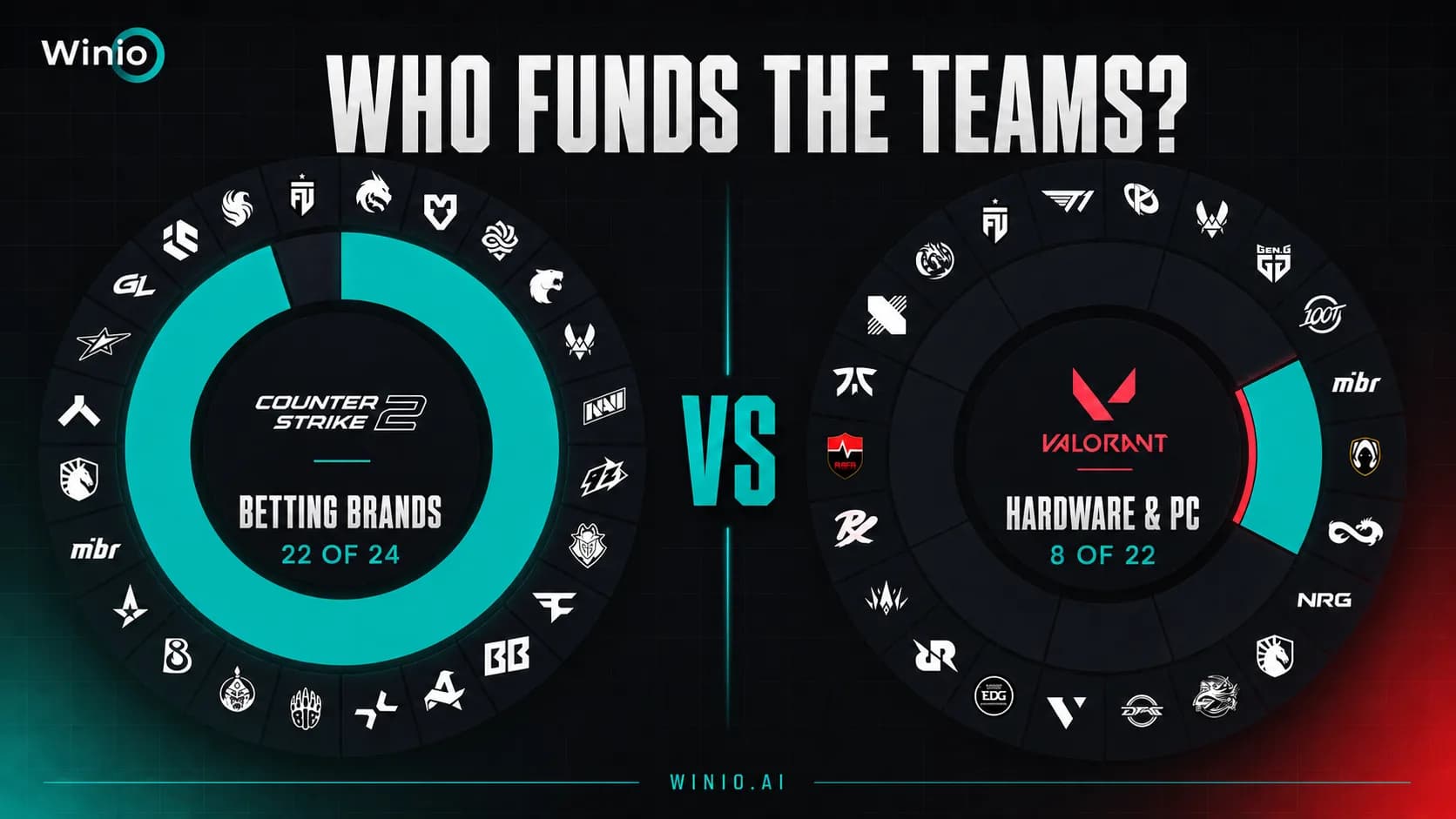
Compare esports sponsorships in CS2 and VALORANT. See why betting brands dominate CS2 while hardware companies lead the VALORANT market.
A ranking of the most reliable CS2 teams in BO3 series over the past two months. The analysis considers series win rate, map pool depth, first-map conversion, comeback ability and decider performance.

A data-driven review of EWC 2026 CS2, including Spirit’s title, FUT’s breakout, Legacy’s upsets and 87% prediction accuracy from Winio.

BLAST Open Porto 2026 runs from August 26 to September 6. See the CS2 schedule, groups, format, prize pool, map pool and Winio Power Ranking.
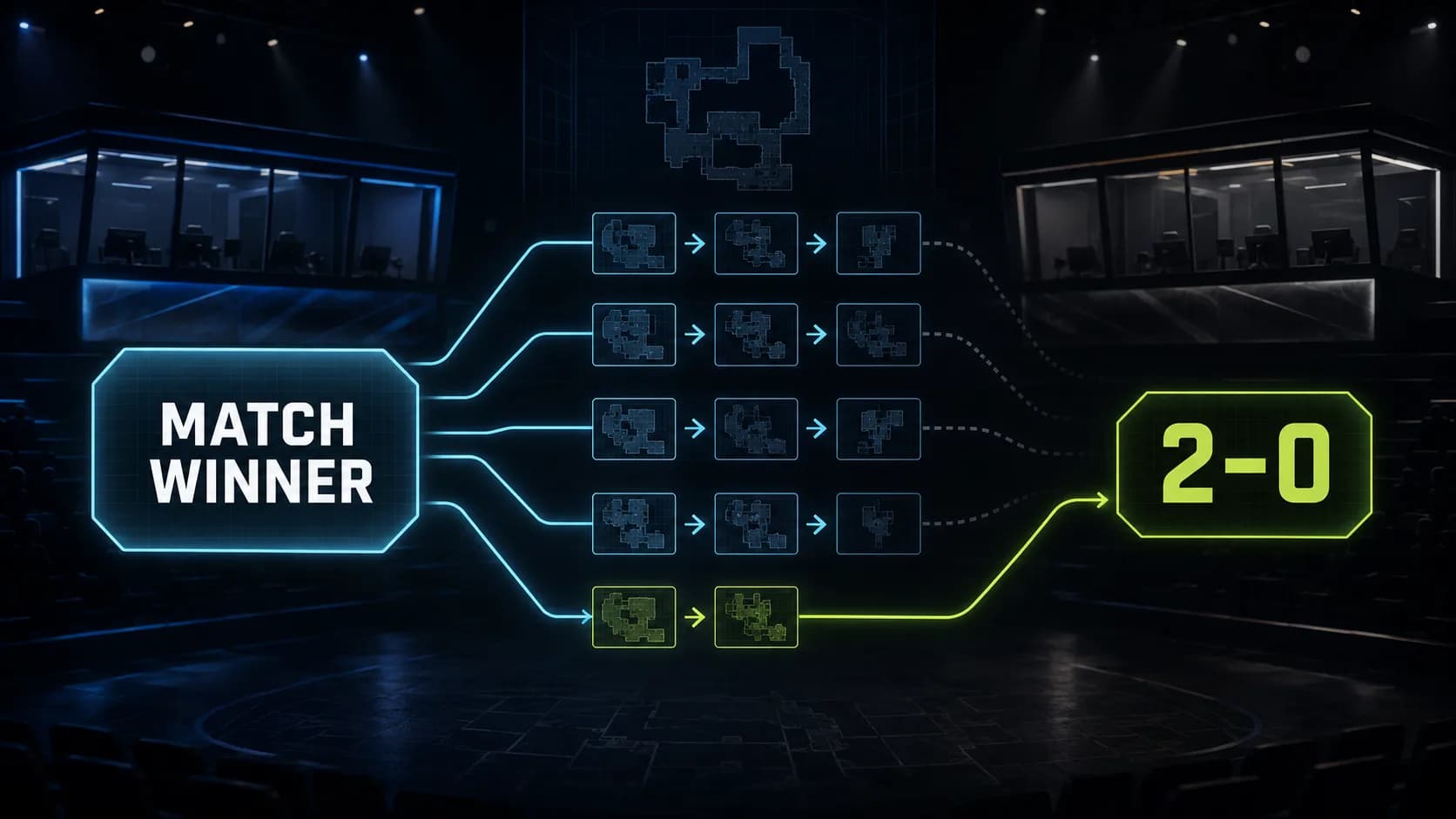
Predicting a 2–0 requires more than identifying the stronger team. Here’s why forecasting a clean sweep in a BO3 is significantly harder than simply picking the match winner.