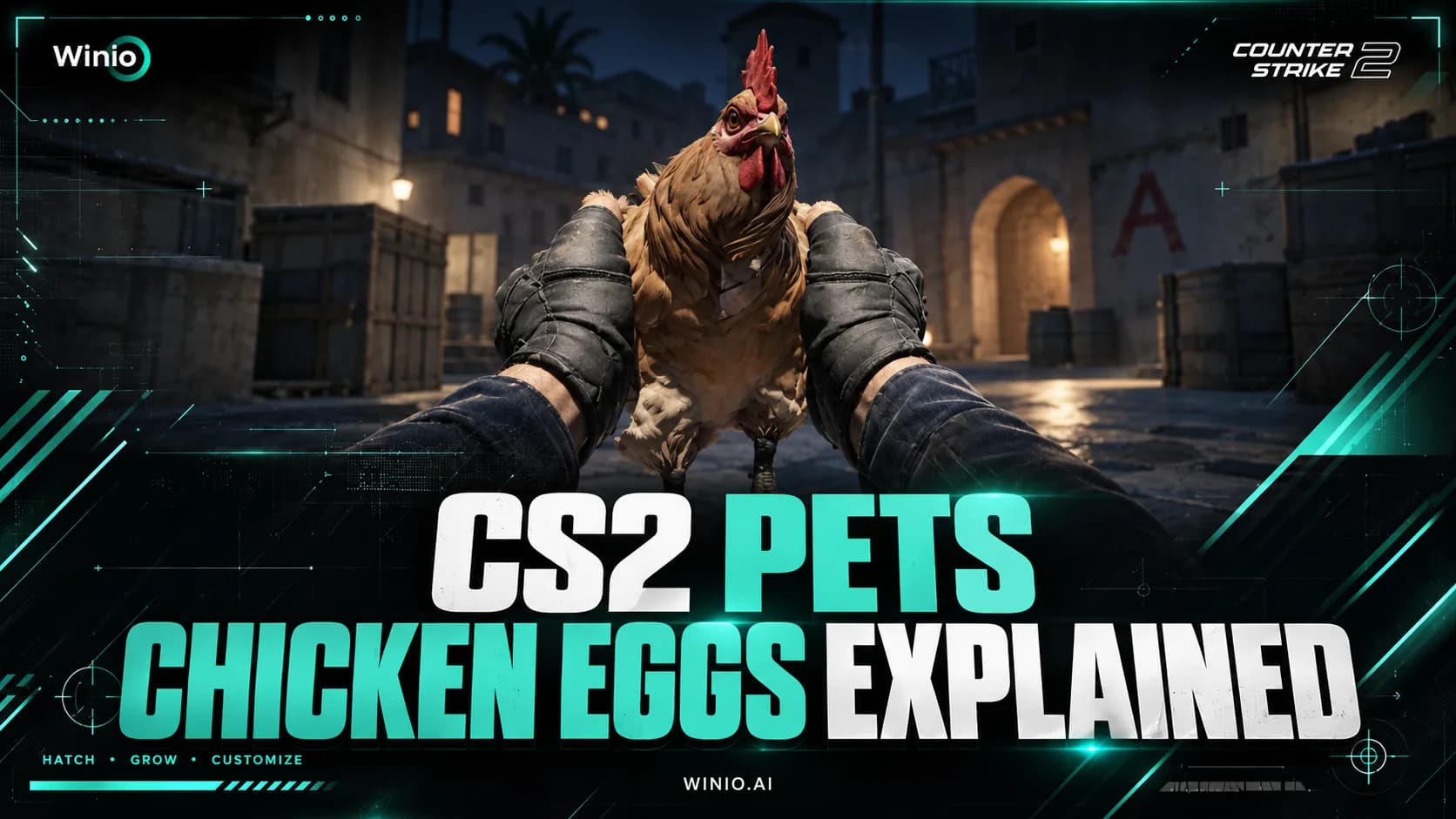
CS2 Pets Guide: How to Get and Hatch a Chicken Egg
Learn how to get a Chicken Egg in CS2, how pets hatch and grow, all discovered chicken breeds, Pet Book features and current drop details.
October 1, 202607:54 AM10 min


A 12–0 half should be a death sentence. In Counter-Strike’s MR12 format, that kind of lead leaves almost no room for drama, because the team in front only needs one more round to end the map. NRG had reached that position against BIG on Mirage, the deciding map of their IEM Cologne Major Stage 1 series. They had won every CT round, built total control of the scoreboard, and stood one round away from Stage 2.
Then the match flipped completely. BIG won twelve straight rounds on their own CT side, dragged the map into overtime, swept the extra period 4–0, and finished the comeback 16–12. The scoreline looks competitive in hindsight, but it hides the real shape of the map: NRG owned the first half, BIG owned everything after it, and the match became a study in how pressure can move from one side of the server to the other.
This was not just a comeback because of the numbers. It mattered because of when and where it happened: a Major, an elimination match, and a deciding map. NRG did not lose after being slowly worn down from a normal lead. They lost after being one round from safety for sixteen consecutive rounds.
Tesla Cup 2026
27.10 11:00
 B8K27
B8K27
Prediction: B8
Hotspawn 10k Showdown
LIVE
 STATEG2 Ares
The stakes made the collapse heavier. This was Swiss Round 5, with both teams sitting at 2–2. The winner advanced to Stage 2 of the IEM Cologne Major; the loser was eliminated. There was no lower bracket, no second chance, and no way to treat Mirage as just another map in a long tournament run.
That context is important because it explains why the second half became so tense. NRG were not only trying to close a map. They were trying to close the match, the series, and their place in the next stage of the Major. BIG, meanwhile, were already in survival mode. At 0–12, they had no realistic room for long-term thinking, which may have made their task mentally simpler: win the next round or go home.
The cruel twist is that NRG’s lead eventually became part of the problem. A 12–0 scoreline should create comfort, but once BIG started stacking rounds, that comfort turned into pressure. Every failed attempt to close made the situation more awkward, then more alarming, then historic.
The series had already shown momentum could shift before Mirage even began. BIG opened strongly on Dust2, NRG answered in overtime on Nuke, and the decider became the final test of composure. A short table helps frame how the match reached that point.
| Map | Winner | Score | What it added to the story |
|---|---|---|---|
| Dust2 | BIG | 13–5 | BIG started the series with control and confidence. |
| Nuke | NRG | 16–12 | NRG survived overtime and forced the decider. |
| Mirage | BIG | 16–12 | NRG led 12–0, then lost sixteen rounds in a row. |
Mirage was not an isolated shock. BIG had already shown they could dominate a map, while NRG had already shown they could recover from pressure. The decider asked which version of each team would appear when the series was on the line.
For twelve rounds, the answer looked obvious. NRG’s CT side on Mirage was so clean that BIG could not establish any rhythm. BIG were not simply losing rounds; they were failing to create the kind of foothold that lets a team reset mentally. By halftime, Mirage looked less like a contest and more like a formality.
NRG’s first half deserves credit before the collapse is examined. A 12–0 half does not happen by accident, and it should not be treated as if BIG were always in control of the map’s deeper story. NRG’s CT side was dominant, confident, and clean enough to make BIG look short of solutions. nitr0, in particular, became the symbol of that dominance, producing a brilliant first half that helped put NRG on the edge of victory.
The important analytical point is that NRG’s lead was real. It was not a lucky run built only on broken economies or coin-flip clutches. They repeatedly stopped BIG from getting comfortable, and each defensive success made the next BIG attack feel more desperate. By the side switch, NRG had earned the safest possible winning position.
But the side switch also changed the job. On CT, NRG could defend, react, and punish BIG’s attempts to create play. On the T side, they had to create the final round themselves. That difference became decisive, because closing from 12–0 sounds easy in theory but still requires a team to make proactive, committed decisions under pressure.
The comeback’s first major hinge came at 12–2. BIG had won the pistol and started to build a second-half platform, but the map was still overwhelmingly in NRG’s hands. At that stage, one NRG round would have ended the story before it became dangerous. BIG needed a round that did more than add to their score; they needed a round that denied NRG emotional relief.
faveN’s Round 15 1v2 did exactly that. In a normal box score, a clutch at 12–2 can look like a small detail. In this match, it was the moment that kept the door open long enough for doubt to enter. It stopped NRG from closing early, protected BIG’s growing CT-side rhythm, and gave the comeback its first real sense of possibility.
That is often how impossible runs begin. They do not start with the trailing team suddenly solving every tactical problem at once. They start with one survival round that forces the leading team to play again. faveN made NRG play again, and that became increasingly costly with every round that followed.
If faveN’s clutch kept BIG alive, tabseN’s Round 20 1v2 changed the emotional balance of the map. The score was 12–7, which still looked favorable for NRG on paper, but by then the match had entered a different psychological state. A 12–0 lead had become 12–7. BIG were no longer collecting consolation rounds; they were close enough to make NRG feel what they were losing.
tabseN’s clutch mattered because it suggested NRG were no longer playing with the same clarity they had shown in the first half. After the match, tabseN said that once he won that clutch, he felt BIG had the map because NRG looked scared, failed to plant, and overthought the situation. That comment is central to understanding the comeback. BIG did not just see the score getting closer; they sensed NRG’s decision-making changing under pressure.
Winio’s match-state read frames this as the point where the comeback became psychologically dangerous. The map had already become structurally dangerous after faveN’s Round 15 clutch kept BIG alive, but tabseN’s Round 20 1v2 made NRG’s hesitation visible. From that moment, NRG were no longer just trying to win one round. They were trying to escape the possibility of losing a map they had led 12–0.
From that point on, the match was no longer only about tactics. It was about whether NRG could still behave like a team trying to win, rather than a team trying not to lose. BIG’s advantage was that they had already accepted the danger. NRG were still trying to escape it.

BIG’s comeback was not a single miracle moment. It was a layered recovery: first the pistol, then early CT stability, then the faveN clutch, then the tabseN clutch, then JDC’s B-site hold, and finally the overtime sweep. Each stage reduced the size of the impossible task. BIG did not play like a team trying to erase twelve rounds at once; they played like a team trying to win the next defensive sequence.
The comeback’s structure is worth separating because it shows why the run became believable.
| Phase | Score context | Why it mattered |
|---|---|---|
| Initial CT rounds | 12–0 to 12–2 | BIG avoided immediate elimination and built basic economy. |
| faveN clutch | 12–2 | BIG denied NRG an early close and kept the comeback alive. |
| Mid-half pressure | 12–3 to 12–7 | NRG’s lead started to feel less safe with every failed T round. |
| tabseN clutch | 12–7 | BIG sensed NRG’s fear and took emotional control. |
| JDC B-site 4K | 12–8 range | BIG showed NRG that even direct site hits would not offer relief. |
| Overtime | 12–12 onward | BIG were freer and sharper; NRG were carrying the weight of the blown lead. |
What stands out is that BIG’s CT side kept forcing NRG to earn the final round rather than gifting it through panic. They did not need to overextend or chase hero plays every round. Their key players delivered impact when the situation demanded it, but the larger pattern was discipline: stable holds, composure in late rounds, and enough individual quality to punish NRG’s hesitation.
The longer the run continued, the more the pressure became asymmetrical. NRG still had the lead for most of the half, but BIG had the momentum and emotional freedom. That combination can be brutal. The team in front starts playing the scoreboard, while the team behind keeps playing the round.
Calling this a choke is understandable, but it is not enough. The more useful explanation is that NRG never found a dependable T-side method to close the map. They needed only one round, but that requirement became a psychological trap. Instead of building a half naturally through pressure, spacing, and repeated adaptations, they seemed to be dragged into the burden of the finish line.
This is one of Counter-Strike’s strangest dynamics. A massive lead can make a team cautious because the risk of a mistake feels unnecessary. But once the opponent starts winning rounds, caution can turn into paralysis. The leading team still needs someone to take space, commit to a call, trade decisively, or make the round happen. NRG could not find that player or that pattern on their T side.
Their first half had been defined by control. Their second half was defined by delay. They waited for the one round that would end the map, but BIG kept making them work for it. By the time the score reached 12–12, the match was tied numerically, but it no longer felt even. BIG were chasing history; NRG were trying to avoid becoming part of it.
faveN is the first BIG player who has to be highlighted because his Round 15 clutch protected the comeback before it had fully formed. His Mirage performance was not just statistically strong; it was timed perfectly. He delivered the survival round, then remained a central part of the CT-side wall that NRG could not break.
JDC deserves equal attention for giving BIG their most consistent force across the series and one of the defining moments of the comeback. His B-site 4K arrived when NRG were desperate for a stabilizing round, and it reinforced the feeling that every route into the map had become dangerous. In an article about pressure, JDC’s value is that he made BIG’s comeback feel less like a miracle and more like a controlled defensive takeover.
tabseN’s role is different but just as important. His Round 20 clutch gave BIG the emotional confirmation that NRG were fading, and his post-match read of NRG’s fear gives the comeback its clearest psychological frame. He was not just part of the run; he understood what the run was doing to the opponent.
nitr0 belongs in the spotlight because his map represents NRG’s entire story. He was excellent during the 12–0 CT half and helped create the lead that should have carried NRG into Stage 2. That makes the collapse harsher, not softer. The same player who symbolized NRG’s control in the first half became part of a second half where the team could not find one final round.
The historical label matters because a 0–12 comeback at a Major is almost impossible by design. Under MR12, the team leading 12–0 does not need a strong half to close. It does not even need a decent half. It needs one round. That is what makes BIG’s comeback so extreme: they had to be perfect from halftime through regulation, then perfect again in overtime.
The match also says something important about MR12 pressure. Shorter halves make every round more valuable, but they also compress panic. There are fewer chances to reset, fewer low-stakes rounds to rebuild confidence, and fewer opportunities for a struggling side to discover solutions gradually. Once NRG started hesitating, the format gave them very little room to recover emotionally.
For BIG, the comeback will be remembered because it turned a hopeless position into a Major milestone. For NRG, it will be remembered because the safest possible lead became a burden they could not carry. That contrast is what gives the match its lasting analytical value.
BIG vs NRG was a story about how pressure changes ownership during a Counter-Strike map. At 12–0, pressure belonged to BIG because they had no rounds and no margin for error. By 12–7, after tabseN’s clutch, pressure had moved almost entirely onto NRG because the match had become about the round they still could not win.
From Winio’s match-state view, the map turned when NRG stopped playing a 12–0 lead and started playing the fear of losing it. That is why the comeback felt different after the first few BIG rounds. The scoreboard still favored NRG, but the emotional state of the match no longer did.
BIG kept playing the next round with absolute focus, while NRG became trapped by the final round. faveN kept the map alive, JDC powered the defensive takeover, tabseN identified the moment NRG’s belief cracked, and nitr0 became the tragic symbol of a team that went from perfect control to total collapse.
STATE
G2 Ares

MOUZ
9z

Aurora

G2

ex-Zero Tenacity

Spirit Academy

INFINITE

BRUTE

Aces

Inner Circle Academy

BORRACHEIROS

RED Canids Academy

FURIA

Natus Vincere
STATE
G2 Ares
MOUZ
9z
Aurora
G2
ex-Zero Tenacity
Spirit Academy
INFINITE
BRUTE
Aces
Inner Circle Academy
BORRACHEIROS
RED Canids Academy
FURIA
Natus Vincere
STATE
G2 Ares
MOUZ
9z
Aurora
G2
ex-Zero Tenacity
Spirit Academy
INFINITE
BRUTE
Aces
Inner Circle Academy
BORRACHEIROS
RED Canids Academy
FURIA
Natus Vincere