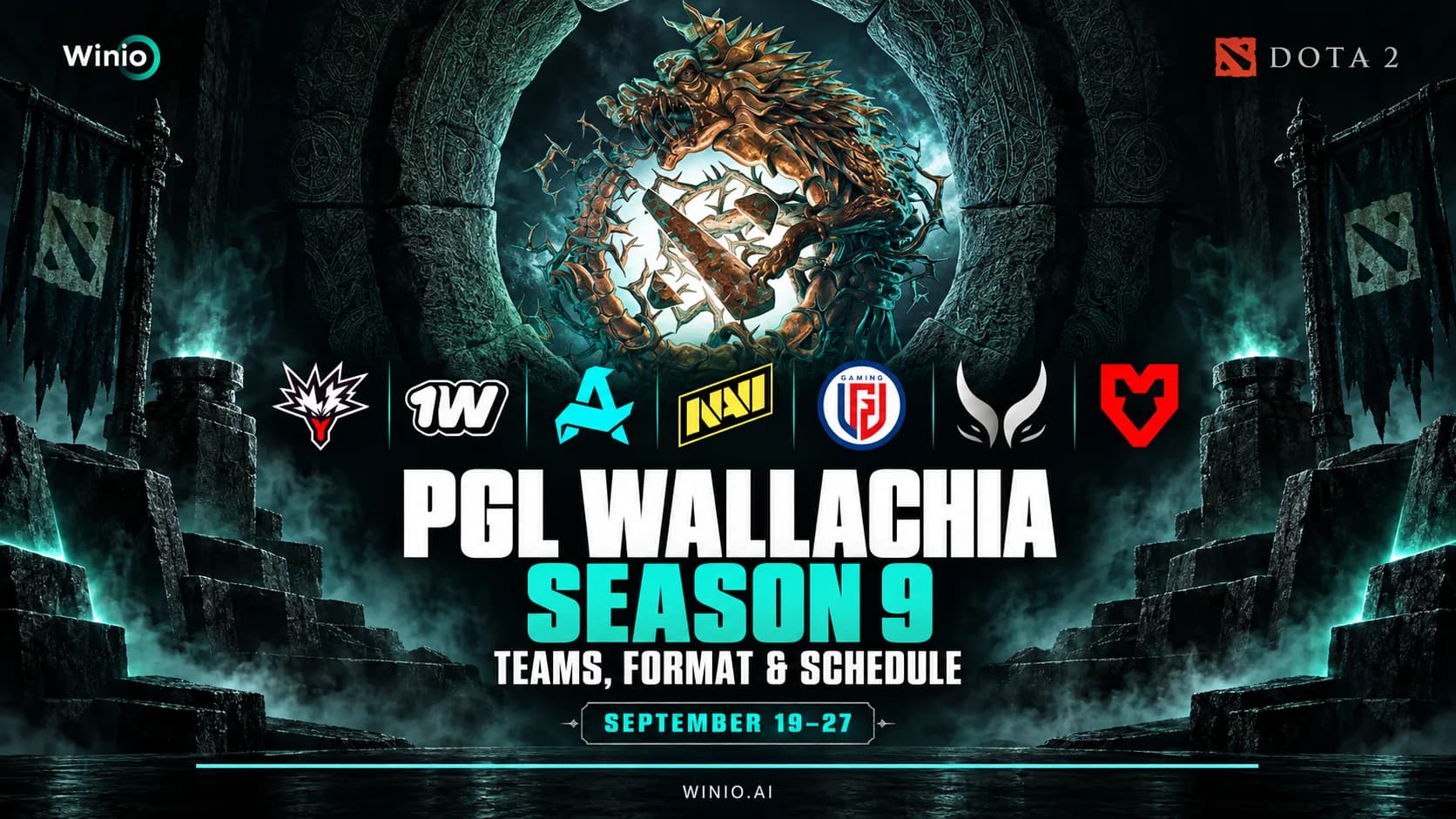
PGL Wallachia Season 9 preview: teams, format and schedule
PGL Wallachia Season 9 runs from September 19 to 27 with 16 Dota 2 teams and a $1 million prize pool. Full team list, format and opening schedule.
September 18, 202609:52 AM10 min


In Dota 2, the match does not truly begin when the creeps meet. It begins in the draft, where both teams start shaping the conditions that will define the game long before anyone buys starting items or walks toward the first rune. By the time the horn sounds, each team has already made decisions that influence lane matchups, tempo, damage profile, teamfight structure, scaling, Roshan access, and the kinds of fights they want to take.
This is why draft has such a large impact on match outcomes. It does not replace execution, and it does not guarantee victory, but it determines how difficult the game is supposed to be. A good draft gives a team a clear path to victory and room to recover from imperfect play. A weak draft often forces a team to be cleaner, faster, and more precise simply to reach the same position.
The easiest way to understand draft is not as a list of five heroes, but as a strategic blueprint. It answers the most important question in every Dota game: how is this team supposed to win?
PGL Wallachia Season 9
Today 10:00
 Team NemesisGamerLegion
PGL Wallachia Season 9
Today 13:00
 Natus Vincere1w Team
A Dota draft is a game plan expressed through heroes. Every pick contributes to how the team wants to lane, fight, scale, control space, and eventually close the game. Some lineups are designed to dominate lanes and convert early pressure into towers. Others are built around late-game scaling, high-ground defense, pickoffs, vision control, split push, five-man teamfight, aura timings, or Roshan control.
This is why looking at a hero in isolation is often misleading. A hero with a high win rate can be weak in the wrong draft, while a situational hero can be game-winning when picked into the right matchup. A carry may look greedy unless the other four heroes create enough space. A mid laner may look strong until the support duo has no way to secure runes, protect rotations, or stabilize the side lanes.
A draft only works when its parts support the same overall plan. The table below breaks down the main functions a lineup usually needs to cover, and why a draft can look strong on paper but still feel awkward in-game if one of those functions is missing.
| Draft element | Question it answers | Why it matters |
|---|---|---|
| Lane setup | Can the team survive or win the first 10 minutes? | Determines early gold, levels, tower pressure, and support freedom. |
| Damage profile | Can the lineup kill heroes and buildings reliably? | Prevents drafts from having control but no finishing power. |
| Initiation | Who starts fights on favorable terms? | Gives the team control over when and where engagements happen. |
| Scaling | What happens if the game goes late? | Defines whether time is an ally or a threat. |
| Objective control | Can the team take towers and Roshan? | Converts hero strength into map control and win conditions. |
| Defensive tools | Can the lineup recover from pressure? | Gives the draft a fallback plan when lanes or fights go poorly. |
Strong drafts usually have a clear win condition. That win condition may be direct: win lanes, take towers, control Roshan, and end before the enemy carry reaches critical mass. It may also be more patient: survive the early game, defend towers with wave clear, protect farming patterns, and take over once the cores hit key items. The important thing is not whether the plan is aggressive or defensive, but whether the heroes are working toward the same idea.
Weak drafts often fail because they lack that direction. They may have strong heroes, but no shared timing; damage, but no reliable initiation; scaling, but no way to survive early game; or teamfight, but no tower damage. In Dota, a collection of good heroes is not the same thing as a good draft. The best drafts create alignment between lanes, timings, objectives, and teamfight execution, which makes the game easier to play and gives players clearer decisions under pressure.
The first visible effect of draft appears in the lanes, because Dota’s laning stage is shaped before the first creep wave arrives. Last-hitting, trading, pulling, and spell usage all matter, but they happen inside a matchup that has already been created by the draft. A safe lane carry with a defensive support faces a very different game from a carry paired with a kill-threat support. An offlane duo with strong trading and disable can pressure the enemy carry from level one, while a mid hero with rune control can influence both side lanes before the ten-minute mark.
The early game usually comes down to which lanes are expected to win naturally, which heroes need protection before they can play, which supports are free to rotate first, and which team can pressure the first tower without overcommitting. These are not separate from draft; they are some of the first ways draft becomes visible in the game itself.
If one team drafts lanes that naturally push, trade well, and threaten kills, its supports may be free to rotate, its mid laner may secure power runes more easily, and its offlaner may take the enemy safe-lane tower early. That early freedom opens the map and reduces the enemy carry’s farming space. It also gives the stronger laning draft the first real opportunity to choose where the game goes next.
A weaker laning draft can still recover, but it often gives up initiative. Supports may be forced to babysit losing lanes instead of securing runes or stacking camps, while cores may need extra time to reach basic items. This is why draft analysis should pay close attention to lane architecture.
The first 10 minutes rarely decide everything, but they often decide who controls the first major timing window. A lineup that wins two lanes and draws the third usually has more freedom to choose the next move, while a lineup that loses lanes may spend the next phase of the game reacting. In a game as snowball-oriented as Dota, that initial freedom can be worth more than a small gold lead suggests.
Every draft has a clock, and understanding that clock is central to understanding the game. Some lineups become strongest early, while others are drafted to delay, absorb pressure, and eventually win through scaling. The mistake many viewers make is treating tempo as a general preference, when in reality it is often a draft requirement.
Early tempo drafts want to fight with level six supports, early Blink Daggers, Mekansm timings, Drum or Pipe timings, or the first BKBs. These drafts usually want to take towers, invade the enemy jungle, secure Roshan, and compress the map before the opponent’s late-game heroes come online. If they spend too long farming or fail to convert their first advantage into objectives, they are not simply staying even; they are allowing the enemy draft to move closer to its preferred version of the game.
Other drafts are more comfortable waiting. They may have strong wave clear, defensive supports, high-ground protection, and cores that scale better with items. These slower drafts are not necessarily weak early. Their goal is simply different: stretch the match until their heroes become harder to kill, harder to control, or harder to out-damage.
The differences between these draft types are easiest to see through the windows they are trying to hit. A tempo draft, a scaling draft, and a pickoff draft can all be strong, but they become strong under different conditions and lose value in different ways.
| Draft type | What it usually wants | What goes wrong if it misses the window |
|---|---|---|
| Early tempo draft | Win lanes, force towers, invade jungle, take early Roshan | The enemy survives into stronger items and better scaling. |
| Mid-game fight draft | Group around key ultimates or item timings | The lineup loses impact if fights are delayed or avoided. |
| Scaling draft | Protect cores, defend towers, extend the game | The map may collapse before the late-game advantage arrives. |
| Pickoff draft | Control vision and punish isolated heroes | The draft struggles if the enemy groups or has strong saves. |
| Teamfight draft | Force grouped engagements around objectives | The draft loses value if the enemy splits the map and avoids 5v5 fights. |
This is where many games are won or lost without a dramatic fight. A team may take the first tower two minutes too late, miss the first Roshan window, farm instead of forcing a fight when its lineup is strongest, or fight too early before its core items are ready. Those mistakes look like execution errors, but they often come from misunderstanding the draft’s timing.
Good teams know when their lineup is supposed to be strong and which area of the map must be controlled before that timing arrives. A draft with clear timings gives players a shared rhythm: when to smoke, when to group, when to split the map, and when to avoid contact. Bad drafts, or poorly understood drafts, create confusion because different heroes are asking for different versions of the game at the same time. One core may want to farm while the supports want to fight; the offlaner may be ready to go while the carry needs five more minutes; the mid hero may want to rotate while the side lanes have no kill setup. Tempo is not simply about playing fast. It is about playing at the speed your draft requires.
Draft also determines how teams control space. In Dota, objectives are not taken in isolation; towers, Roshan, tormentors, runes, jungle camps, outposts, and high ground all depend on which team can safely enter an area and threaten a fight there. A draft with strong teamfight and vision control can make parts of the map feel impossible to enter. A draft with pickoff heroes can punish isolated movement, while a draft with summons or physical damage can force towers and Roshan before the enemy is ready.
This is why teamfight is about more than five heroes pressing spells at the same time. A strong teamfight draft gives a team permission to stand in important areas and force the opponent to respond. If the enemy cannot walk into the river without risking a huge initiation, Roshan becomes easier to control. If the enemy cannot defend towers without grouping tightly, area spells become more valuable.
Good drafts do not merely win fights; they choose better fights. A lineup with reliable initiation can decide when the fight starts, while a lineup with counter-initiation can punish the enemy for overcommitting. Saves can reset engagements, long-range poke can force the opponent to engage from low health, and strong objective damage can make the enemy respond before they are ready. All of these tools shape where the game is played and which team feels comfortable occupying contested areas.
Roshan is one of the clearest examples. Some drafts can take Roshan quickly but cannot contest it well, while others can contest the pit but cannot start it themselves. Some lineups need vision and positioning before entering the area. Others can walk in confidently because their heroes are naturally strong in tight spaces. The draft determines not only who wants Roshan, but who can realistically play around it.
Map control follows the same logic. If a team has catch, wave clear, and vision tools, it can play aggressively into the enemy jungle; if it lacks those things, it may be forced to stay on its own side of the map. The difference between those two situations is not just strategic preference. It is often built into the draft before either team places its first ward.
A strong draft is not always the flashiest draft. It is usually the one with more ways to win, especially when the game does not go according to plan. Flexibility matters because Dota games are messy: a team may lose a lane it expected to win, a support may die during a rune fight, a core may miss an item timing, or the enemy may dodge the first smoke. A strong draft can absorb these setbacks because it has backup plans. It can fight early or scale, take Roshan or split the map, initiate or counter-initiate, and win through multiple cores rather than depending on only one.
Fragile drafts are different. They may look powerful if everything goes right, but they collapse when the first plan fails. A draft that must crush lanes has a problem if the lanes are only even. A draft that must win the first Roshan has a problem if the enemy delays it. A draft built around one major teamfight combo has a problem if the opponent has saves or disengage. A draft that relies on one core has a problem if that core is countered.
This is where counters become more than simple hero matchups. A counterpick does not only make one opponent uncomfortable; it can remove an entire strategic option. A hero that clears illusions can weaken a whole illusion-based draft. A hero with strong dispel or save can reduce the value of a pickoff lineup, while a hero with instant disable can prevent a mobile core from playing aggressively. A hero with superior wave clear can stop a push draft from ending the game on schedule.
Execution difficulty is just as important. Some drafts are powerful but demanding because they require precise spell layering, disciplined cooldown management, clean map movement, and coordinated smoke timings. Other drafts are easier to execute because their strengths are more direct. They win lanes, group with auras, force towers, and control Roshan without needing every spell interaction to be perfect.
At the highest level, teams can win with complex drafts because their communication and discipline are strong enough. But complexity still has a cost, and the harder a draft is to execute, the smaller the margin for error becomes. This is one of the most important ideas in draft analysis: a draft can be theoretically strong and practically difficult. The question is not only whether a lineup can win, but how many things must go right for it to win.
Draft affects win probability because it changes the starting conditions of the match. A team with stronger lanes, clearer timings, better objective control, reliable initiation, and multiple win conditions usually begins the game with a wider margin for error. That does not mean the team is guaranteed to win. It means the team can often make a small mistake and still have another route back into the game, while a weaker or more fragile draft may need cleaner execution, better reads, or mistakes from the opponent.
This is why draft-based win probability should not be treated as a verdict. It is not saying the game is over before it begins; it is estimating how favorable each team’s path to victory looks before execution begins. A useful win-probability model would not simply ask which five heroes have higher average win rates, because draft strength depends on the relationships between heroes and the context around them.
| Signal | What it helps measure |
|---|---|
| Lane matchups | Which team is likely to control the first 10 minutes. |
| Hero synergy | Whether the lineup’s spells, timings, and damage types work together. |
| Counters | Whether one draft blocks the other’s main win condition. |
| Scaling profile | Which team benefits more as the game extends. |
| Objective control | Which team can realistically take towers and Roshan. |
| Initiation and saves | Which team has more reliable fight execution. |
| Player comfort | Whether the heroes match the players’ proven strengths. |
| Patch context | Whether the heroes and strategies are strong in the current environment. |
Winio can separate those signals into two useful views: pre-draft and post-draft predictions. The pre-draft view estimates team strength before hero selection is complete, while the post-draft view shows how the actual picks changed the expected balance of the match. A 60% edge on a post-draft prediction, for example, does not mean the match is solved before the first rune. It means the model sees one team as having a more stable route to victory based on how the draft is likely to play out.
That difference matters. One lineup may be favored because it has easier lanes, earlier tower pressure, safer Roshan access, and more reliable initiation. Another may be rated lower because it depends on surviving the first 20 minutes, landing a specific mid-game fight, or protecting one core until a late item timing. The probability is useful because it points the reader toward the underlying question: what does this draft make easy, and what does it make difficult?
Dota is too complex for draft to be destiny, but too structured for draft to be ignored. The heroes chosen in the first phase and the answers revealed in the last phase shape what both teams are allowed to do, which mistakes are punishable, and which objectives are realistic. In that sense, draft affects win probability by changing the cost of execution. A good draft lowers that cost, while a bad draft raises it and forces the players to compensate through sharper decisions in-game.
Draft is the first battle of every Dota 2 match because it defines the terms of the rest of the game. It decides whether a team wants to attack early or defend late, how the lanes should play out, when the lineup is strongest, and which objectives are realistic. It also influences who controls the map, who gets to start fights, who can contest Roshan, and who has the better fallback plan if the game becomes messy.
The best drafts do not guarantee victory. They do something more subtle and more important: they make victory easier to reach. They give players clearer decisions, stronger timings, better fights, and more room to recover from mistakes. Weak drafts can still win, but they usually ask more from the players because they require sharper execution, better coordination, and more successful risk-taking.

Team Nemesis
GamerLegion
Natus Vincere
1w Team

Pipsqueak+4

Team Cobra

Nemiga Gaming
Team Spirit Academy

LGD Gaming

Aurora Gaming
Prediction: Aurora Gaming wins
MOUZ

Hokori
Team Nemesis
GamerLegion
Natus Vincere
1w Team
Pipsqueak+4
Team Cobra
Nemiga Gaming
Team Spirit Academy
LGD Gaming
Aurora Gaming
Prediction: Aurora Gaming wins
MOUZ
Hokori
Team Nemesis
GamerLegion
Natus Vincere
1w Team
Pipsqueak+4
Team Cobra
Nemiga Gaming
Team Spirit Academy
LGD Gaming
Aurora Gaming
Prediction: Aurora Gaming wins
MOUZ
Hokori