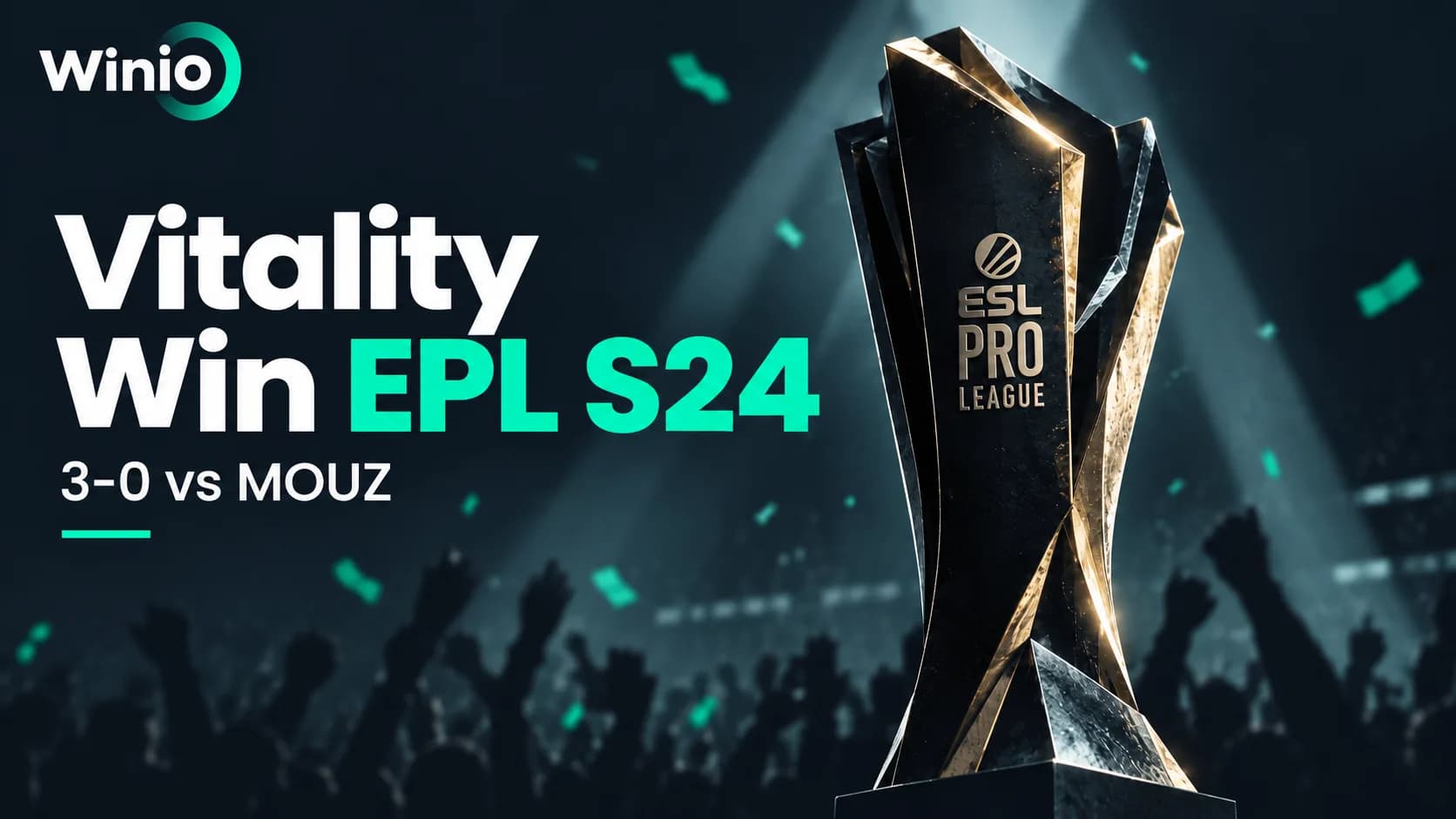
Vitality Crush MOUZ in 3-0 ESL Pro League Season 24 Final
Vitality swept MOUZ 3-0 in Katowice to win EPL S24, taking Cache, Inferno and Dust2.
October 11, 202606:53 PM5 min


BLAST will bring a top-level Counter-Strike event to Mongolia in 2027. BLAST Open Ulaanbaatar is scheduled for May 10–23, with 16 teams competing for a $1.25 million prize pool through a combination of Valve Regional Standings invitations and regional qualifiers.
The announcement matters beyond adding another tournament to the calendar. Ulaanbaatar has never been a regular destination for the international Counter-Strike circuit, which has traditionally concentrated its largest events in Europe, North America and a limited number of established Asian host cities.
Mongolia’s selection is closely connected to the country’s rise inside competitive Counter-Strike. The MongolZ became the first East Asian team to reach a Major final in 2025, later won the CS2 event at the 2025 Esports World Cup and reached first place in both the HLTV and Valve rankings. Their recent rebuild has pushed them down the standings, but the broader impact of that run remains: Mongolia has already demonstrated that it can produce a world-leading team rather than only occasional regional qualifiers.
A home event therefore has more substance than a tournament organizer simply entering a new market. The audience already has a strong domestic reference point, and an Ulaanbaatar arena does not need to create interest in elite Counter-Strike from zero. The MongolZ gave local supporters a reason to follow the full international circuit, while their success made Mongolia visible to audiences outside Asia.
NODWIN Clutch Series #13
Tomorrow 11:00
 GenOne6666
Prediction: GenOne
ESL Challenger League Season 52: NA - Cup #3
Today 04:00
 Chicken CoopZomblers
Prediction: Chicken Coop
The timing also fits BLAST’s wider direction. The organizer has described its revised 2027 circuit through the idea of more LAN competition, greater financial investment and a broader selection of host locations. Its Opens will be full 16-team LAN events, while BLAST plans to invest $10 million across teams and the wider ecosystem during the season.
Ulaanbaatar also continues a wider shift toward Asian tournament destinations. BLAST has already held arena events in Singapore and Hong Kong and will return to Singapore for another Open in March 2027. Other organizers have similarly expanded into cities such as Chengdu and Shanghai, indicating that Asia is becoming part of the regular tier-one calendar rather than an occasional alternative to Europe.
Winio read: BLAST Open Ulaanbaatar is best understood as the competitive scene reacting to Mongolia’s proven Counter-Strike audience. The MongolZ created international credibility, but the long-term value of the event is that it can separate the country’s esports potential from the form of one roster. A successful arena tournament would show that Mongolia can remain relevant to tier-one Counter-Strike even when its leading team is rebuilding.
There are still practical questions. The final venue has not been confirmed in the available announcement, and attracting international audiences to a less familiar destination may be harder than selling an event in an established European hub. Teams will also face another long-distance stop in an increasingly dense global calendar.
BLAST’s 2027 financial model is designed partly to reduce that friction. The circuit introduces event-based acceptance fees and additional investment in travel, accommodation and player conditions, rather than relying only on prize money. Those incentives may become especially important when organizers ask teams to travel beyond the circuit’s traditional locations.
The tournament will ultimately be judged by more than attendance for a possible MongolZ appearance. Its real test is whether Ulaanbaatar can support strong crowds across the bracket, deliver the infrastructure expected from a tier-one LAN and establish itself as a destination worth revisiting.


Chicken Coop
Zomblers
Prediction: Chicken Coop wins

Overtake Sector

Iowa Stormboar

PCIFIC

STATE

Liquid

BBL
Prediction: Liquid wins

100 Thieves

JiJieHao
Prediction: JiJieHao wins

Team Aunkere

OVERDRIVE
GenOne
6666
Prediction: GenOne wins
9z

Aurora
Chicken Coop
Zomblers
Prediction: Chicken Coop wins
Overtake Sector
Iowa Stormboar
PCIFIC
STATE
Liquid
BBL
Prediction: Liquid wins
100 Thieves
JiJieHao
Prediction: JiJieHao wins
Team Aunkere
OVERDRIVE
GenOne
6666
Prediction: GenOne wins
9z
Aurora
Chicken Coop
Zomblers
Prediction: Chicken Coop wins
Overtake Sector
Iowa Stormboar
PCIFIC
STATE
Liquid
BBL
Prediction: Liquid wins
100 Thieves
JiJieHao
Prediction: JiJieHao wins
Team Aunkere
OVERDRIVE
GenOne
6666
Prediction: GenOne wins
9z
Aurora