PGL Wallachia Season 9 Results: Team Yandex Win, NAVI Surprise
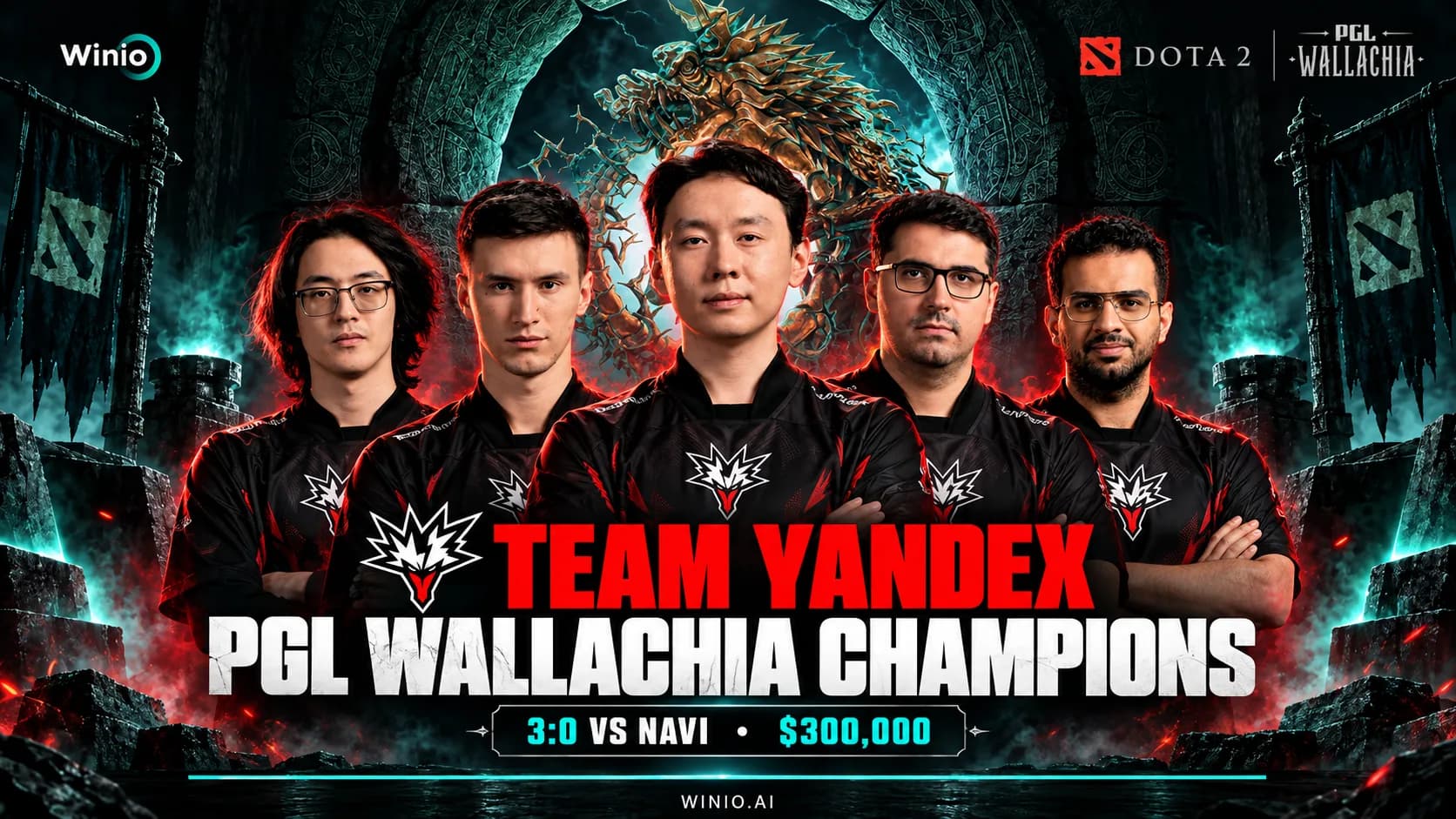
Team Yandex swept NAVI 3:0 to win PGL Wallachia Season 9. We analyze the champions, NAVI’s final run, surprises and disappointments.
September 28, 202607:28 AM8 min


BLAST Slam VII enters its early stage as more than just another stop on the Dota 2 calendar. With a strong field of participants, a volatile opening format and a playoff race shaped by every early result, the tournament is already creating useful signals about team strength, form and adaptation.
At this stage, any prediction should be treated as a scenario rather than a final conclusion. Early wins and losses can shift the evaluation, but they do not fully define a team’s tournament ceiling. The more important question is whether a team’s performance looks sustainable: stable drafts, strong early game, clean map control, flexible hero pools and the ability to adapt under pressure.
This article covers what the expectations were before the start, which early results may already affect the evaluation of teams, and which key factors are likely to matter most before the playoffs.
The BLAST Slam VII format makes the opening stage especially important because it gives teams very little room to hide weaknesses. The group stage features 12 teams in a best-of-one round-robin, where every match can affect seeding, playoff access and the difficulty of the next bracket path.
This is important because Bo1 Dota is highly volatile. A single draft mismatch, poor lane or failed mid-game call can change the outcome of the entire match. Whereas the stronger team would usually have more time to adapt and reduce the impact of a single upset in a Bo3. For early tournament analysis, that means results should not be treated as final proof of team strength, but they do create useful signals about form, preparation and adaptability.
The seeding structure also rewards stable performance across the group stage. In a Bo1 round-robin, one mistake can directly affect a team’s bracket path. The top two teams move directly into the Upper Bracket Semifinals, while 3rd and 4th place start from the Upper Bracket Quarterfinals. Teams finishing 5th–10th still have a path through the Last Chance Qualifier, but that route adds pressure and reduces the margin for error.
Because of this, the early stage affects more than the standings. It shapes the entire tournament context. A favorite that drops avoidable games may still remain dangerous, but its route becomes harder. A mid-tier team that starts well can warrant a reevaluation if its wins are supported by stable drafts, clean early games and repeatable map control.
The key is to separate noise from structure. One upset can happen in any format, but a repeated pattern across the group stage is much more meaningful. That is why the early phase of BLAST Slam VII should be read as a test of team’s sustainability against ever-varying opponents.
BLAST Slam VII brings together a field where the difference between the top tier and the chasing pack is narrow enough to make the early stage meaningful. Several teams entered the tournament with recent finals runs, strong roster identity and clear playoff expectations, while others arrived with more volatile profiles: dangerous on the right draft, but harder to trust across a full group stage.
This tiering is not a prediction of the final standings. It is a pre-playoff read based on team strength, recent form, roster context and the performance profile each team brings into BLAST Slam VII.
| Tier | Teams | Why they fit |
|---|---|---|
| Favorites | PARIVISION, Aurora, BetBoom Team | Strong recent results, high individual level, proven structure and realistic deep-run potential |
| Strong contenders | Team Falcons, Team Spirit, Tundra Esports, Team Yandex, Team Liquid | High ceiling and strong experience, but with more recent inconsistency or specific questions to answer |
| Unstable but dangerous | Xtreme Gaming, LGD Gaming, OG | Enough individual quality or draft threat to upset stronger teams, but less reliable across the full group stage |
| Underdogs | GLYPH | Clear outsider by Tier 1 track record, but Bo1 format gives them room to create problems |
PARIVISION arrive with the strongest recent result in the field: they won DreamLeague Season 29, beating Aurora 3–2 in the grand final. Their playoff path also included wins over Team Liquid and Team Falcons, which makes their favorite status easy to justify through recent pro play.
Aurora have been one of the most consistent finalists of the recent cycle. They finished second at DreamLeague Season 29 and also second at PGL Wallachia Season 8, where they lost the final to BetBoom Team. That gives them a strong form profile, but also creates a clear question: can they turn repeated deep runs into a title?
BetBoom Team enter BLAST Slam VII with a recent Tier 1 title after winning PGL Wallachia Season 8. They beat Aurora 3–0 in the final. The main counterpoint is that their DreamLeague Season 29 run ended earlier, with Team Spirit beating them 2–0 in the upper bracket quarterfinals.
Team Falcons remain one of the safest teams to track because their roster is stable and highly experienced: skiter, Malr1ne, ATF, Cr1t-, Sneyking and coach Aui_2000 are listed for BLAST Slam VII. However, their recent results were competitive rather than dominant: third place at PGL Wallachia Season 8 and a DreamLeague Season 29 run that ended after losses to PARIVISION and Aurora.
Tundra Esports are interesting because their results have been uneven. They came into the recent cycle with a strong profile, but at PGL Wallachia Season 8 they failed to make playoffs after playing without Pure, using V-TUNE as a stand-in while Pure focused on visa matters. For BLAST Slam VII, the official roster again lists Pure, bzm, 33, Ari, and Whitemon, with MoonMeander as coach.
Team Yandex are another high-ceiling team with mixed recent context. Yandex and Tundra were the ESL One Birmingham 2026 grand finalists, but they lost to Tundra Esports in both UB Final and Grand Final, so this team matchup requires close attention. Yandex later exited PGL Wallachia Season 8 in the group stage while playing with DM as a stand-in for Noticed. For BLAST Slam VII, the listed roster includes watson, CHIRA_JUNIOR, DM, Saksa, Malady and coach Accell.
Team Liquid have direct BLAST relevance because they won BLAST Slam VI: Malta, beating Natus Vincere 3-1 in the final. Their current BLAST Slam VII roster includes m1CKe, Nisha, Ace, Boxi, tOfu and coach Jabbz, which makes them one of the most experienced teams in the field, even if their DreamLeague Season 29 run was far from convincing.
LGD Gaming / ex-HEROIC are one of the most curious storyline teams. BLAST’s roster article originally lists the team as ex-HEROIC, while later reporting says the roster is competing under the LGD Gaming tag at BLAST Slam VII. The lineup is Yuma, TaiLung, Wisper, Thiolicor, KJ and coach kaffs, giving the team continuity from the ex-HEROIC core but a new organizational context. How this change will affect their play we will see in the coming days.
Team Yandex are the most important upward adjustment of the early stage. Their 5–1 start includes wins over Team Spirit, Team Liquid, PARIVISION, OG and Xtreme Gaming, which makes the run difficult to dismiss as schedule-driven. If their early-game structure remains stable, Yandex should be treated as a real contender for a strong playoff seed.
Team Falcons also improved their tournament outlook. The loss to GLYPH was a reminder of Bo1 volatility, but their response was more relevant: they recovered with wins over OG, LGD Gaming, Xtreme Gaming and Aurora. That supports the view that Falcons’ experience and structure remain reliable across a larger sample.
LGD Gaming are one of the biggest surprises so far. Wins over BetBoom Team, GLYPH, Aurora and Team Spirit suggest that the ex-HEROIC core is more than a storyline. Their early record does not make them a favorite, but it should move them closer to the contender conversation.
PARIVISION remain in a strong position. Their wins over OG, Xtreme Gaming, Tundra Esports and BetBoom Team keep them in the favorite range, even after the loss to Yandex. The key question is whether they can hold the same level against the other top-seeded teams.
Team Liquid have built a solid 4–2 start. That does not automatically make them a title favorite, but it supports their profile as an experienced team with a realistic playoff path. Their next matches should show whether this is a controlled run or simply a good start in a volatile group.
Aurora are the most surprising early concern. They entered the tournament with strong recent finals-level form, but a 2–4 start puts pressure on their playoff route. The issue is not overall talent; it is whether their current drafts and early-game plans are giving them enough control in Bo1.
Team Spirit are also below expectation. A 2–4 start does not remove their playoff threat, but it does reduce their margin for error. For Spirit, the next step is proving that their core strength can still translate into stable group-stage wins.
Tundra Esports remain difficult to evaluate. Their ceiling is high, but the 2–4 start reinforces existing concerns about consistency. In this format, that matters because unstable teams can quickly lose control of their bracket path.
Xtreme Gaming have the clearest negative signal. A 1–5 record is hard to separate from team evaluation, even with a veteran-heavy roster. Their individual experience remains important, but the early stage has not shown enough structure.
OG are also under pressure at 1–4. They have enough individual quality to create upset wins, but their current position makes them hard to project as a reliable playoff threat.
The early stage has already changed the pre-playoff picture. Yandex, Falcons and LGD have improved their model evaluation, while Aurora, Spirit, Tundra and Xtreme have created more questions than expected. PARIVISION and Liquid remain in stable positions, but the next matches will decide whether they are simply safe playoff teams or serious upper-bracket threats.
The next BLAST Slam VII matches should be read through one main question: are early results stronger than pre-tournament expectations, or will longer-term team strength reassert itself before the playoffs?
The pre-playoff picture is best read through two layers: the actual group-stage results and the mathematical modeling of underlying team strength. Some teams are already moving in line with expectations; others have created a gap between current form and projected level. Those gaps are the most important storylines to track before the bracket is set.
| Team | Early tournament signal | Winio model read | What to watch next |
|---|---|---|---|
| Team Yandex | Strong upward signal | Not consistently favored against established teams | Can they keep beating stronger-name opponents? |
| LGD Gaming | Positive surprise | Still treated cautiously | Is the early run sustainable or matchup-driven? |
| Aurora | Weak start | Still respected by the model | Do they recover, or is the early slump structural? |
| Tundra Esports | Inconsistent start | Still favored in some key matches | Does roster strength translate into results now? |
| BetBoom Team | Below expectations | Model still trusts them in several matches | Can they stabilize before playoffs? |
| PARIVISION | Strong start | Model and early results both support them | Can they confirm favorite status against direct rivals? |
Three upcoming matches stand out because they directly test the gap between early form and model expectation.
This is one of the clearest examples. Yandex’s early results point upward, but the model still gives Tundra a strong chance. If Yandex win, their contender case becomes much harder to dismiss. If Tundra win, it supports the idea that their poor start was partly noise.
This upcoming match has a similar dynamic. Yandex have the better early signal, while BetBoom still carry stronger long-term respect in the model. This match is useful for deciding whether Yandex should move closer to the top tier or whether BetBoom are beginning to recover.
This match is important for Aurora’s evaluation. Their early position is weaker than expected, but the model still respects their baseline strength. If Aurora lose again to a top team, the pre-tournament finalist profile becomes harder to defend.
BLAST Slam VII is already moving from pre-tournament expectations to real group-stage evidence. Yandex and Falcons have improved their outlook through early results, while PARIVISION remain one of the most stable favorite profiles in the field with both early results and models supporting their strong position.
The pressure is now on teams that entered with stronger expectations but have not fully matched them yet. Aurora, Spirit, Tundra, BetBoom and Xtreme still have enough quality to recover, but their next matches need to show that the early problems were temporary rather than structural
That makes the final stretch before the playoffs especially important. The key question is not only who wins the next maps, but which teams can turn early form into sustainable tournament strength — and which teams are still relying more on reputation than current performance.


PARIVISION

Aurora Gaming
PARIVISION
Aurora Gaming
PARIVISION
Aurora Gaming