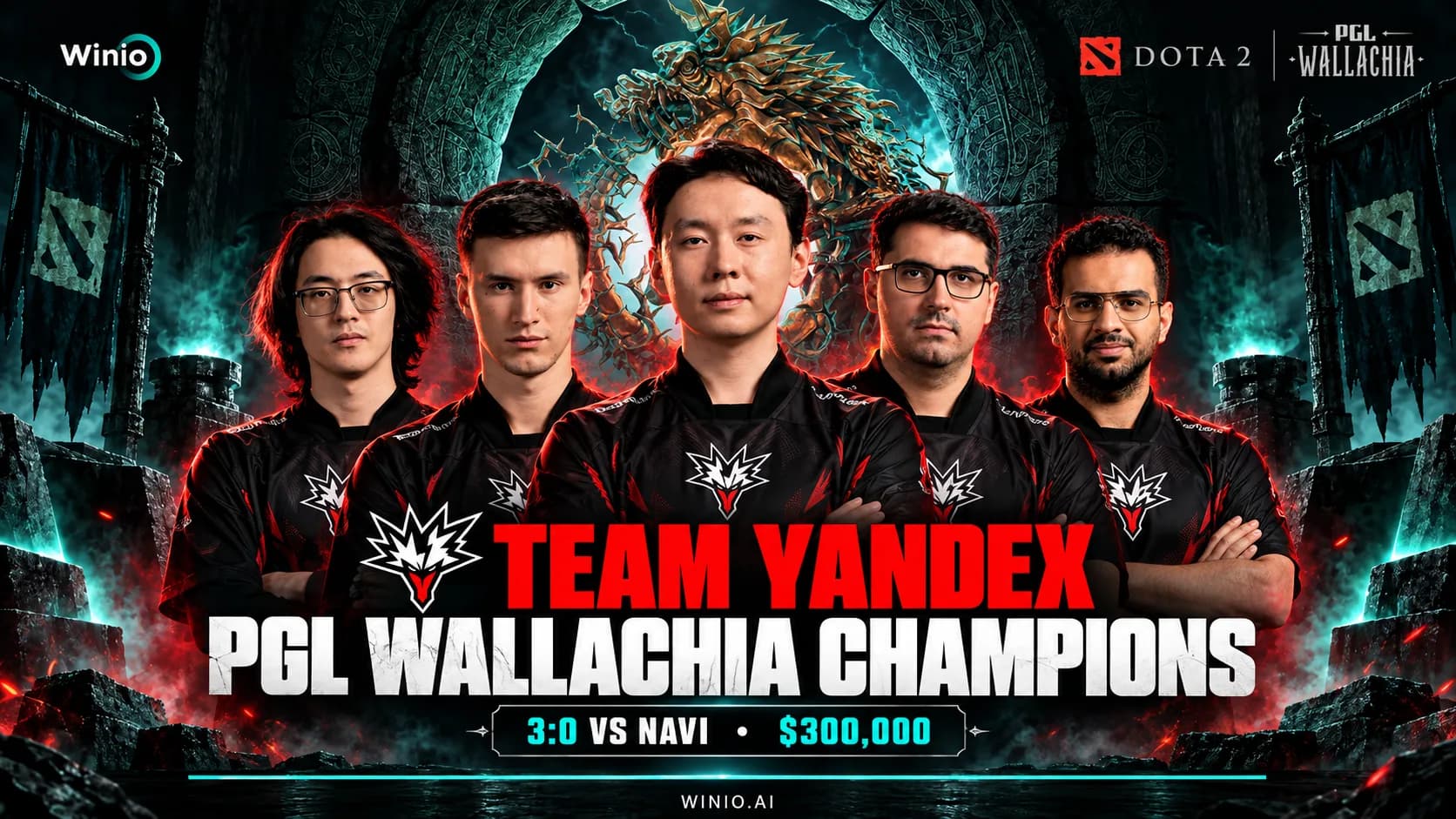
PGL Wallachia Season 9 Results: Team Yandex Win, NAVI Surprise
Team Yandex swept NAVI 3:0 to win PGL Wallachia Season 9. We analyze the champions, NAVI’s final run, surprises and disappointments.
September 28, 202607:28 AM8 min


Mirana is one of Dota 2’s most flexible heroes. She can roam, scout, set up kills, escape dangerous fights, and help her entire team move around the map with invisibility. She is best known for Sacred Arrow, but reducing Mirana to one skillshot misses what makes the hero important.
In the current patch, Mirana is mostly played as a support, especially position 4, with some games as hard support and occasional core appearances. Her value comes from creating pressure without always needing farm. A good Mirana can make enemies afraid to show in vision, punish careless movement, turn setup stuns into kills, and help her team control the pace of the mid game.
Mirana is a ranged agility hero who combines mobility, long-range control, magic damage, scouting, and team utility. She is strongest when she can play around vision and distance. She does not want to stand still and trade like a tank. She wants to move, threaten arrows, follow up on disables, and appear in fights from unexpected angles.
BLAST SLAM VIII
Tomorrow 19:00
 Aurora GamingGamerLegion
Prediction: Aurora Gaming
BLAST SLAM VIII
Tomorrow 13:00
 PARIVISIONLevel Up
Her general strengths are:
| Strength | Why it matters |
|---|---|
| Long-range stun | Sacred Arrow can punish enemies from fog or after allied setup. |
| Mobility | Leap lets Mirana chase, escape, reposition, and play aggressively. |
| Lane pressure | Starstorm and Celestial Quiver give her damage in trades and skirmishes. |
| Team invisibility | Moonlight Shadow helps with ganks, disengages, and map movement. |
| Draft flexibility | She can be played in multiple roles, making drafts harder to read. |
Her weaknesses are also clear. Mirana can feel weak if her arrows miss, if she has no setup, or if the enemy team buys detection and groups early. She is mobile, but not tanky. If she is caught by reliable disables, silence, or instant burst, Leap may not save her.
Mirana is strongest when the game gives her space to move and threaten. She is weaker when enemies force direct fights, block arrows with units, or control the tempo before she can.
Mirana’s abilities are easy to understand individually, but her real strength comes from how they combine with vision, positioning, and allied setup.
| Ability | What it does | Why it matters |
|---|---|---|
| Starstorm | Damages nearby enemies, with a second hit on the closest enemy near Mirana. | Gives Mirana burst damage, lane pressure, and wave clear. |
| Sacred Arrow | Fires a long-range arrow that damages and stuns the first enemy hit, with longer stun based on travel distance. | Creates pickoff threat and rewards good setup or prediction. |
| Leap | Mirana jumps forward and gains movement speed and attack speed for a short duration. | Lets her reposition, escape, chase, or play aggressively. |
| Celestial Quiver | Mirana’s innate attack modifier that empowers attacks with bonus magic damage using charges. | Adds extra damage to trades and scales with hero level. |
| Moonlight Shadow | Turns allied heroes invisible after a fade delay and gives movement speed. | Enables ganks, saves, disengages, and team movement. |
Starstorm is Mirana’s most reliable damage spell. It is useful in lane because it lets her punish enemies who stand too close, and it becomes important in the mid game when Mirana needs to help finish kills after an arrow or allied stun. The second Starstorm hit makes positioning important. If Mirana is close enough to the right target, her burst becomes much stronger.
Sacred Arrow is the spell that defines the hero. Even when Mirana does not hit every arrow, enemies must respect the possibility. They may avoid certain paths, move differently around trees, or hesitate before farming dangerous waves. Arrow is strongest when paired with reliable setup, but good Mirana players can also use fog, vision, and prediction to make it dangerous on its own.
Leap gives Mirana freedom. She can trade more aggressively than many supports because she has a built-in escape. It also gives attack speed and movement speed, which makes her better at chasing and skirmishing after a fight begins. However, Leap should not be wasted. If Mirana uses all charges carelessly, she becomes much easier to punish.
Celestial Quiver gives Mirana extra magic damage on attacks. It uses charges and becomes stronger as Mirana levels. This makes her right-click harassment more meaningful, especially in lane and in longer skirmishes. With Aghanim’s Shard, Leap can give temporary Celestial Quiver charges, which improves her damage during active fights.
Moonlight Shadow is one of Mirana’s most important spells in organized Dota. It can start a gank, hide a retreat, reset a fight, or force the enemy team to spend gold and attention on detection. In pro matches, Moonlight Shadow often changes how teams move around the map because a missing Mirana can mean several heroes are approaching invisibly.
Mirana is most commonly played as a support. She can appear in different roles, but her support versions are the most reliable because she does not need heavy farm to provide value.
| Role | How it works |
|---|---|
| Position 4 | Roams, sets up kills, contests runes, scouts, and plays around Arrow pressure. Best role for Mirana currently. |
| Position 5 | Plays more defensively, helps lane, buys utility, and uses Moonlight Shadow for saves or team movement. |
| Offlane | Situational. Uses mobility and range to pressure, but needs the right matchup. |
| Mid | Rare and more dependent on farm, levels, and player comfort. Considered off-meta. |
| Carry | Possible in some games, but generally less common than support Mirana. Considered off-meta. |
As a position 4, Mirana wants to be active. She can play with an offlaner who has a stun, rotate toward mid, secure runes, and threaten arrows from fog. This is usually her most natural role because she can move around the map without abandoning the team’s main farm priority.
As a position 5, Mirana has to be more careful. She still offers damage and control, but she also needs to protect her carry, manage lane resources, and buy support items. Position 5 Mirana is strongest when the lane has enough control to make Arrow realistic or enough pressure to stop enemies from freely diving her carry.
Core Mirana can work, but it is much more draft-dependent. She needs items and levels to justify taking farm, and she can struggle if the game requires a more reliable frontliner or harder scaling core.
Mirana’s items depend heavily on her role. She can build utility, magical burst, catch, or right-click scaling, but most support Mirana games should start with the same idea: solve the game’s problem first.
| Item type | Common options | Why they help |
|---|---|---|
| Early items | Magic Wand, Boots, Wind Lace, Bracer or Wraith Band | Help with trading, movement, and survival. |
| Mana and support items | Arcane Boots, Urn of Shadows, Spirit Vessel | Let Mirana keep casting and contribute to early fights. |
| Catch and setup | Eul’s Scepter, Rod of Atos, Gleipnir | Make it easier to land Arrow or control mobile heroes. |
| Team utility | Mekansm, Guardian Greaves, Force Staff, Glimmer Cape, Pipe, Lotus Orb | Help the team survive and fight around objectives. |
| Damage and scaling | Aghanim’s Scepter, Aghanim’s Shard, Maelstrom, Mjollnir, Manta Style | Increase damage when Mirana has space or a more farmed role. |
For support Mirana, Magic Wand and Boots are practical early purchases because she needs movement and survivability. Arcane Boots are common because Mirana casts often and can run into mana problems. From there, the build depends on the game.
If the team needs healing and dispel, Guardian Greaves can be valuable. If Mirana needs to set up her own arrows, Eul’s Scepter or Rod of Atos can help. If the enemy team relies on healing, Spirit Vessel can be strong. If the game goes late and Mirana has farm, Aghanim’s Scepter and Shard can improve her damage and fight impact.
The biggest mistake is building as if every Mirana game is the same. Some games need utility. Some games need catch. Some games let Mirana scale. A good item build should support the draft, not just copy a fixed list.
Mirana’s lane is about pressure, movement, and threat. She can harass with attacks, use Celestial Quiver damage in trades, and punish enemies who stand too close with Starstorm. However, her lane becomes much stronger when her partner has reliable control.
If Mirana lanes with a hero who can stun, root, or slow, Sacred Arrow becomes much easier to land. This forces enemies to respect every small positioning mistake. A simple stun into Arrow can turn a normal trade into a kill.
Mirana should use trees and fog carefully. Standing in obvious positions makes Arrow easy to dodge. Moving through unexpected angles makes it much harder for enemies to react. Even when Arrow is not used, the threat can change how enemies approach the wave.
Leap gives Mirana room to play aggressively, but it should not make her reckless. If she jumps forward without vision or uses all her charges early, she can still be punished. Mirana is mobile, not unkillable.
In lane, her basic goals are:
The mid game is where Mirana usually matters most. By this stage, lanes are breaking down, supports are moving, and teams are looking for pickoffs around towers, runes, and jungle entrances. Mirana fits this phase well because she can move quickly, scout dangerous areas, and turn one disable into a kill.
Her best mid-game plays often start before the fight is visible. She can smoke with teammates, use Moonlight Shadow to hide movement, or sit near a core who has reliable setup. If the first stun lands, Sacred Arrow can extend the disable long enough for the team to finish the target.
Moonlight Shadow is especially important in this stage. It can help a team invade, escape, or force the enemy to waste time placing detection. Against teams that are behind on vision, Moonlight Shadow can make the map feel unsafe.
In fights, Mirana usually should not be the first hero to die. She wants to stay at the edge of the fight, cast Starstorm when safe, use Arrow on controlled or predictable targets, and Leap into better positions. If she survives long enough to cast multiple spells, her value increases a lot.
Mirana’s skill build depends on role and lane, but support builds often take early Sacred Arrow and Leap, then prioritize Starstorm for damage and wave clear. Moonlight Shadow is usually taken at level 6 because the team-wide invisibility is too important to delay in most games.
A common support direction is:
Her talents should be read through the game rather than selected automatically.
| Level | Talent options | General idea |
|---|---|---|
| 10 | +150 Leap Distance or -2s Starstorm Cooldown | Choose mobility or more frequent damage. |
| 15 | +100 Leap Attack Speed or Moonlight Shadow gives +20% Evasion | Choose damage tempo or team survivability. |
| 20 | +50 Celestial Quiver Damage or +200 Starstorm Damage | Choose attack-based scaling or stronger spell burst. |
| 25 | -30s Moonlight Shadow Cooldown or +2 Multishot Sacred Arrows | Choose more frequent team invisibility or stronger late-game Arrow output. |
The Starstorm cooldown talent is useful when Mirana is playing around spell damage and repeated skirmishes. Leap distance helps if survival and positioning are the main problems. The Moonlight Shadow evasion talent can be strong when the enemy team relies on physical damage, while Leap attack speed supports more aggressive right-clicking.
At level 20 and 25, Mirana’s choices depend on whether she is mostly a utility support, magic burst hero, or scaling damage dealer. Support Mirana often values team impact, while farmed Mirana can justify more damage-focused talents.
Mirana works best with heroes who can set up Sacred Arrow. She can hit raw arrows, but reliable setup makes her much more consistent.
| Hero | Why the pairing works |
|---|---|
| Bane | Nightmare can set up long-range Sacred Arrow very reliably. |
| Shadow Demon | Disruption gives Mirana time to line up Arrow. |
| Mars | Spear and Arena control enemy movement, making Arrow follow-up easier. |
| Dragon Knight | Dragon Tail gives simple, reliable setup for Arrow. |
| Kunkka | X Marks the Spot and Torrent can create predictable movement. |
| Faceless Void | Chronosphere gives Mirana easy Arrow and Starstorm follow-up. |
| Batrider | Flaming Lasso drags enemies into predictable positions. |
| Earthshaker | Fissure and Echo Slam fights create strong Arrow opportunities. |
| Puck | Coil and silence help keep enemies controlled long enough for follow-up. |
The main idea is simple: Mirana becomes better when her team already has control. She is less reliable when the entire draft depends on her landing raw arrows with no setup.
She also works well with lineups that want to move fast. Heroes who like pickoffs, smoke plays, and early map control benefit from Moonlight Shadow and Sacred Arrow threat. Mirana is not always the main initiator, but she is often the hero who turns initiation into a clean kill.
Mirana can be difficult to catch, but she has clear counters. The best answers either block Sacred Arrow, punish her low durability, reveal Moonlight Shadow, or force fights before she can play around fog.
| Hero or draft type | Why it is difficult for Mirana |
|---|---|
| Illusion heroes | Illusions can block Sacred Arrow and make target selection harder. |
| Summon heroes | Summons reduce Arrow reliability and pressure Mirana’s team early. |
| Slardar | Can reveal invisible heroes and punish Mirana with physical damage and catch. |
| Bounty Hunter | Tracks invisible movement and pressures supports. |
| Zeus | Can reveal invisible heroes and punish grouped movement. |
| Night Stalker | Closes distance, silences, and controls vision at night. |
| Riki | Silence and smoke effects can stop Mirana from using Leap freely. |
| Storm Spirit | Jumps the backline and punishes Mirana before she can reposition. |
| Puck | Can catch Mirana with control and punish her mobility. |
| Nyx Assassin | Threatens pickoffs and punishes fragile supports moving through the map. |
| Beastmaster | Summons and vision make it harder for Mirana to play hidden. |
| Chen / Enchantress | Controlled creeps can block Arrow and pressure early objectives. |
When playing against Mirana, detection matters. Sentry Wards, Dust, Gem, and reveal abilities can reduce the value of Moonlight Shadow. But the bigger idea is tempo. If Mirana’s team is allowed to move first, she becomes dangerous. If the enemy team groups, pushes, and controls vision first, Mirana has fewer angles to create chaos.
The most common mistake on Mirana is treating Sacred Arrow like the entire hero. Arrow is important, but Mirana still needs good positioning, item choices, and map movement. Missing arrows is not ideal, but a Mirana who only waits for perfect arrows may contribute too little.
Another mistake is using Leap too casually. Leap is Mirana’s safety tool. If she spends every charge just to move around faster, she may have nothing left when enemies jump her. Good Mirana players think about whether they need Leap to chase, escape, or reposition before committing it.
Players also forget that Moonlight Shadow is not just an escape spell. It can be used proactively to start fights, cross vision, invade jungle areas, or force enemies to react. Waiting too long to use it can waste one of Mirana’s strongest team tools.
Item greed is another issue. A support Mirana who rushes damage while her team needs utility can become a weak semi-core instead of a useful support. Damage items are good only when the game allows them. Many games require detection, saves, control, or teamfight items first.
Finally, Mirana players often stand in obvious Arrow positions. If enemies see the angle, they will dodge. Mirana’s best arrows usually come from fog, allied setup, or moments when enemies are forced to move predictably.
In professional Dota 2, Mirana is valuable because she gives teams flexibility. She can be picked early without fully revealing the draft. She can play support, occasionally shift into a greedier role, and pair with many different forms of setup.
Her presence often says something about how a team wants to play. A Mirana draft may want to:
Mirana is also useful for analysts because her impact is connected to tempo. If her team has setup and vision, she can help create a fast, dangerous mid game. If her team lacks reliable control, she may look quiet because raw arrows are much harder to land against disciplined opponents.
Mirana is a good example of why match analysis should go beyond kills and gold. A Mirana pick can explain how a team wants to move, when they want to fight, and whether their draft has enough control to punish enemy positioning. Data can show the outcome, but hero knowledge helps explain why the game is developing that way.
Winio gives users 5 free data-driven predictions, but understanding heroes like Mirana helps users read those predictions more deeply. A team with Mirana may not look dominant on the scoreboard yet, but if they are controlling vision, forcing detection, and landing Arrow setups around objectives, their draft may already be doing its job.
Mirana is a mobile, flexible, tempo-focused Dota 2 hero who rewards map awareness, positioning, and coordination. She can play as a roaming support, defensive hard support, or situational core, but her most reliable value comes from control, movement, and utility.
Her biggest strengths are Sacred Arrow setup, Starstorm burst, Leap mobility, Celestial Quiver damage, and Moonlight Shadow team movement. Her biggest weaknesses are unreliable raw arrows, low durability when caught, detection, summons, illusions, and drafts that force direct fights before she can create angles.
To play Mirana well, you need to think beyond landing arrows. You need to understand when to move, when to hold Leap, when to use Moonlight Shadow, and what item their team actually needs. To analyze Mirana in professional matches, you should watch her rotations, setup partners, vision control, and whether her team turns pickoffs into objectives.
Mirana matters because she changes how teams move around the map. That makes her useful for players learning Dota 2 and for Winio users who want to understand draft logic, team style, and match tempo.

PARIVISION
Level Up

Team Spirit

Team Nemesis
Prediction: Team Spirit wins

1w Team
Natus Vincere
Prediction: Natus Vincere wins

LGD Gaming

Xtreme Gaming
Prediction: Xtreme Gaming wins
Aurora Gaming
GamerLegion
Prediction: Aurora Gaming wins

Team Liquid

Yakult Brothers
Prediction: Team Liquid wins
Team Liquid
Yakult Brothers

Team Yandex

MOUZ
PARIVISION
Level Up
Team Spirit
Team Nemesis
Prediction: Team Spirit wins
1w Team
Natus Vincere
Prediction: Natus Vincere wins
LGD Gaming
Xtreme Gaming
Prediction: Xtreme Gaming wins
Aurora Gaming
GamerLegion
Prediction: Aurora Gaming wins
Team Liquid
Yakult Brothers
Prediction: Team Liquid wins
Team Liquid
Yakult Brothers
Team Yandex
MOUZ
PARIVISION
Level Up
Team Spirit
Team Nemesis
Prediction: Team Spirit wins
1w Team
Natus Vincere
Prediction: Natus Vincere wins
LGD Gaming
Xtreme Gaming
Prediction: Xtreme Gaming wins
Aurora Gaming
GamerLegion
Prediction: Aurora Gaming wins
Team Liquid
Yakult Brothers
Prediction: Team Liquid wins
Team Liquid
Yakult Brothers
Team Yandex
MOUZ