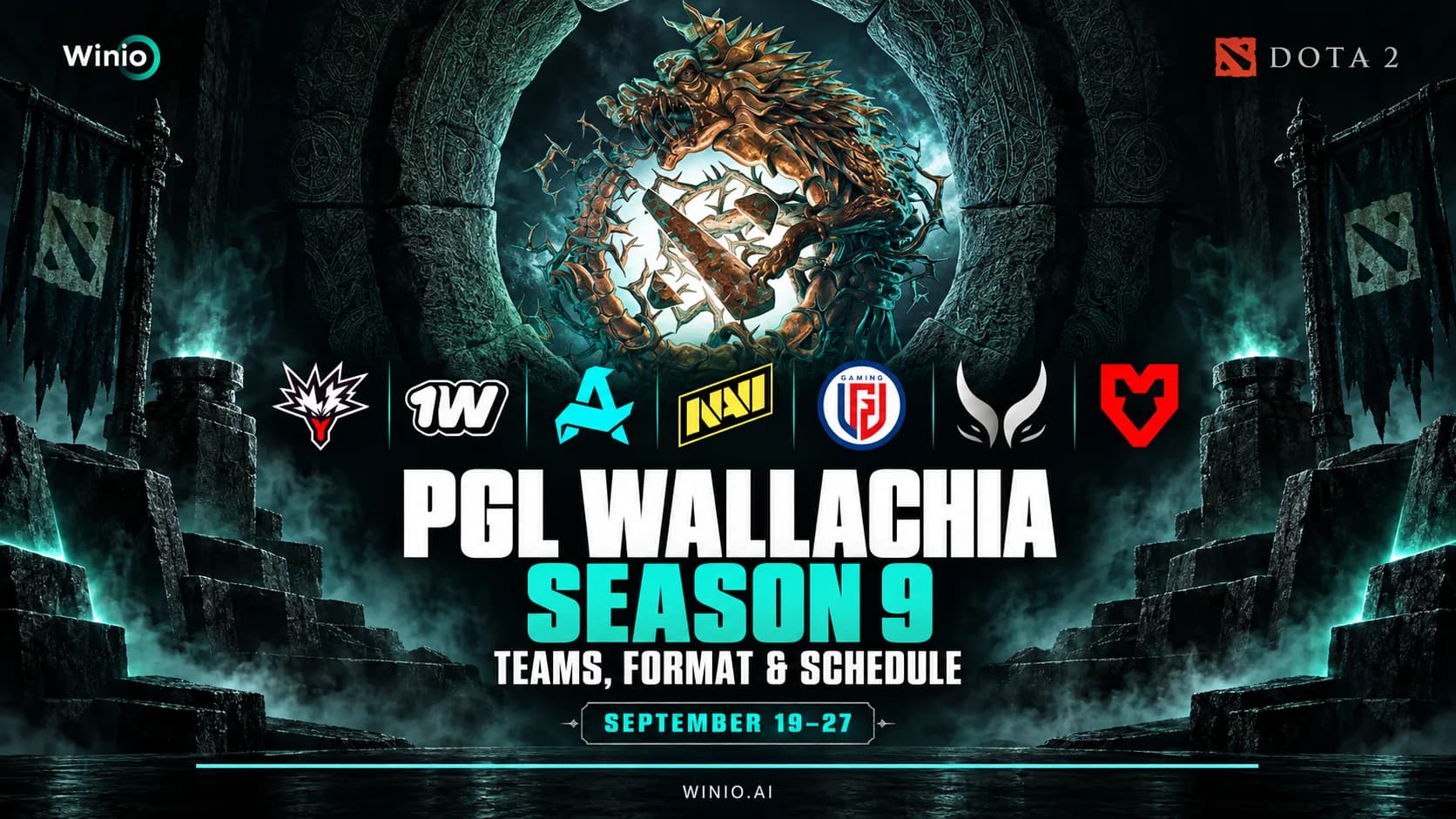
PGL Wallachia Season 9 preview: teams, format and schedule
PGL Wallachia Season 9 runs from September 19 to 27 with 16 Dota 2 teams and a $1 million prize pool. Full team list, format and opening schedule.
September 18, 202609:52 AM10 min

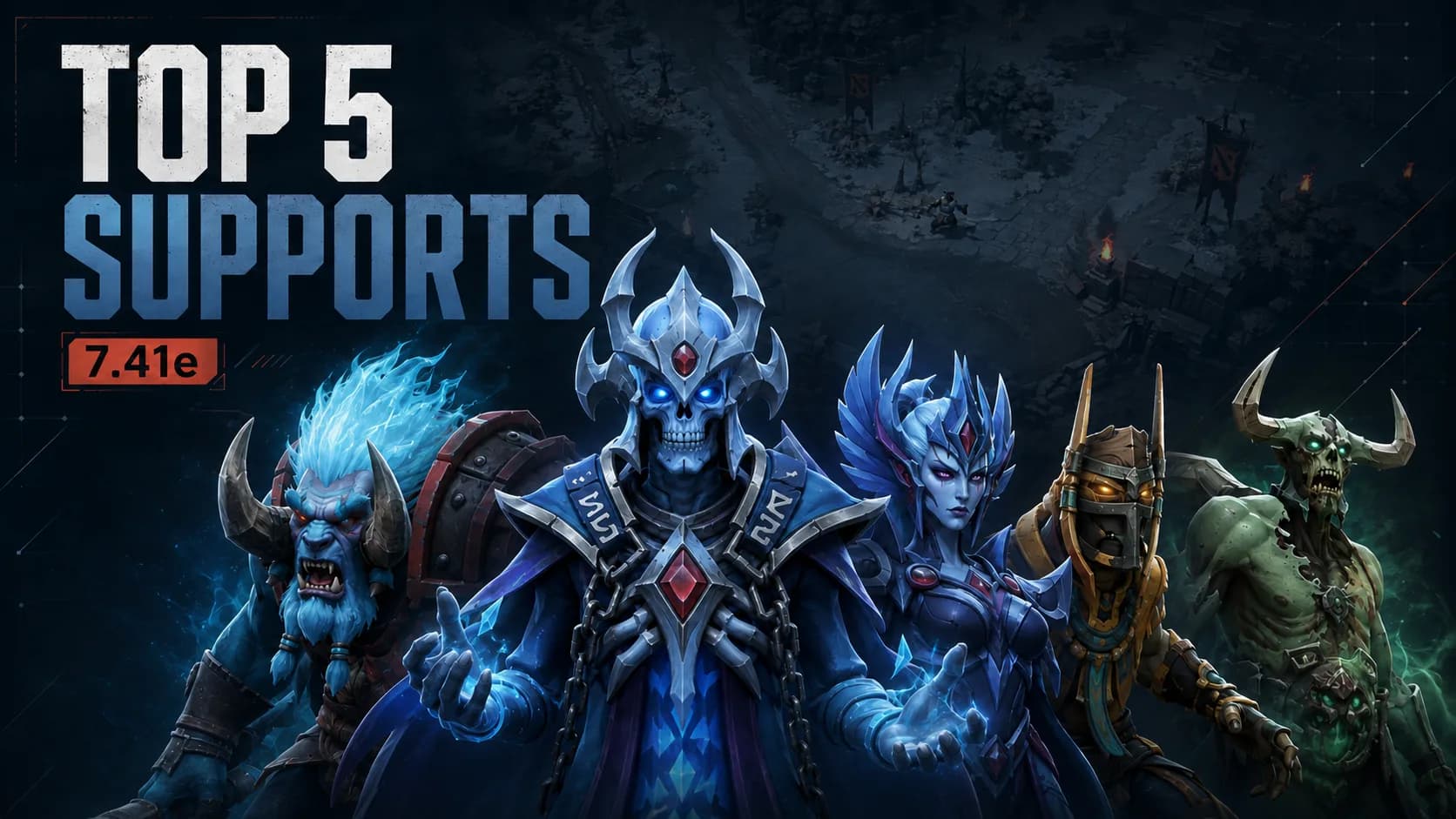
Climbing the Dota 2 ranking ladder as a support is easier when your hero can create impact without expensive items or perfect coordination. The strongest pub supports provide reliable control, win lanes and give their team a clear way to start fights or take objectives.
That does not mean selecting the hero with the highest professional win rate. Heroes such as Io, Earth Spirit and Keeper of the Light can dominate coordinated matches but demand more execution from both the player and the team. For solo queue, consistency is usually more valuable.
The five supports below combine positive early Patch 7.41e results with accessible mechanics and repeatable ranked impact.
| Hero | Best position | Main strength |
|---|---|---|
| Lich | Position 5 | Lane control and saving allies |
| Spirit Breaker | Position 4 | Global pressure and initiation |
| Vengeful Spirit | Position 4 or 5 | Reliable control and repositioning |
| Shadow Shaman | Position 5 | Disables and objective damage |
| Undying | Position 4 or 5 | Lane dominance and teamfighting |
Lich is one of the safest position-five choices in Patch 7.41e. He has a strong lane, a targeted disable, defensive utility and an ultimate that can decide fights with very little mechanical input.
Frost Blast gives Lich dependable harassment and helps secure a ranged creep when his carry cannot approach it safely. Frost Shield reduces incoming attack damage, making it especially useful against physical carries. It can also protect buildings, delay pushes and buy time for reinforcements.
BLAST SLAM VIII
Tomorrow 19:00
 Aurora GamingGamerLegion
Prediction: Aurora Gaming
BLAST SLAM VIII
Tomorrow 13:00
 Team SpiritNemesis
Prediction: Team Spirit
His new Sacrifice innate provides additional mana and experience by consuming an allied creep. Used correctly, it gives Lich more resources for lane pressure while also influencing creep equilibrium.
After the laning stage, Lich should normally stay behind his front line and wait for the enemy to commit. Frost Shield goes on the ally being focused, while Sinister Gaze can interrupt an important spell or hold an enemy in place. Chain Frost is most effective in narrow areas or when opponents have already grouped around one target.
Useful items include Arcane Boots, Glimmer Cape, Force Staff and Aghanim’s Shard. Aether Lens can help with positioning, but defensive utility should usually take priority if the enemy can reach the back line.
The most common mistake is opening a fight with Chain Frost before enemies are committed. If they can immediately spread out, much of the ultimate’s potential disappears.
Spirit Breaker is an excellent position-four hero for players who want to influence the entire map. Charge of Darkness allows him to join fights, punish isolated enemies and create action without spending time walking between lanes.
His job in the early game is not to charge every visible target. Spirit Breaker should first help stabilize his lane, use his high base damage to trade and watch for vulnerable enemies elsewhere. A good charge should have a realistic chance of producing a kill or forcing an important rotation.
Once the game opens up, Spirit Breaker makes farming alone dangerous for the enemy. Charge supplies vision of its target, while Greater Bash and Nether Strike provide enough control for teammates to arrive and finish the kill. Bulldoze gives him status resistance and makes him much harder to stop after he commits.
Spirit Breaker is also more forgiving than many roaming supports. His strength, mobility and defensive ability allow him to survive situations that would immediately kill a fragile ranged hero.
Phase Boots are the standard mobility choice. Urn of Shadows can become Spirit Vessel when the enemy has significant healing, while Drum of Endurance offers useful team utility. Shadow Blade is an option when the team needs additional initiation, but it should not delay more important support items.
The biggest mistake is charging into fights that allies cannot reach. Global initiation is valuable only when the rest of the team can convert it into something.
Vengeful Spirit offers almost everything a pub team needs from a support: a targeted stun, vision, armor reduction, an offensive aura and one of the game’s most flexible repositioning abilities.
Magic Missile is simple and reliable. It can start a gank, interrupt a channel or stop an enemy chasing an ally. Wave of Terror reveals terrain from long range, making it useful for checking Roshan, scouting high ground and placing wards without walking into danger. Its armor reduction also increases the damage of physical lineups.
Nether Swap is the main reason Vengeful Spirit remains useful regardless of her net worth. It can pull an enemy out of position, rescue a core from danger or disrupt an opponent during a team fight. Even a support with only boots and basic utility can change a game with one correct Swap.
Vengeful Spirit works in both support positions, although position four gives her more freedom to move around the map. Her straightforward laning and point-target abilities also make her accessible to players who do not want to rely on skill shots.
Arcane Boots, Glimmer Cape, Force Staff and Solar Crest are dependable options. Aghanim’s Scepter is powerful when the game provides enough farm, but it should not be rushed at the expense of essential team utility.
The main danger is treating Nether Swap as an automatic initiation tool. Trading the support’s life for an enemy core can be excellent, but swapping a durable opponent directly into your own back line can lose the entire fight.
Shadow Shaman is one of the best ranked supports for turning small advantages into permanent progress. Many supports can help win a fight, but Shadow Shaman can immediately convert that victory into a tower or Roshan.
Hex and Shackles give him two long targeted disables. This makes catching mobile heroes much easier and reduces the amount of coordination required from teammates. Ether Shock provides lane damage and later helps clear waves when no core is available.
Mass Serpent Ward is Shadow Shaman’s main climbing tool. After a successful gank, the wards can quickly destroy a tower. They can also secure Roshan, control a choke point or trap an enemy hero. In uncoordinated ranked games, this independent objective damage is extremely valuable because teams often fail to use their kills productively.
Shadow Shaman usually wants Arcane Boots followed by an item that improves his ability to cast safely. Blink Dagger enables instant Hex initiation, while Aether Lens provides additional range. Glimmer Cape and Force Staff are safer choices when the enemy can easily jump him. Aghanim’s Shard adds further pushing and fighting potential.
The hero’s main weakness is positioning. Shackles requires channeling at relatively close range, so using it before dangerous enemy spells have been committed can lead to an immediate death.
Another common mistake is saving Mass Serpent Ward for a perfect team fight. If the ultimate can secure a tower or Roshan, that is already a strong use.
Undying is one of the easiest supports for controlling a difficult lane. Decay simultaneously damages enemy heroes, reduces their strength and increases Undying’s own health. Repeated casts can make melee opponents unable to contest creeps or fight back.
His lane plan is straightforward: hit multiple heroes with Decay whenever possible, use the temporary health advantage to trade and protect the core’s access to the wave. Soul Rip supplies burst healing or damage, while Tombstone can force enemies to abandon an engagement.
In team fights, Tombstone placement matters more than complicated spell combinations. It should be close enough to affect the fight but difficult for enemy heroes to attack directly. Cliffs, trees and the edge of a fight are usually safer than dropping it in the center of five opponents.
Patch 7.41e reduced Undying’s base movement speed from 300 to 295, although Flesh Golem now provides slightly more bonus movement speed. The nerf makes careless positioning more punishable, but his fundamental strengths remain intact: lane pressure, durability and high impact without expensive items.
Arcane Boots and Mekansm provide the most direct team value, with Guardian Greaves as a natural upgrade. Glimmer Cape, Force Staff and Lotus Orb are situational defensive choices.
The biggest mistake is playing passively during the laning stage. Undying is selected to pressure opponents early. If he spends the first ten minutes standing behind his core, much of the hero’s advantage is wasted.
Lich is the most balanced option for players who want a conventional position five. He can win lanes, protect allies and contribute to fights without entering dangerous positions.
Spirit Breaker is better for aggressive players who constantly watch the map. Vengeful Spirit provides the most flexible mixture of initiation and saving potential. Shadow Shaman is the best choice when teams regularly win fights but fail to take objectives, while Undying is ideal for players who want to dominate the lane from the opening minutes.
No support guarantees easy MMR. The real advantage comes from selecting a small pool of dependable heroes and learning their lane matchups, item decisions and teamfight positioning. In Patch 7.41e, these five provide a particularly strong foundation for doing exactly that.

Team Spirit
Nemesis
Prediction: Team Spirit wins
PARIVISION
Level Up
LGD Gaming

Xtreme Gaming
Prediction: Xtreme Gaming wins

1w Team
Natus Vincere
Prediction: Natus Vincere wins
Aurora Gaming
GamerLegion
Prediction: Aurora Gaming wins

Team Liquid
Yakult Brothers
Team Liquid
Yakult Brothers
Prediction: Team Liquid wins
BetBoom Team

OG
Team Spirit
Nemesis
Prediction: Team Spirit wins
PARIVISION
Level Up
LGD Gaming
Xtreme Gaming
Prediction: Xtreme Gaming wins
1w Team
Natus Vincere
Prediction: Natus Vincere wins
Aurora Gaming
GamerLegion
Prediction: Aurora Gaming wins
Team Liquid
Yakult Brothers
Team Liquid
Yakult Brothers
Prediction: Team Liquid wins
BetBoom Team
OG
Team Spirit
Nemesis
Prediction: Team Spirit wins
PARIVISION
Level Up
LGD Gaming
Xtreme Gaming
Prediction: Xtreme Gaming wins
1w Team
Natus Vincere
Prediction: Natus Vincere wins
Aurora Gaming
GamerLegion
Prediction: Aurora Gaming wins
Team Liquid
Yakult Brothers
Team Liquid
Yakult Brothers
Prediction: Team Liquid wins
BetBoom Team
OG