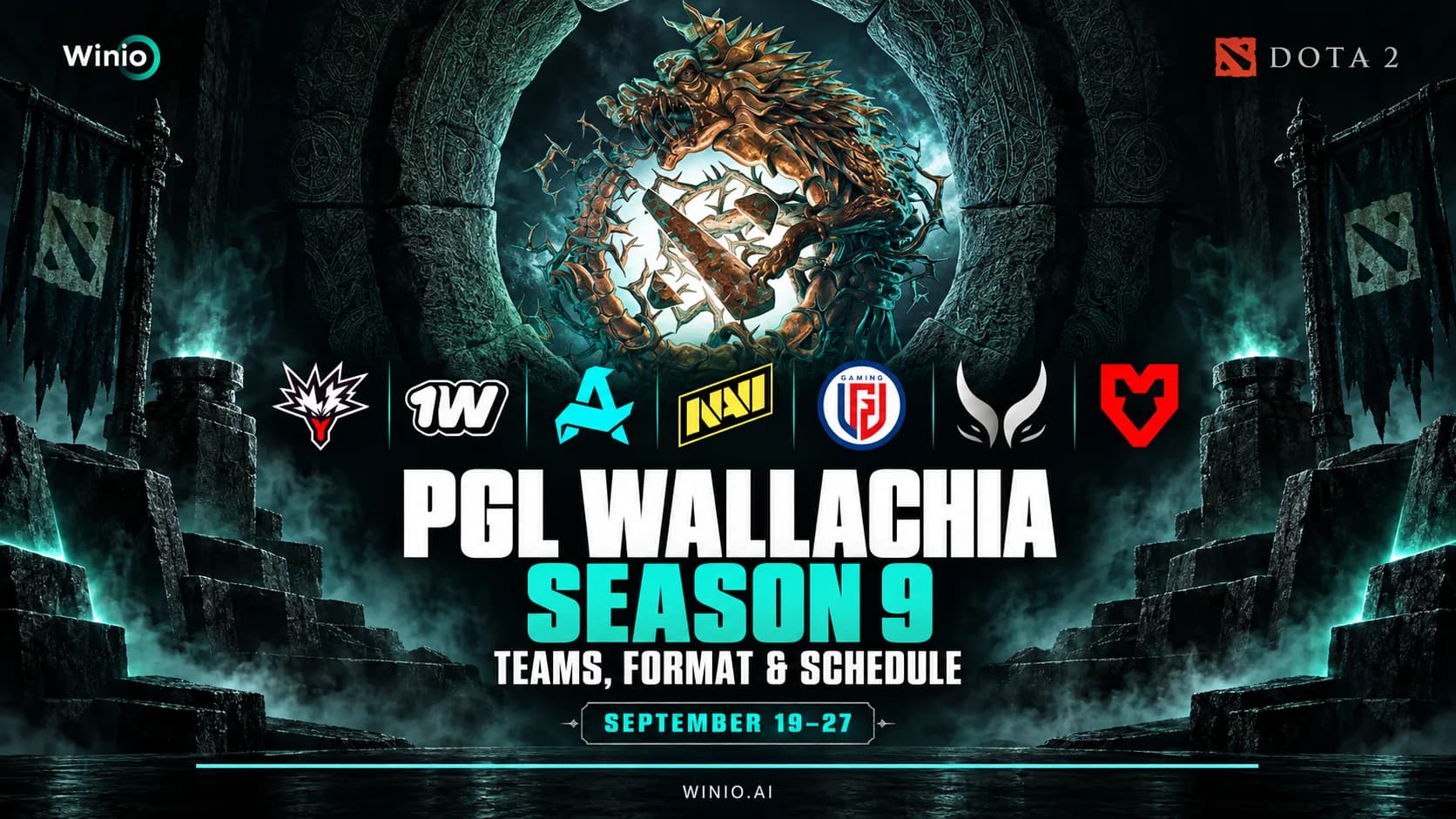
PGL Wallachia Season 9 preview: teams, format and schedule
PGL Wallachia Season 9 runs from September 19 to 27 with 16 Dota 2 teams and a $1 million prize pool. Full team list, format and opening schedule.
September 18, 202609:52 AM10 min


Dota 2 is a game where the outcome is decided not only by large-scale teamfights in the late game, but also in the very first minutes. Understanding how resources are distributed and how heroes interact begins with learning lane mechanics. Dota 2 lanes explained is a fundamental topic every new player must master to climb the ranks. In this article, we’ll break down how the map works, why lanes are divided into “safe” and “offlane,” and which strategies dominate the current meta.
The Dota 2 map is symmetrical in structure but asymmetrical in gameplay priorities. Each side, Radiant and Dire, has its own positioning advantages. Many beginners ask: how do lanes work in dota 2? The answer lies in map geometry: distances to towers, jungle placement, and rune access.
A proper understanding of dota 2 lanes allows players not just to farm creeps, but to control the map, apply pressure, and secure an advantage for their carry.
BLAST SLAM VIII
29.09 19:00
 Team LiquidYakult Brothers
Prediction: Team Liquid
BLAST SLAM VIII
29.09 13:00
 Team SpiritNemesis
Prediction: Team Spirit
The top lane is the offlane for Radiant and the safe lane for Dire.
On the Radiant side, players in the top lane often find themselves isolated, facing the enemy carry and support. This requires strong survivability and mobility. Meanwhile, Dire players feel more comfortable on the top lane, as their tower is positioned closer to the jungle, offering safer farming conditions.
Mid lane is the heart of the game, where dota 2 lanes and roles intersect most directly. This lane is reserved for heroes who rely heavily on experience and gold to reach key power spikes quickly.
Mid is typically played as a 1v1 matchup – a true skill duel where last-hitting, micro-control, and rune management dictate the pace of the game. The mid player often becomes the playmaker, rotating to other lanes after reaching level 6.
The bottom lane mirrors the top lane. For Radiant, it’s the safe lane; for Dire, it’s the offlane.
The same dynamics apply, but with different terrain advantages, such as neutral creep camps for pulls and proximity to Roshan (for Radiant). Early-game control of the jungle area often begins here, and protecting your carry on this lane is critical for Radiant’s success.
The safe lane is designed to give the carry hero a secure environment to farm gold.
Why is it “safe”?
In dota 2 lanes, the safe lane requires discipline – over-pushing can remove your safety advantage and expose you to ganks.
The Off Lane (or hard lane) is where survival matters more than farm. Heroes here are expected to initiate fights, absorb damage, or disrupt the enemy carry’s farm.
Offlaners often describe themselves as “sacrificial” players. You’re positioned far from your tower and constantly threatened by enemy supports. However, a successful offlane performance can lead to complete mid-game dominance.
To fully understand how do lanes work in dota 2, it’s essential to explore common strategies. While the meta evolves, core principles remain consistent.
A solo lane means one hero gains all experience and gold. This is most common in mid, though occasionally seen in offlane depending on the strategy and hero survivability.
A classic approach since the earliest days of Dota. One player dominates mid, gaining levels faster than anyone else. Heroes like Invoker, Puck, or Shadow Fiend thrive in this setup.

Sometimes teams run a solo offlaner to allow supports to roam and gank. This is risky, as the offlaner must survive without assistance.
The standard modern setup. Two heroes occupy each side lane:
Dual lanes balance farming efficiency and aggression.
An aggressive strategy where three heroes occupy one lane (usually safe lane). The goal is either to guarantee free farm for the carry or completely shut down the enemy offlaner.
This strategy requires strong coordination and macro understanding.
Dota 2 lanes are not just static parts of the map – they are a dynamic system that defines the economy and tempo of the match. Understanding lane mechanics, hero roles, and the balance between aggression and farming is what separates experienced players from beginners.
No matter your role – carry, mid, or support: your effectiveness begins with how well you perform in your lane. Practice, study the meta, and remember: controlling lanes means controlling the game.
Watching professional matches can also help you better understand how do lanes work in dota 2. And to make viewing more engaging, Winio offers five free monthly esports predictions for everyone.

Team Spirit
Nemesis
Prediction: Team Spirit wins

PARIVISION

Level Up

LGD Gaming

Xtreme Gaming
Prediction: Xtreme Gaming wins

1w Team

Natus Vincere
Prediction: Natus Vincere wins
Team Liquid
Yakult Brothers
Prediction: Team Liquid wins

Aurora Gaming

GamerLegion
Team Liquid
Yakult Brothers

Team Yandex

MOUZ
Team Spirit
Nemesis
Prediction: Team Spirit wins
PARIVISION
Level Up
LGD Gaming
Xtreme Gaming
Prediction: Xtreme Gaming wins
1w Team
Natus Vincere
Prediction: Natus Vincere wins
Team Liquid
Yakult Brothers
Prediction: Team Liquid wins
Aurora Gaming
GamerLegion
Team Liquid
Yakult Brothers
Team Yandex
MOUZ
Team Spirit
Nemesis
Prediction: Team Spirit wins
PARIVISION
Level Up
LGD Gaming
Xtreme Gaming
Prediction: Xtreme Gaming wins
1w Team
Natus Vincere
Prediction: Natus Vincere wins
Team Liquid
Yakult Brothers
Prediction: Team Liquid wins
Aurora Gaming
GamerLegion
Team Liquid
Yakult Brothers
Team Yandex
MOUZ