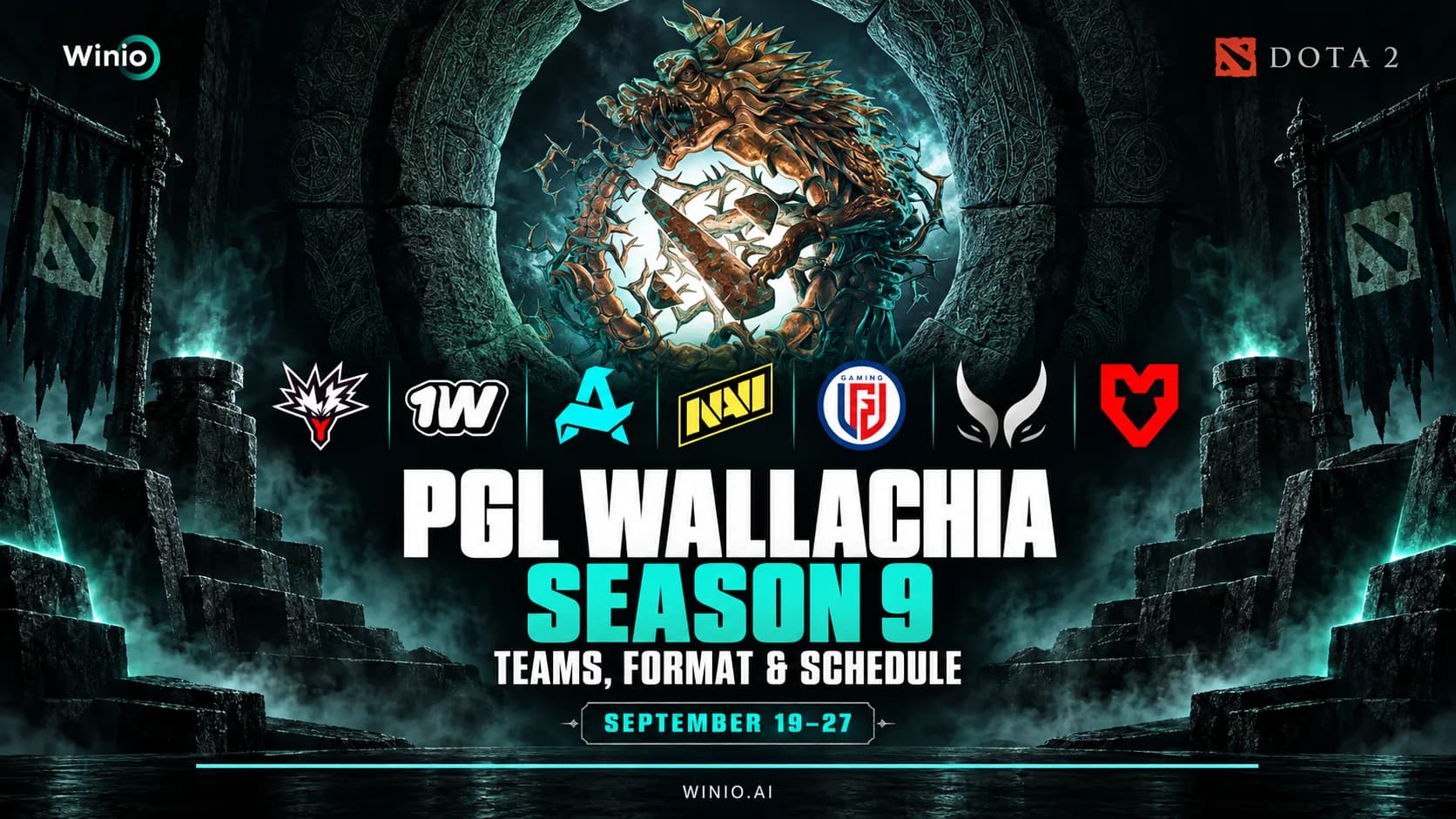
PGL Wallachia Season 9 preview: teams, format and schedule
PGL Wallachia Season 9 runs from September 19 to 27 with 16 Dota 2 teams and a $1 million prize pool. Full team list, format and opening schedule.
September 18, 202609:52 AM10 min


Dota 2 is a complex, multi-layered strategy game where success depends not only on individual skill but also on a clear understanding of your role within the team. If you’ve ever heard phrases in chat like “pick pos 4” or “we need space for position 1” but didn’t fully understand what they meant, this guide is for you.
In this article, we’ll take a detailed look at Dota 2 positions, their responsibilities, map placement, and how resources are distributed throughout the game.
At the core of the position system in Dota 2 lies the concept of farm priority. The map is limited: the number of creeps in lanes and the jungle is fixed. If all five players try to collect gold at the same time, no one will get enough items to secure victory.
The 1–5 positions system defines the order in which players take resources:
This Dota 2 lanes and roles distribution allows the team to efficiently spread its power throughout the match.
European Pro League 40
Today 12:00
 Inner CircleYellow Submarine
PGL Wallachia Season 9
Today 13:00
 GamerLegionLGD Gaming
The Carry is a hero who starts the game weak and vulnerable but becomes an unstoppable killing machine in the late game.
Responsibilities of Position 1:

Position 2 is the most dynamic role. The midlaner plays one-on-one, allowing them to gain experience and levels faster than anyone else on the map.
Responsibilities of Position 2:
Mid Playstyles:
1. Active gankers: Puck, Queen of Pain – mobile heroes that secure kills across the map.
2. Farm mids: Templar Assassin, Shadow Fiend – quickly clear jungle camps and scale into heavy damage.

The Offlaner plays the “hard lane” against the enemy carry and support. Their task is to survive where others would already be dead and disrupt the enemy’s game.
Responsibilities of Position 3:

Position 4 is a support that is not tied to a single lane. Unlike position 5, they can afford more expensive items such as Aghanim’s Scepter or Lotus Orb.
Responsibilities of Position 4:

Position 5 is the foundation of the team. This player sacrifices everything: gold, experience, and sometimes even their own life for the benefit of teammates.
Responsibilities of Position 5:
Even without items, a good position 5 support can completely change a fight with one well-timed spell, such as Black Hole by Enigma or Global Silence by Silencer.

The correct early-game map setup looks like this:
After the laning stage (10–15 minutes), the distribution changes. The carry usually moves to the triangle (a safe jungle farming area), while the supports and the midlaner rotate to look for kills or defend towers.
Many players confuse the concepts of Role and Position. Let’s clarify: Position (1–5) is a strict farm hierarchy. The number shows how many map resources you are expected to take.
Role refers to the hero’s function, such as:
The same hero can fulfill different roles depending on the situation, but their Dota 2 position in a match is usually fixed from the start.
Understanding Dota 2 positions is the first step toward climbing MMR and escaping the “hidden pool.” When every player knows their place, the team functions like a single mechanism. Remember: victory in Dota is built not only on teamfights but also on proper resource distribution across the map.
Choose the role that matches your temperament:
You can get to know the roles and the best characters in them by watching Dota 2 tournaments. To make watching esports matches even more exciting, Winio offers five free predictions every month.
Traditionally, Position 2 (Mid) is considered the most difficult because you are left one-on-one with your opponent, and every mistake directly impacts the game. Position 5 is also challenging because you must provide value without having items or much gold.
In rare cases and specific metas (for example, a “greedy” position 4), yes – but generally this is a poor strategy. The Dota 2 hero roles distribution is designed to optimize farming, and taking too many resources can leave the team without key items, experience, or damage.
Not necessarily, but it is highly recommended. The offlaner’s task is to initiate fights and survive. If your team has no other heroes capable of soaking damage, picking a fragile hero for position 3 can lead to losing teamfights.
The numbers are a universal language. They instantly explain farm priority, which is far more important in competitive play than simply saying “jungler” or “roamer.”

Inner Circle
Yellow Submarine
GamerLegion
LGD Gaming

1w Team

Hokori

Team Lynx

PuckChamp
Prediction: Team Lynx wins

Pipsqueak+4
Yakult Brothers

Aurora Gaming

Natus Vincere

Team Yandex

Team Nemesis
Inner Circle
Yellow Submarine
GamerLegion
LGD Gaming
1w Team
Hokori
Team Lynx
PuckChamp
Prediction: Team Lynx wins
Pipsqueak+4
Yakult Brothers
Aurora Gaming
Natus Vincere
Team Yandex
Team Nemesis
Inner Circle
Yellow Submarine
GamerLegion
LGD Gaming
1w Team
Hokori
Team Lynx
PuckChamp
Prediction: Team Lynx wins
Pipsqueak+4
Yakult Brothers
Aurora Gaming
Natus Vincere
Team Yandex
Team Nemesis