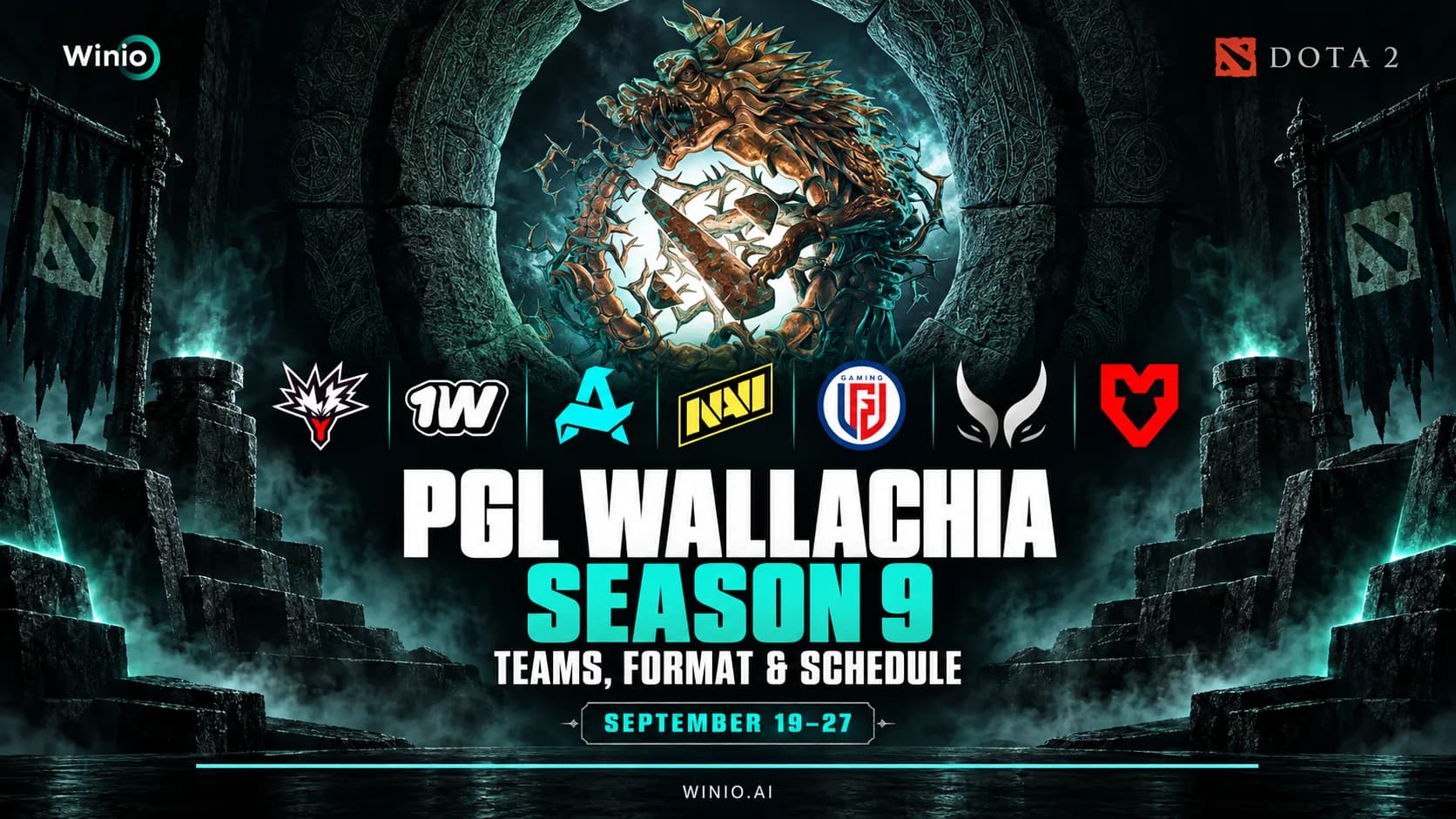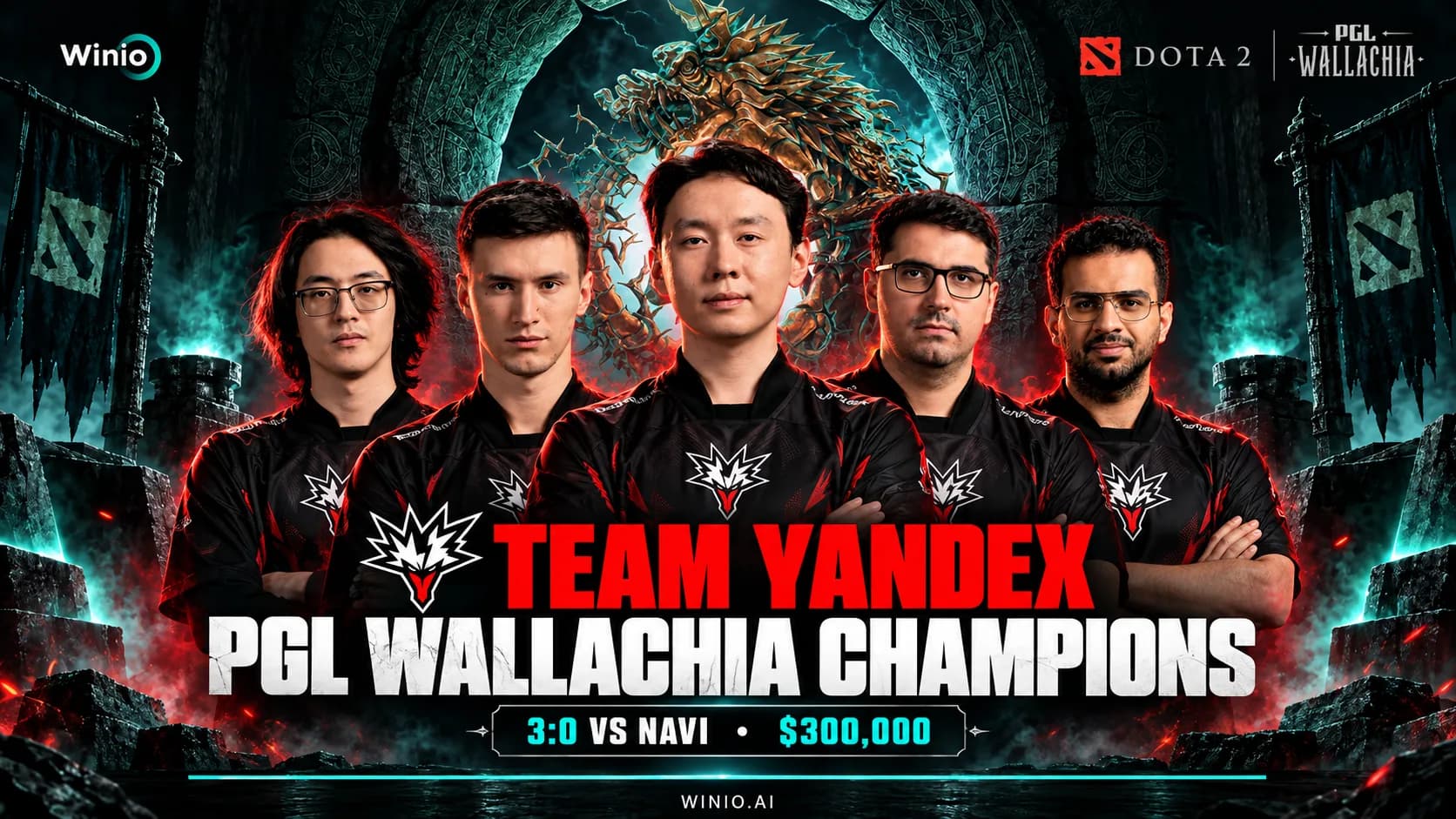
PGL Wallachia Season 9 Results: Team Yandex Win, NAVI Surprise
Team Yandex swept NAVI 3:0 to win PGL Wallachia Season 9. We analyze the champions, NAVI’s final run, surprises and disappointments.
September 28, 202607:28 AM8 min


The map is one of the most important gameplay elements in Dota 2. It determines the team’s strategy, hero movement routes, farming points, and locations of key battles. Understanding the structure of the map allows players to make decisions faster, control resources, and effectively distribute roles among allies.
The modern map in Dota 2 has evolved significantly over the years of the game’s development. Patches regularly change the placement of objects, add new objects, and adjust the balance between the Radiant and Dire teams. Updates in recent years, including the Dota 7.41b map, have expanded the territory, added additional neutral creep camps, and new strategic points.
Before studying the map in detail, it is important to understand how player roles are distributed on it. In Dota 2, there is a position system from first to fifth that determines farm priority and player responsibilities.
EPL World Series: SЕA Season 18
Today 06:00
 Inter Active PhilippinesYangon Galacticos
BLAST SLAM VIII
08.10 12:00
 Team YandexLGD Gaming
The main hero of the late game stage. His main task is to farm the necessary slots as quickly as possible and enter the game. Characters whose strength is revealed precisely through item purchases fit this role. There are currently many strong carries in the game who win lanes, in the mid game, they are still weak and continue farming their items.
The hero of the central corridor. This hero differs greatly from everyone else on the map at the beginning of the game, because he does not share experience with the team and gains levels and, in particular, the ultimate faster than anyone else. Both active heroes who are ready to move around the map already by the 10th minute, and those who prefer farming are taken for this position. The key feature is the need for levels.
A core standing on the hard lane. His task is initiation or the frontline. The hero must either have skills to start a fight or act as a tank for his team. During the laning stage, he must prevent the enemy carry from gaining net worth, and after it ends, it is desirable to destroy the tower.
A support standing on the hard lane, he can leave his offlaner and help on other lanes or move for runes. In the game, he can act as an initiator or support. This is one of the most interesting roles in Dota 2, which does not spend time farming and sets the pace of the game.
A full support standing on the safe lane. At the beginning of the game, his task is to help his carry obtain the starting items for farming. He rarely leaves his lane and constantly zones enemies. In the game, this position often plays behind the team and saves teammates. On the map, he mainly places and removes vision.
The map in Dota 2 is an almost symmetrical square divided diagonally by a river. Radiant starts the game in the lower left corner, and Dire in the upper right. The map has lanes, neutral creep camps, Roshan, Tormentor, and other activities.

Although the map is almost symmetrical, the win rate between the sides is distributed unevenly. In most patches, Radiant has a higher win rate than Dire. This is due to the fact that it is easier for players to navigate the game as Radiant because of the camera angle.
The map in Dota 2 changes from patch to patch, sometimes slightly, and sometimes significantly. Players get used to the changes, new wards, and paths. It is thanks to updates that the map has not become boring for players for almost 13 years.
The most important part of the map in Dota 2 is the lanes along which creeps move and towers stand. Each lane has three towers, behind which there are two barracks. All three lanes lead to the throne, in front of which there are two T4 towers.
The upper, middle, and lower lanes in the game are commonly called top, mid, and bot, respectively.

The hard lane is located at the top for the Radiant team and at the bottom for the Dire team. It got its name because of the tower’s location. The tower is far from the creep meeting point, and farming them in this zone is dangerous.
Heroes in positions three and four stand on the hard lane. Their task in modern Dota 2 is to prevent the enemy carry from farming the necessary items, control experience at the 7th minute, and try to destroy the tower.
In this patch, where strong snowballing heroes are picked as carries, it is once again difficult to stand on this lane, and in tournaments, you can see that the enemy offlane often pulls creep waves behind their own T1 tower.
The safe lane is located opposite the hard lane and has its own asymmetric problems and advantages. Standing on this lane is easier because the heroes are under the tower, receive bonuses from it, and the team can quickly teleport to help.
There are two camps to pull the creep wave and place the lane back under the tower; together with the currently strong carries, this lane lives up to its name.
Heroes in the first and fifth positions stand on the safe lane. The key task of the carry is to farm slots for further farming in the jungle. If the lane is won, the tower can be preserved, which gives a great advantage in the mid game and allows farming along a profitable route without fear of attacks.
Everything is symmetrical in the mid lane. Two midlaners stand opposite each other, the distance from the towers is the same, and the creeps meet in the middle. Here, everything is decided by your skill and heroes. Runes appear nearby on the river, for which the first fights on the lane often occur.
Near the central corridor, there is the main jungle and triangle. At the beginning of the game, the midlaner has many opportunities for gaining levels, farming, and influence on the map, which is why this position often sets the pace of the entire game.
The jungle in Dota refers to the space between the lanes where neutral creep camps are located. Three lanes divide the map into four jungles.
Neutral creeps appear in their camp every minute if it is not blocked by heroes, wards, or other creeps. From this rule, players quickly found an interesting mechanic – creep stacks.
If you pull creeps out of the camp so that at the zero second, the camp is empty, a new pack of neutral creeps will appear there. Stacks allow you to gather many creeps in one place and farm them quickly. A support can stack creeps for a core hero, who will then come and farm them without wasting time.
There are four types of creep camps: small, medium, large, and ancients. The larger the camp, the more gold is given for killing its inhabitants. Their size is also important for some heroes or items. Pudge cannot hook ancients, and Hand of Midas cannot be used on them.
Each creep in Dota has its own abilities: active and passive. Some heroes can tame creeps or take their abilities. For such characters, it is important to know creep abilities and where to find them.
The map in Dota 2 consists of objects called points of interest. Each of them can help achieve victory, and it is important to know where and when to use them.
There are a total of 4 small, 14 medium, 6 large, and 4 ancient creep camps in Dota 2. They are evenly distributed across the map, but the best places for farming are considered to be: the main jungle, the triangle, and the two ancient camps near the twin gates.

Twin Gates are located next to the Tormentor spawn points, at opposite diagonal ends of the map. Moving through them costs 30 mana. When activated, the opposite gate starts moving, which allows catching a teleporting opponent. This is a convenient tool for moving around the map and organizing early ganks from supports between the hard and safe lanes.

Towers are located on the lanes and connect the teams’ thrones. Each lane has three towers and two barracks, and at the end of the road – the throne with two more towers. Each subsequent tower is stronger than the previous one. If you destroy T2, you can capture the outpost, T3 – attack the barracks, and both T4 – the throne.

Two symmetrical points located in the triangles of each team. You can teleport to them, and they provide a small amount of vision around them. After any T2 falls, the outpost can be captured by the enemy team.

Roshan appears at the start of the game and changes his location between lairs every five minutes with the start of a new day or night. At the same time, the Tormentor teleports to the opposite side. At night, Roshan is on top, and during the day – at the bottom. This is a key object in both the mid and late game. After killing him, an Aegis drops, giving a second life for five minutes, and other items. Roshan respawns after 8–11 minutes.

The Tormentor appears at the 20th minute and changes location every five minutes with the start of a new day or night. Killing him drops an Aghanim’s Shard for one of the two teammates with the lowest net worth. The Tormentor respawns after 10 minutes.

Power runes appear near the central corridor on the river randomly in one of two places. They are useful even in the late stage of the game. Runes spawn every two minutes starting from the sixth minute. The only way to know their spawn location in advance is Oracle’s innate ability – Prognosticate.

Bounty runes appear once every four minutes in two places. They do not disappear and do not increase in value; they simply lie there until picked up. The runes are located in the main jungle near T2 on the safe lane.

Wisdom Shrines are located next to T2 on the hard lane for each team. Once every seven minutes, you can gain experience in them simply by standing in the circle. If two heroes from opposite teams stand in the circle, it stops filling until one of them leaves. This is a very useful object that should always be remembered.

The Secret Shop is located between T1 on the hard lane and the triangle. Here you can buy items marked with the Secret Shop symbol. These items cannot be purchased elsewhere, so at any stage of the game, enemy couriers can be found here. When passing by, it is worth checking the trees and trying to find them.

The Ancient, or throne, is the key object on the map that must be destroyed to win or defended to avoid losing.

The Fountain is located behind the throne. Heroes respawn there and have high HP and mana regeneration. The Fountain shoots at all enemy units that enter its radius. In its area, there is a regular shop, and couriers are given acceleration.

The map in Dota has many objects that change from patch to patch. Some heroes have special interactions with these objects. The objects themselves can be changed, moved, removed, and returned to the game.
From patch to patch, it is important to follow changes and analyze how they affect the game. It is necessary to track the new meta and constantly improve. Our team works in a similar way: we make AI predictions for esports matches based on statistics and never stop working on improving our predictions. Go to Winio and claim 5 free predictions.

Inter Active Philippines
Yangon Galacticos
Team Yandex
LGD Gaming
Aurora Gaming

1w Team
Inter Active Philippines
Yangon Galacticos
Team Yandex
LGD Gaming
Aurora Gaming
1w Team
Inter Active Philippines
Yangon Galacticos
Team Yandex
LGD Gaming
Aurora Gaming
1w Team