


Legacy beat G2 3-0 to win FISSURE Playground 3
Legacy swept G2 3-0 in the FISSURE Playground 3 grand final. Map scores, latto’s statistics and tournament prize money.
September 13, 202612:48 PM

donk spoke about how Team Spirit are playing at IEM Cologne Major 2026 without a coach behind them. According to him, in calm matches the absence of a coach is hardly noticeable, but in difficult stretches the team lacks someone who can call a timeout and quickly explain what went wrong.
The interview came amid Spirit’s strong run in Cologne. The team reached the Major playoffs, but the match against 9z Team became one of the most tense series for the roster. donk pointed to that series as an example of a situation where the absence of a coach was especially noticeable.
For Winio, this is a telling detail: predictions should account not only for individual form, but also for the full decision-making structure inside a team. In CS2, a coach does not directly affect aim, but they do influence the quality of timeouts, mid-series adjustments, and a team’s ability to stabilize quickly after losing rounds.

In matches where Spirit gains control early, the issue is less visible. If the team starts a map confidently, controls the economy, and imposes its tempo, the players can maintain the structure on their own. In those scenarios, individual level, team synergy, and the base game plan often cover the lack of coaching input.
NODWIN Clutch Series #12
Tomorrow 11:00
 SPARTABAKS
Prediction: SPARTA
NODWIN Clutch Series #12
Today 11:00
 BRUTEG2 Ares
But in the high-pressure BO3 series, the situation changes. When the opponent wins several close rounds in a row, breaks the economy, or forces the team to doubt its plan, a timeout becomes a tool for managing the series. At that point, a coach helps not just to calm the players down, but to quickly break down the problem: where the team is losing positions, why prepared ideas are not working, and which plan should be used next.
The match against 9z shows this context well. Spirit won the series, but individual maps and stretches required serious adaptation from the team. In matches like that, the final result is not the only thing that matters. It is also important to see how a team regains control after losing tempo and who inside the roster takes on the coordinator role in critical moments.
For fans, the main takeaway is simple: before Spirit’s playoff matches, it is worth looking beyond the team’s strong tournament run. The key is how they react to long maps, how confidently they use timeouts, who takes the initiative in difficult stretches, and whether the team can adjust quickly without a coach.
Winio’s approach helps read these details through in-game patterns. In Spirit’s case, the key factors are the form of donk and the rest of the players, the map pool, the quality of their starts, late rounds, communication structure, and the ability to stick to the plan when a match moves out of a comfortable scenario.
Spirit remains one of the main contenders for a deep run in Cologne, but donk’s words add an important analytical layer. Even a strong team can run into problems if, at the decisive moment, it lacks an outside voice that can stop the chaos and bring the game back under control.

BRUTE
G2 Ares

Gatorian

Eternal Fire Academy

Black Phoenix

Just Players

Team des0ut

Team Perfecto

BET-M

Leo

Team Aunkere

Team Chopper

ASTRAL

Rune Eaters

Phantom
G2 Ares
BRUTE
G2 Ares
Gatorian
Eternal Fire Academy
Black Phoenix
Just Players
Team des0ut
Team Perfecto
BET-M
Leo
Team Aunkere
Team Chopper
ASTRAL
Rune Eaters
Phantom
G2 Ares
BRUTE
G2 Ares
Gatorian
Eternal Fire Academy
Black Phoenix
Just Players
Team des0ut
Team Perfecto
BET-M
Leo
Team Aunkere
Team Chopper
ASTRAL
Rune Eaters
Phantom
G2 Ares
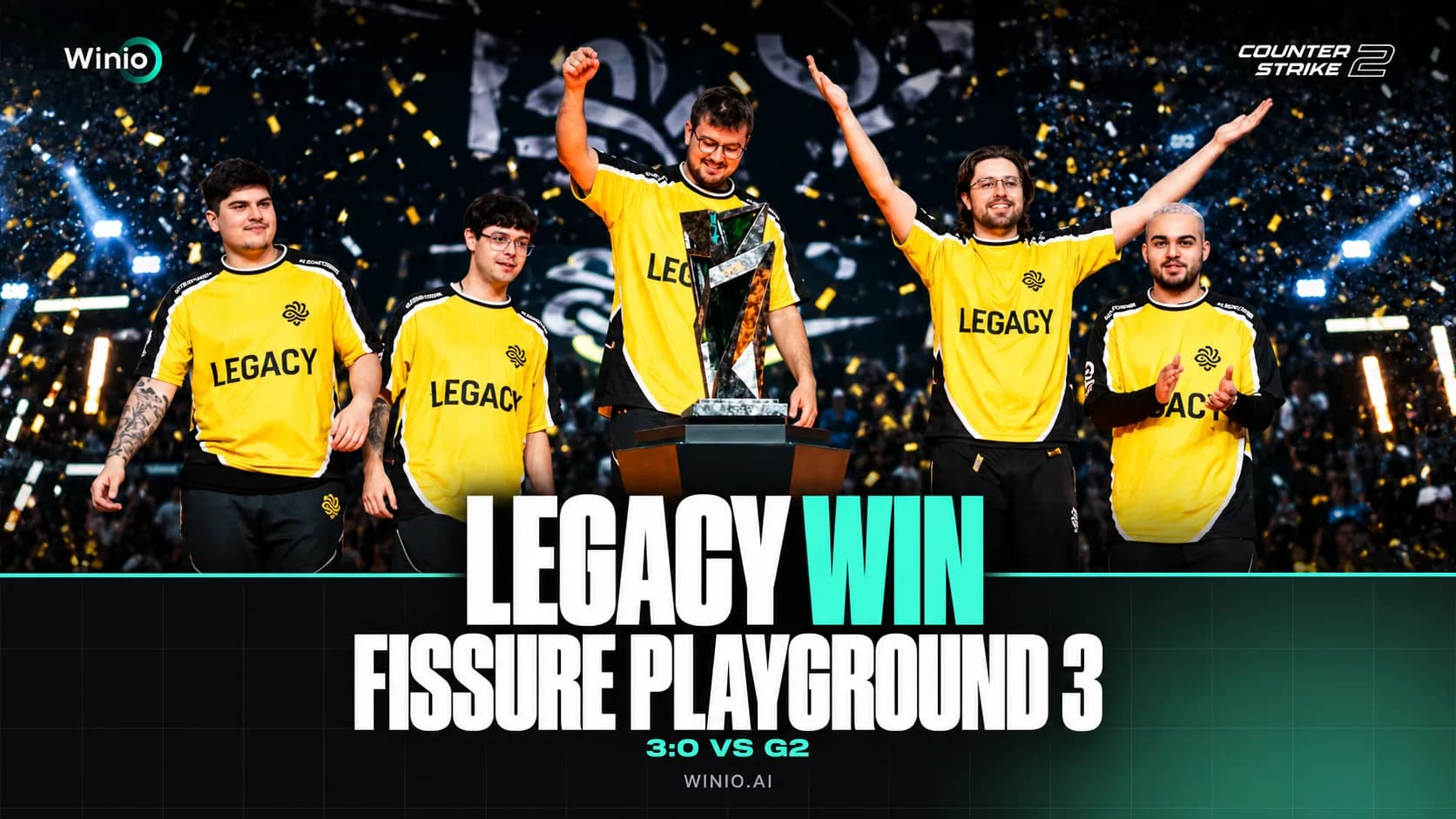
Legacy swept G2 3-0 in the FISSURE Playground 3 grand final. Map scores, latto’s statistics and tournament prize money.
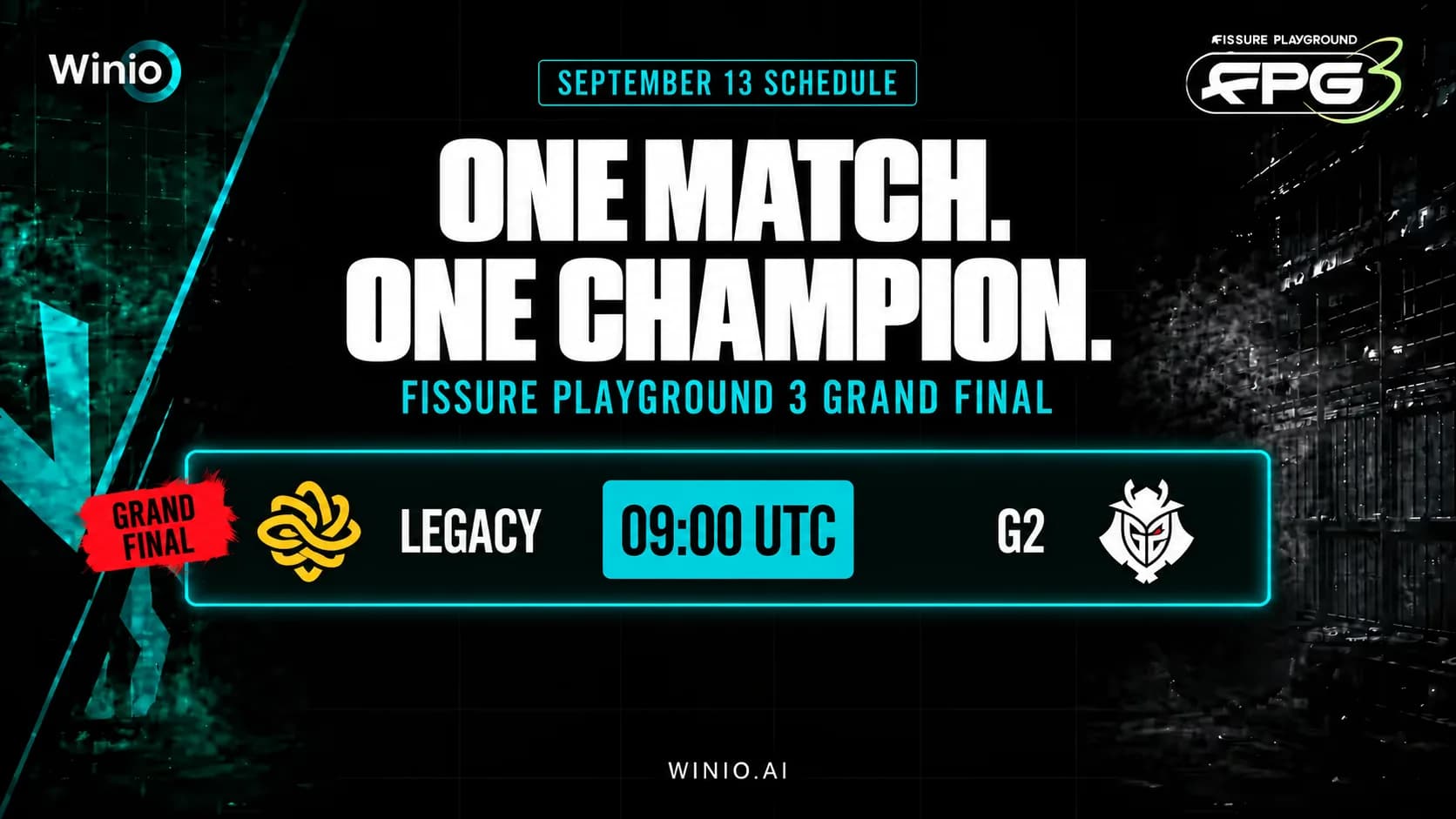
Legacy and G2 meet in the FISSURE Playground 3 grand final on September 13. Match time, format and key statistics.
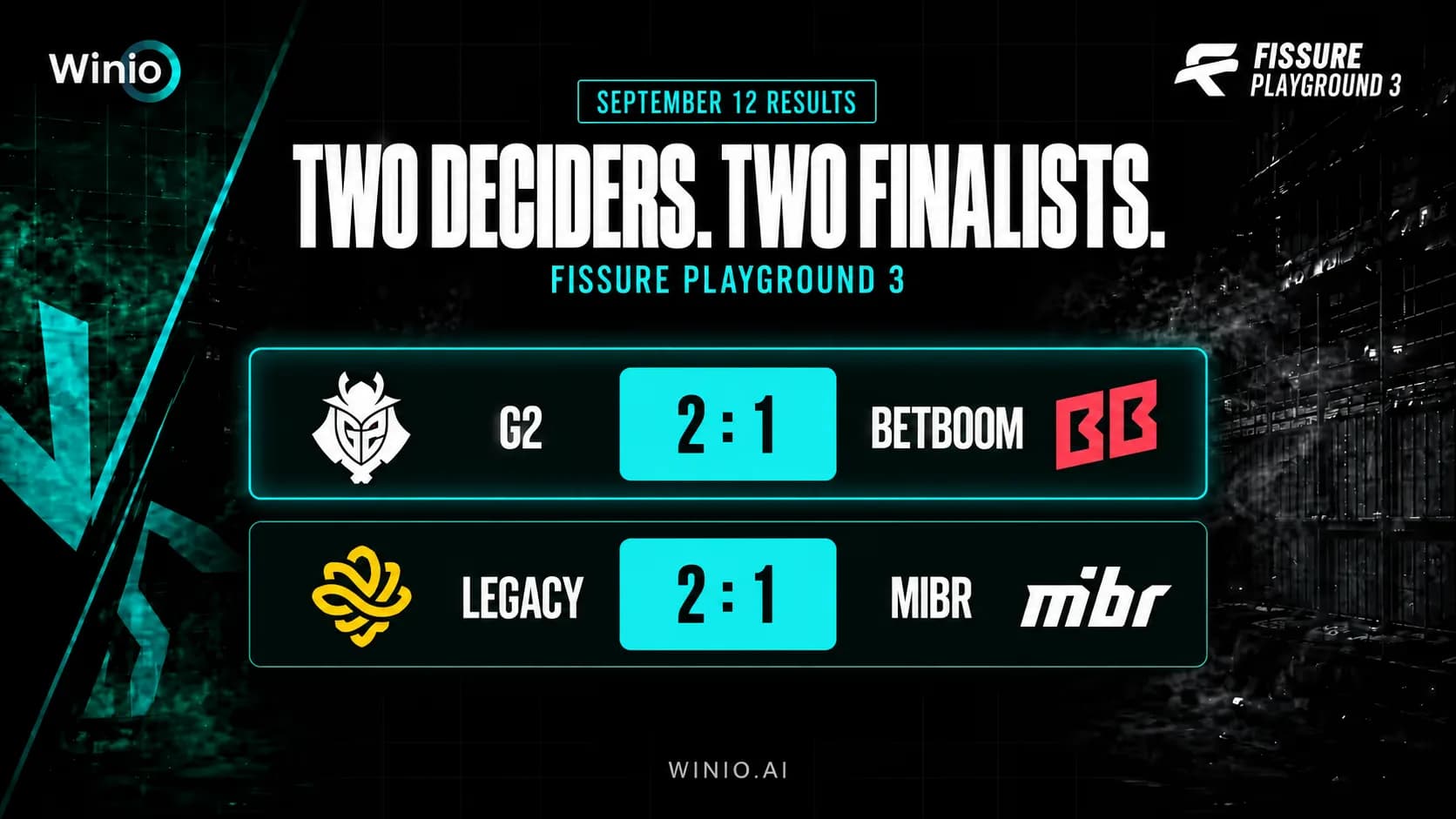
Legacy defeated MIBR in an overtime decider, while G2 completed a comeback against BETBOOM. FISSURE Playground 3 semifinal results for September 12.
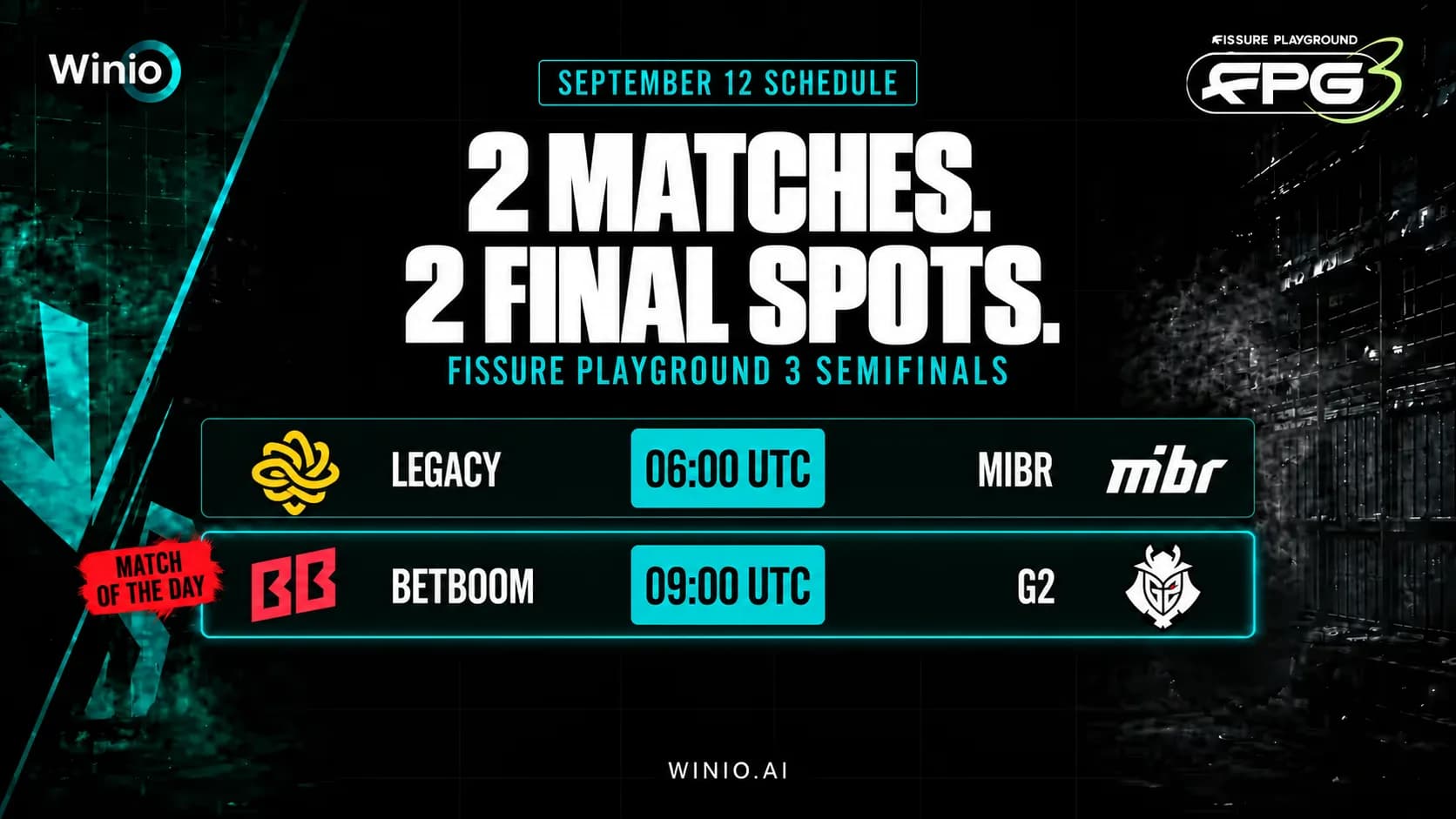
Legacy face MIBR and BetBoom meet G2 in the FISSURE Playground 3 semifinals. Full September 12 schedule with UTC start times.

G2 defeated FURIA 2:0, while MIBR swept Alliance to secure the final semifinal spots at FISSURE Playground 3.

Ranked No. 112, 5star defeated The MongolZ and Astralis at FISSURE Playground 3 and may join the race for a PGL Major Singapore invite.

MIBR face Alliance at 06:00 UTC, while FURIA play G2 at 09:00 UTC. FISSURE Playground 3 quarterfinal schedule for September 11.